Reading Room — Meaning and Performance
BOOKS / LANGUAGE / PERFORMANCE
Reading Room
What does a sentence mean, and how would you show it? Most of us answer the first question quickly and skip the second. This room is built around the second. Choose a book, read a passage, find the evidence, test your interpretation, and then rehearse your voice.
The idea is simple: meaning needs an argument, and the argument has to point to the words on the page. Reading aloud then becomes a test of that argument rather than a performance laid on top of it.
Coverage and checking
The library holds editions of different kinds. Some are whole-text readers; others contain excerpts and companions. Each entry states its coverage.
The scores include automated annotations, so pronunciations and pauses need checking, and initials can have segmentation errors. The cues are not the authors’ instructions. No recordings are included.
The source editions retain their rights. Redistribution permissions have not been reviewed, and converting a text does not establish permission to share it.
Library
ORWELL / PERFORMANCE SCORE
All Art Is Propaganda
The score has 506 reading pages (507 in the PDF, including the cover). Pronunciation, pauses, stress and direction are marked.
Full text available privately; short quotations only for copyright reasons.
Full text available privately; short quotations only for copyright reasons.
TOWLES / PERFORMANCE SCORE
A Gentleman in Moscow
The score has 709 reading pages (710 in the PDF, including the cover). Characters, intention, pauses and stress are marked.
Full text available privately; short quotations only for copyright reasons.
Full text available privately; short quotations only for copyright reasons.
ASIMOV / SYNOPSIS, NOT STORY
The Last Question
The source is a three-page synopsis in seven scenes, prepared by Arif Hussain Reshi. It is not Asimov’s complete story, and it reveals the ending.
Full text available privately; short quotations only for copyright reasons.
LEWIS / PERFORMANCE SCORE
On Writing (and Writers)
The score has 125 reading pages (126 in the PDF, including the cover). Advice, qualifications, examples and delivery are marked.
Full text available privately; short quotations only for copyright reasons.
Full text available privately; short quotations only for copyright reasons.
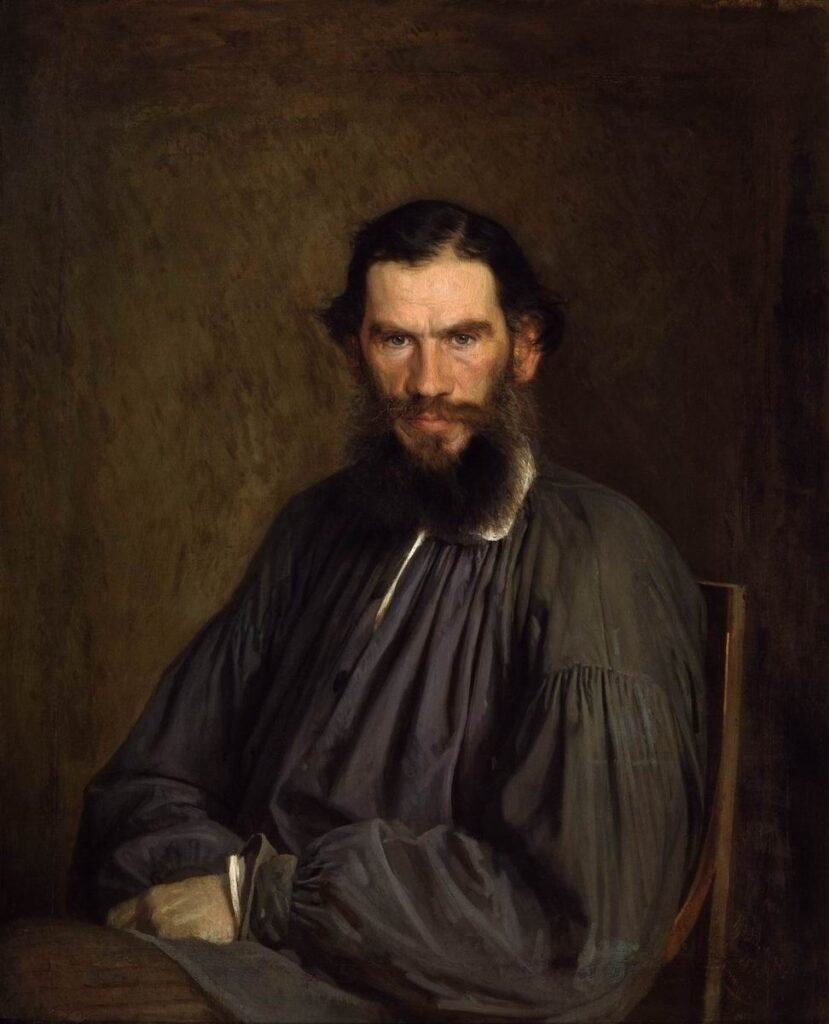
TOLSTOY / READING STUDIO
Anna Karenina
Translated by Rosamund Bartlett, from a supplied advance reading copy. The studio contains a whole-text HTML reader; nine sentences have contextual coaching, and the automatic pronunciation is still only a scaffold.
Full text available privately; short quotations only for copyright reasons.
This is an earlier reader and is not part of the four-book ZIP.
DOYLE / EXCERPTS AND COMPANIONS
Sherlock Holmes
Three practice excerpts, with guidance on nineteen sentence units. These pages are not complete books.
Open reading lab · Open performance guide
Compare observation with inference, and separate Watson’s viewpoint from the events he reports.
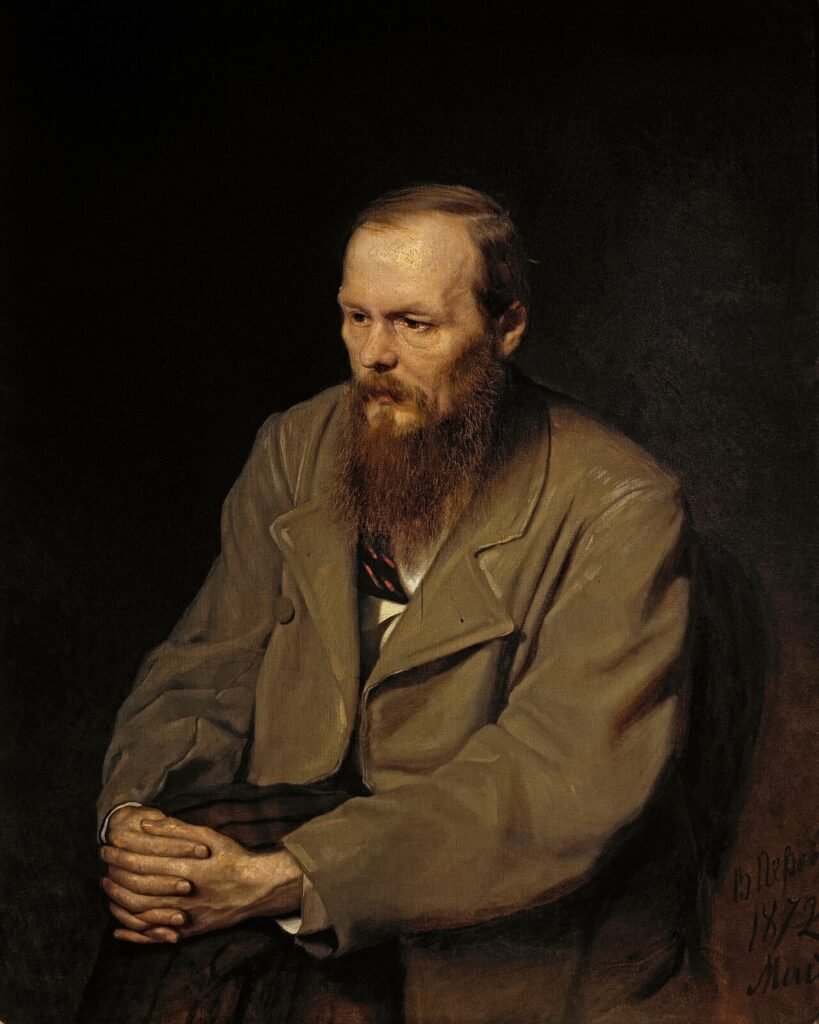
DOSTOEVSKY / EXCERPTS AND COMPANIONS
White Nights and other stories
Includes A Gentle Creature and The Dream of a Ridiculous Man, in Alan Myers’s translation. There are three excerpts and eleven sentence units; this is not the complete translation.
Full text available privately; short quotations only for copyright reasons.
Distinguish confession from self-justification, and track the narrator’s qualifications.
DOSTOEVSKY / COMPANIONS
Notes from Underground
The Grand Inquisitor
Reading and performance companions, not whole-book conversions. Use the guidance supplied with each passage.
Open reading lab · Open performance guide
Track claims, contradictions and objections, and keep the speakers distinct from the author.


The ZIP contains nine files: four HTML editions, four PDFs and a short README. It does not include the earlier companions. The workbook runs to six pages.
Read for meaning
Do not assume there is only one interpretation. An interpretation is a claim, and a claim needs support: show the words that support it, and then try to disprove it.
+--------------------------+
| EVENTS                   |
| what happens, who speaks |
+--------------------------+
             |
             v
+--------------------------+
| EVIDENCE                 |
| the exact words, located |
+--------------------------+
             |
             v
+--------------------------+
| INTERPRETATION           |
| what the words suggest   |
+--------------------------+
             |
             v
+--------------------------+
| CHALLENGE                |
| what resists the claim?  |
+--------------------------+
             |
             v
+--------------------------+
| VOICE                    |
| emphasis, pause, pace    |
+--------------------------+
1. Establish the passage
What happens? Who speaks, and who listens? What changes? For an essay, identify the claim.
2. Trace the pressure
What does someone want, and what prevents it? What remains unsaid? Whose viewpoint frames the account?
3. Find the evidence
Choose two details and record where they are. Quote without changing the words. Notice repetition, contrast and qualification.
4. Make an interpretation
Explain what those details suggest, and keep the evidence beside the interpretation. Separate authors from narrators, and do not diagnose the characters.
5. Challenge the claim
Try to contradict your own claim. What evidence resists it? Compare the opening with the ending, and revise whatever the text challenges.
6. Test the voice
Record two interpretations, changing the emphasis, pauses or pace. Keep the author’s words, and explain each performance choice.
Each kind of text asks for a different focus. In fiction, examine the viewpoints; in essays, the arguments; in memoir, the act of recollection; in history, the evidence; and in instructions, test the method itself.
This method is a proposal. It is not the authors’ framework. The examples below are there to show the difference between evidence and interpretation.
Why read aloud to test meaning?
Two of the writers in this library argued for close attention to words. Orwell held that the influence runs both ways: “if thought corrupts language, language can also corrupt thought” (Orwell, Politics and the English Language, 1946, at the Orwell Foundation). Lewis gave the same warning from the writer’s side in a 1956 letter to a young correspondent: describe the thing so that the reader feels it, rather than labelling the feeling (C.S. Lewis official site).
There is also experimental evidence that saying words makes a difference to memory. In a series of experiments, Colin MacLeod and colleagues found that words read aloud were remembered better than words read silently, a finding they named the production effect (MacLeod et al., 2010, Journal of Experimental Psychology: Learning, Memory, and Cognition). Those studies used word lists rather than literary passages, so they do not show that performance improves interpretation. They do suggest that saying words aloud changes how well we remember them.
That is why the exercises below end with the voice. If you can read a sentence two ways and explain which reading the evidence supports, you have tested your interpretation instead of merely stating it.
Four examples
Read the source before you rehearse. The interpretations below are proposals, and the cue timings are rehearsal choices rather than the authors’ instructions.
Orwell: language and thought
Source: Politics and the English Language. Reading score page 364; PDF page 365.
But if thought corrupts language, language can also corrupt thought.
What the passage gives
The sentence reverses its nouns: thought affects language, and language affects thought. Orwell then implicates himself.
An interpretation
My reading: the corruption forms a cycle, and the criticism includes the critic. It is not simply blame.
Challenge it
Find his admission of fault. Does your interpretation account for it? Look at his examples of imitation. What evidence limits your claim?
Try the performance
But if THOUGHT corrupts LANGUAGE, / LANGUAGE can also corrupt THOUGHT.
Language: Keep both clauses connected. Contrast thought with language, and preserve the reversal.
Performance: Use the comma as the turning point and try a 0.4-second pause. Make the reversal audible without shouting to create emphasis.
Does the claim travel one way?
No. The direction reverses, so the sentence describes influence running both ways.
Full text available privately; short quotations only for copyright reasons.
Towles: agency and inheritance
Source: An Ambassador. Reading score pages 24–25; PDF pages 25–26. The quotation is a clause taken from a longer sentence.
if a man does not master his circumstances then he is bound to be mastered by them.
What the passage gives
The Count recalls this advice. He also inherits a desk whose legs contain gold. Notice both the advice and the resources.
An interpretation
My reading: agency needs examining. The advice promotes self-mastery, but the inheritance complicates that lesson, and with it any simple ‘mindset’ reading.
Challenge it
Whose advice is being recalled? What does the Count inherit? Would resolve alone explain the gold? Keep the gold in view.
Try the performance
if a man does not MASTER his circumstances / then he is bound to be MASTERED by them.
Language: Contrast master with mastered: the grammar reverses who is in control. Connect the condition to its consequence.
Performance: Separate the condition from the consequence and try a 0.5-second pause. Let the reversal carry the weight, and avoid sounding as if you are announcing the novel’s verdict.
Does resolve explain the gold?
No. The gold shows inheritance: the desk contains it, and that detail complicates the advice.
Full text available privately; short quotations only for copyright reasons.
Lewis: experience before labels
Source: David C. Downing’s Preface, which quotes a letter from Lewis (attribution: CL 3, 766). Reading score page 1; PDF page 2.
Don’t use adjectives which merely tell us how you want us to feel about the thing you are describing.
What the passage gives
The quotation qualifies its own criticism. It targets adjectives that label feelings, because a label is not the same as an effect. Lewis appears here within Downing’s commentary.
An interpretation
My reading: create the experience rather than demanding the response. The qualification matters; this is not a ban on adjectives.
Challenge it
Find the word merely. Does your summary keep it? Separate the editor from Lewis: which claim belongs to whom?
Try the performance
Don’t use adjectives which MERELY tell us / how you want us to FEEL / about the thing you are describing.
Language: Merely restricts the criticism, so do not drop that qualification.
Performance: Do not invent contempt. Try a 0.3-second grouping pause, and address the advice to someone.
Does Lewis prohibit every adjective?
Not in this quotation. The criticism carries a qualification: it targets feeling-labels that replace description.
Practice: Write a sentence that names fear. Replace the label with an action, compare how a reader responds, and label the exercise as your own.
Full text available privately; short quotations only for copyright reasons.
Asimov synopsis: uncertainty and time
Source: the supplied three-page synopsis, prepared by Arif Hussain Reshi; scenes 1, 2 and 5. The quotation below is the synopsis’s wording. This is not the complete story.
INSUFFICIENT DATA FOR MEANINGFUL ANSWER
What the passage gives
The question returns across the scenes, and each time the computer lacks an answer. A child fears that the stars are dying. The same answer crosses all of those contexts.
An interpretation
My reading: uncertainty outlasts progress, and the question confronts mortality. Ignorance does not establish impossibility. This is an interpretation, not cosmology.
Challenge it
Separate the child from the computer. Who expresses fear? What does the computer actually claim? Does repetition preserve the meaning?
Try the performance
INSUFFICIENT DATA / FOR MEANINGFUL ANSWER
Language: Keep insufficient data together as one group. Distinguish missing data from impossibility; capitals do not require shouting.
Performance: Try a 0.5-second grouping pause. Read it first as procedure, then as a postponement, and avoid turning uncertainty into refusal.
Does the answer establish impossibility?
No. It reports that the data are insufficient, and scene 5 discusses that distinction. The synopsis reveals the ending.
Practice: Compare scenes one and two and note how the audience changes. Keep the computer’s wording, and explain your change in delivery.
Full text available privately; short quotations only for copyright reasons.
Your interpretation
Choose one passage and note the book and its location. Keep the evidence beside the interpretation.
These boxes do not save. Copy your notes before you leave, because reloading the page can erase them.
Keep three distinctions
Word stress: O/o patterns describe syllables.
Phrase emphasis: highlights the intended contrast.
Volume: is chosen independently.
Slashes mark proposed pauses; they do not replace punctuation. Check names before accepting a pronunciation, and preserve initials and sentence boundaries. Emotion labels need checking against the context.
Sourov’s video
This space is reserved for a reading demonstration. No video has been attached.
The takeaway: an interpretation is only as strong as the words you can point to. Find the evidence, try to challenge your own reading, and then let your voice show the choice you have made, without changing the author’s words.
More to read
Related pages on this site: Books and Ideas, Human Nature Dossiers and Philosophy and Mental Health. For teachers, the Open Teacher Training unit Read for evidence covers reading for evidence in the classroom, and further downloads are in the Free Resources Library.