Human Nature Dossiers
In a famous 1968 experiment, students talking over an intercom heard another student apparently having a seizure. Of those who believed they were the only listener, 85 per cent went for help before the voice cut off. Of those who believed four other people could hear it too, only 31 per cent did. What changed was not the people but the situation: how many others they thought were listening.
That gap between who we think we are and what we actually do is what this page is about. The Human Nature Dossiers are my research notes on buried human traits, law, science, criminal investigation, political history, Friedrich Nietzsche and Robert Greene. The common thread is the habits of judgement and group behaviour that run underneath our choices.
What a dossier is
Each dossier takes one mechanism, such as bystander diffusion or hindsight bias, and follows the same path: a recognisable scenario, a plain name for what is happening, the research behind that name, and only then any interpretation. I keep to five editorial rules:
- Evidence before interpretation. The study comes first; the commentary comes after, and it is labelled as commentary.
- Political history stays neutral. Cases are there to show a mechanism, not to score points.
- Nietzsche remains philosophical. His ideas are read as questions to think with, not as findings.
- Robert Greene remains interpretive. His books, including The Laws of Human Nature (2018), are read as one writer’s reading of history, not as evidence.
- Uncertainty stays visible. Where the research is weak or disputed, the dossier says so.
+------------------------------+
|  1. SCENARIO                 |
|  something people really do  |
+------------------------------+
               |
               v
+------------------------------+
|  2. NAME THE MECHANISM       |
|  e.g. bystander diffusion    |
+------------------------------+
               |
               v
+------------------------------+
|  3. EVIDENCE                 |
|  studies, dates, limits      |
+------------------------------+
               |
               v
+------------------------------+
|  4. INTERPRETATION           |
|  labelled as interpretation  |
+------------------------------+
               |
               v
+------------------------------+
|  5. OPEN QUESTIONS           |
|  what we still do not know   |
+------------------------------+
The dossiers are still in draft; none has been published yet. As each one is finished, it will be linked from this page and from the results screen of the Bias Lab below.
Why mechanisms matter more than labels
It is easy to collect the names of biases. The Cognitive Bias Codex below groups more than 180 of them in a single circle. A name alone, though, changes very little. What helps is understanding how a mechanism works and when it switches on. Three classic studies show why.

More witnesses, less help
The intercom study in the opening lines is John Darley and Bibb Latané’s “Bystander intervention in emergencies: Diffusion of responsibility” (Journal of Personality and Social Psychology, 1968). The more people the participants believed could hear the emergency, the less likely they were to act and the slower they were when they did. Personality measures did not predict who helped. The situation did.
“I knew it all along”
In 1975 Baruch Fischhoff asked people to judge how likely the possible outcomes of past events had been. Those who were told what had really happened rated that outcome as more likely. They were also largely unaware that knowing the ending had changed their judgement. Fischhoff called his paper “Hindsight is not equal to foresight”. It is a warning for anyone reading history, these dossiers included: we know the ending; the people inside the story did not.
Corrections that do not quite correct
In 2012 Stephan Lewandowsky and colleagues reviewed the research on misinformation and its correction for the journal Psychological Science in the Public Interest. They found that retractions rarely remove the influence of a false claim, even when people remember the retraction. A correction works better when it offers a plausible alternative explanation to fill the gap. This is the continued influence effect, one of the mechanisms in the Bias Lab.
Try the Bias Lab
Each round gives you five short scenarios, chosen at random. Each one hides a well-documented mechanism of judgement or group behaviour, from hindsight bias to pluralistic ignorance. Spot it, then see how it works.
Where philosophy comes in
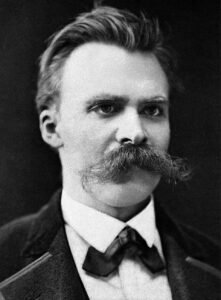
Experiments tell us what people tend to do. They say much less about what that means for how we should live. That is where Nietzsche and Greene come in, each read on his own terms: Nietzsche as philosophy, Greene as interpretation. For related reading on this site, see Philosophy and Mental Health, the Reading Room and Books and Ideas.
The takeaway: knowing the name of a bias does not make you immune to it. Fischhoff’s participants could not undo their own hindsight even when asked to ignore what they knew. What helps is slowing down at the moments when a mechanism usually switches on: in a crowd, after the outcome is known, or when a correction arrives too late.
You can read more about me on the About Me page and find every published essay under All posts.