Notes from Underground · The Grand Inquisitor — Book Reading Lab
PRACTICE EDITION 2 / THREE EXCERPTS
Read Underground and the Inquisitor
Read → answer → rehearse → compare
“I am a sick man…. I am a spiteful man.” Three times in a row the narrator of Notes from Underground tells you who he is, and in the very next sentence he starts to hedge: “I believe my liver is diseased.” This lab is about hearing those hedges. Each unit pairs a short passage with questions, word work and rehearsal notes, so that your voice keeps what a speaker claims apart from what he admits he does not know.
Each unit contains its own passage, so you do not need a separate book. These are short excerpts, not complete books.
How to practise
Spend two minutes reading, two minutes checking the meaning and two minutes drilling the words; then rehearse for three minutes and review for one.
Bold marks a suggested phrase focus; it does not mean shouting. In the respellings, CAPITALS mark the main stressed syllable. In the stress patterns, O is a stressed syllable and o an unstressed one.
For example, un-uh-TRAK-tiv = ooOo. Keep your own accent: the respellings are approximate UK guidance, not verified IPA.
The passages keep Constance Garnett’s public-domain wording. The coaching is an editorial addition, and the narrator’s claims remain his own: they are not medical guidance.
U1 · Claims and qualifications
The narrator describes himself, then qualifies what he says about his body.
Source: Notes from Underground, Part One, I. Opening five sentence units. The ellipsis remains a source boundary. Translation: Constance Garnett (1918), public domain; checked against Project Gutenberg eBook #600.U1-S01 / Underground narratorI am a sick man….
U1-S02 / Underground narratorI am a spiteful man.
U1-S03 / Underground narratorI am an unattractive man.
U1-S04 / Underground narratorI believe my liver is diseased.
U1-S05 / Underground narratorHowever, I know nothing at all about my disease, and do not know for certain what ails me.

Check meaning — reveal answers
Which phrase qualifies the bodily claim?
“I believe” limits his certainty.
What does “ails” mean here?
“What ails me” means what is wrong with me.
Does this establish a diagnosis?
No. The narrator admits that he is uncertain.
Words to practise
spiteful — intending to hurt or annoy.
SPEYET-fuhl · Oo
unattractive — not pleasing; disagreeable.
un-uh-TRAK-tiv · ooOo
liver — an organ named by the narrator.
LIV-uh · Oo
diseased — affected by disease.
di-ZEEZD · oO
ails — troubles; makes ill.
aylz · O
however — introduces contrast or qualification.
how-EV-uh · oOo
Sentence guidance — U1-S01 to S05
S01 · Language: The ellipsis suspends the claim. It comes from the source.
Performance: Try a 0.6s suspension. This is a timing choice.
S02 · Language: The frame repeats. The descriptive word changes.
Performance: Keep the frame steady. Let the changed word carry weight.
S03 · Language: un-uh-TRAK-tiv: ooOo. Connect “an” with “unattractive”.
Performance: Avoid escalating all three claims. Repetition can work through restraint.
S04 · Language: “I believe” marks uncertainty. Do not drop this qualifier.
Performance: Reduce certainty without adding fear. This is the narrator’s claim.
S05 · Language: “Know nothing at all” and “not know for certain” are two admissions. Preserve both negatives.
Performance: Let “However” reset the argument. Pause between ignorance and uncertainty.
Try changing the focus
“I BELIEVE my liver is diseased.”
“I believe my LIVER is diseased.”
Stressing BELIEVE foregrounds the uncertainty; stressing LIVER singles out the organ. Neither establishes a diagnosis.
Then read the whole passage again, keeping both negatives in S05.
U2 · Memory and imagined judgement
The narrator remembers being twenty-four and describes how he avoided his companions. Then he qualifies the judgement he believed they passed on him.
Source: Notes from Underground, Part Two, I, opening four prose sentences. Translation: Constance Garnett (1918), public domain; checked against Project Gutenberg eBook #600.U2-S01 / Underground narrator recallingAt that time I was only twenty-four.
U2-S02 / Underground narrator recallingMy life was even then gloomy, ill-regulated, and as solitary as that of a savage.
U2-S03 / Underground narrator recallingI made friends with no one and positively avoided talking, and buried myself more and more in my hole.
U2-S04 / Underground narrator recallingAt work in the office I never looked at anyone, and was perfectly well aware that my companions looked upon me, not only as a queer fellow, but even looked upon me—I always fancied this—with a sort of loathing.
Check meaning — reveal answers
How old was he then?
He says he was twenty-four.
What behaviour does he report?
He avoided conversation and eye contact.
Which wording questions his interpretation?
“I always fancied this”: it limits how certain the claim is.
Words to practise
solitary — living or being alone.
SOL-i-tuh-ree · Oooo
savage — here, someone living apart from society (the period’s wording).
SAV-ij · Oo
avoided — kept away from doing something.
uh-VOY-did · oOo
companions — here, his fellow clerks.
kuhm-PAN-yuhnz · oOo
queer fellow — older wording for an odd, eccentric person; a label.
kweer FEL-oh · O Oo
loathing — strong disgust.
LOH-dhing · Oo
Sentence guidance — U2-S01 to S04
S01 · Language: The age locates the memory. It is not his present age.
Performance: Reset into recollection. Keep the speaker’s identity consistent.
S02 · Language: “Even then” connects time periods. Keep the list before its extension.
Performance: Let the list build through rhythm. Avoid adding a diagnosis.
S03 · Language: MORE marks increasing withdrawal. Connect “avoided” with “talking”.
Performance: Choose one pause after “talking”. Do not gasp between actions.
S04 · Language: “I always fancied this” qualifies his interpretation. Do not present it as fact.
Performance: Drop into the parenthesis, then resume. Keep the self-correction audible.
Try changing the focus
Rehearsal fragments: “my companions LOOKED upon me” / “I always FANCIED this”.
Stressing LOOKED foregrounds an apparent action; stressing FANCIED foregrounds the qualification. Rehearse the fragments, but keep the full source sentence when you perform.
Try 0.3s around the parenthesis, and explain why those words matter.
U3 · A story inside dialogue
Ivan is telling his brother Alyosha a story, which he calls a poem. Alyosha questions its premise, and Ivan offers one possible interpretation.
Source: The Grand Inquisitor; Alyosha’s question and the beginning of Ivan’s answer. Five sentence units. Ivan’s speech continues beyond this excerpt. Translation: Constance Garnett (1912), public domain; checked against Project Gutenberg eBook #28054.U3-S01 / Alyosha“I don’t quite understand, Ivan.
U3-S02 / Alyosha; attribution: outer narratorWhat does it mean?” Alyosha, who had been listening in silence, said with a smile.
U3-S03 / Alyosha“Is it simply a wild fantasy, or a mistake on the part of the old man—some impossible quiproquo?”
U3-S04 / Ivan; attribution: outer narrator“Take it as the last,” said Ivan, laughing, “if you are so corrupted by modern realism and can’t stand anything fantastic.
U3-S05 / IvanIf you like it to be a case of mistaken identity, let it be so.

Check meaning — reveal answers
Who asks for clarification?
Alyosha asks Ivan.
What does “the last” identify?
The second option: mistaken identity.
Is Ivan establishing a historical event?
No. He simply allows one way of reading his story.
Words to practise
not quite — not completely.
not kweyet
fantasy — an imagined story or situation.
FAN-tuh-see · Ooo
quiproquo — a mix-up, one thing taken for another.
kee-proh-KOH
“Mistaken identity” supplies this context.
realism — representation resembling ordinary experience.
REE-uh-liz-uhm · Oooo
mistaken identity — confusing one person with another.
mi-STAY-kuhn eye-DEN-ti-tee
Alyosha / Ivan — provisional name guides.
uh-LYOH-shuh / ee-VAHN. These names were not verified.
Sentence guidance — U3-S01 to S05
S01 · Language: “Don’t quite” qualifies his understanding. Do not turn it into rejection.
Performance: Ask for understanding, not victory. The name guide is provisional.
S02 · Language: Separate question and attribution. The smile is text evidence.
Performance: Keep narration distinct from Alyosha. Do not laugh at the question.
S03 · Language: OR creates two alternatives. Here “quiproquo” suggests a mix-up.
Performance: Contrast the alternatives through pitch. Pause at the dash for reformulation.
S04 · Language: LAST refers to mistaken identity. Preserve the conditional IF.
Performance: The source specifies laughter. A hint in delivery is enough.
S05 · Language: The permission remains conditional. It does not settle story truth.
Performance: Offer the reading without a verdict. End without adding certainty.
Try changing the focus
“What does it MEAN?”
“WHAT does it mean?”
Stressing MEAN asks for significance; stressing WHAT can intensify the request. Neither needs shouting.
Read with a partner, then swap the roles of Alyosha and Ivan. Keep the narrator’s attributions distinct.
Why listen for the hedges?
All three passages turn on the same small move: a speaker makes a claim and then limits it. The underground man announces that he is sick, then says only that he believes his liver is diseased and admits that he does not know what is wrong with him. Remembering his office, he reports that his companions looked upon him with a sort of loathing, then qualifies it: he always fancied this. In the third passage Ivan does not defend his story at all; he lets Alyosha take it however he likes. If you rush through those qualifiers, the speaker sounds more certain than the text allows.
+------------------------+
| CLAIM                  |
| "I am a sick man"      |
+------------------------+
            |
            v
+------------------------+
| QUALIFIER              |
| I believe / fancied   |
+------------------------+
            |
            v
+------------------------+
| SPEAKER                |
| who limits the claim?  |
+------------------------+
            |
            v
+------------------------+
| VOICE                  |
| keep the hedge audible |
+------------------------+
Reading aloud is a useful test of whether you have noticed them. In a series of experiments, MacLeod and colleagues (2010) found that words read aloud during study were remembered better than words read silently, a finding they named the production effect. Those studies used word lists, so they show an advantage for memory, not proof that performance improves interpretation; here, the voice is simply a way of making your interpretation audible.
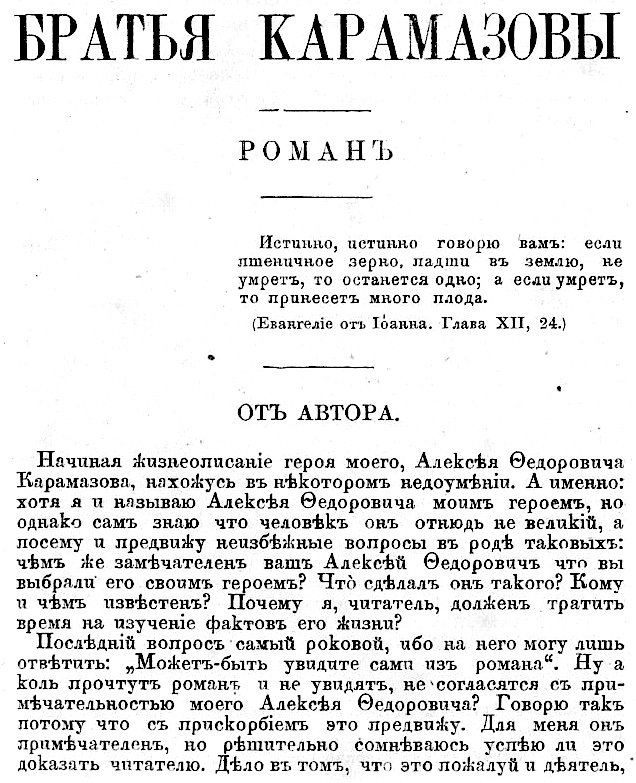
A word about the text itself. Dostoevsky wrote in Russian, and his own works are long out of copyright: Notes from Underground was first published in 1864, as Encyclopaedia Britannica notes, and “The Grand Inquisitor” is the fifth chapter of Book V of The Brothers Karamazov. An English translation, however, is a separate work. The wording on this page is Constance Garnett’s own translation, which is in the public domain, checked word for word against Project Gutenberg (Notes from the Underground and The Brothers Karamazov). Ralph E. Matlaw’s 1960 revision of Garnett, reissued by Plume, is still in copyright and is not quoted here.
The takeaway: before you decide how a line should sound, find the words that limit it (I believe, I always fancied this, if you like) and keep them audible. The speaker’s doubt is part of the meaning, not something to hurry past.
More to read: the Reading Room lists every book studio on this site, and the Notes from Underground audiobook guide gives the pronunciation scripts for these passages. For a narrator who reports what he sees and what he concludes, try the Sherlock Holmes reading lab. The lesson Inference in reading: what the text doesn’t say practises the same kind of close reading, and further essays on books are collected in Books and Ideas.
Switch book or mode
Fyodor Dostoevsky / 03
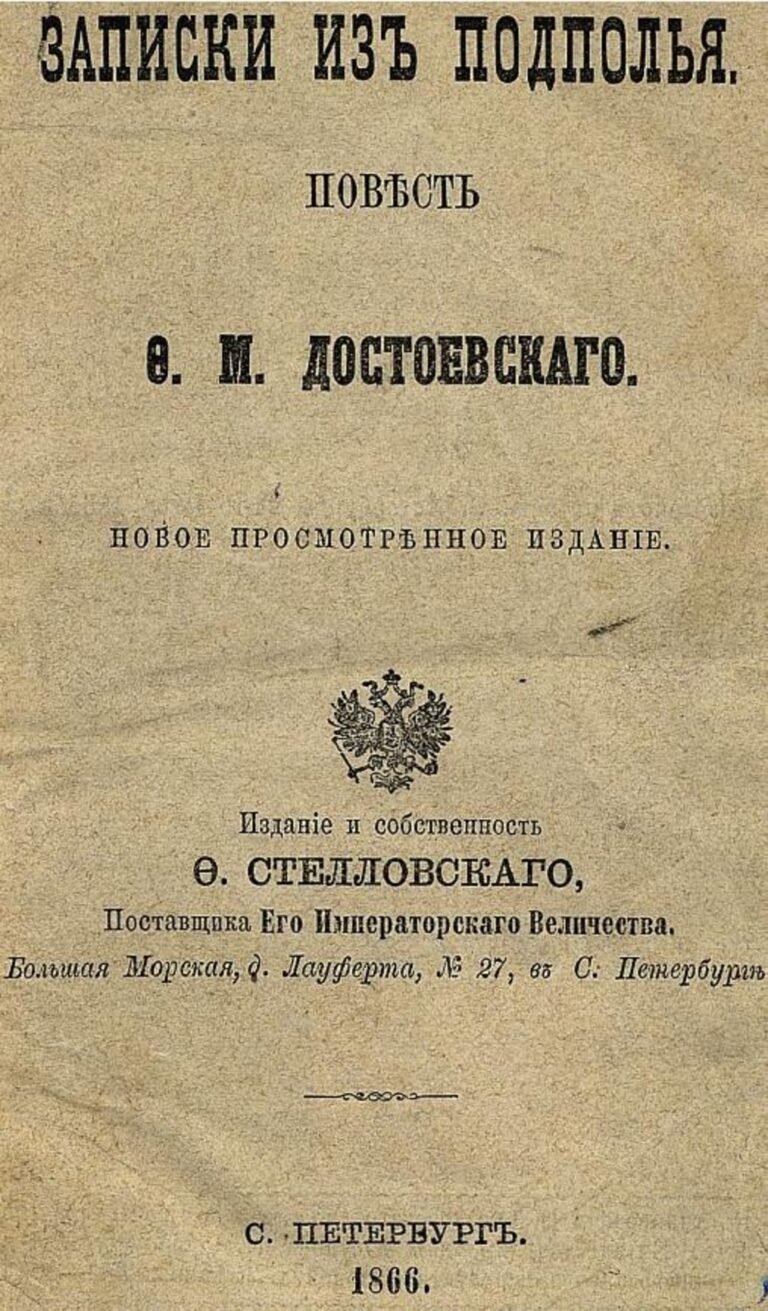
Notes from Underground
Book Reading Lab · The Grand Inquisitor
This is a companion guide, and no recording is included. Open the cards to reveal the notes.
Core method
Read the syntax before you act the psychology. Mark reversals, negation, qualification, correction and repeated self-address, because those features determine where the prominence falls.
Notation
/Meaning
micro-pause
//Meaning
thought switch
///Meaning
structural silence
>Meaning
acceleration
…Meaning
suspension
boldMeaning
nucleus
°quiet°Meaning
reduced intensity.
Notes from Underground
Part One: a philosophical monologue. Keep the voice conversational enough to stay intelligible, put the prominence on contradiction, negation and self-correction, and do not make each sentence angry.
Part Two — Apropos of the Wet Snow: the text moves from abstract argument into social humiliation and memory. The pace can become less regular, but dialogue should still sound cleaner than the internal narration.
The Grand Inquisitor
The main performance problem is sustained argument. Build long thought groups and place one clear nucleus in each. The Inquisitor gains force from control, and the silence around Christ should not turn into sentimental music.
Lexis targets
- consciousness and self-evaluation
- advantage and reason
- humiliation and status
- freedom, authority, miracle, obedience
- argument connectors and concessions
Meaning-to-sound checks
- What is being corrected?
- What is contrasted?
- What is NEW?
- Which word carries the nucleus?
- Does moving it change meaning?
- Can the line work with fewer acting marks?
RECORDING / YOUR SPACE
Video reading
The recorded performance will appear here.