Books & Ideas
books · ideas · practical guides
What does it take to leave an eleven-year comfort zone and start a new life from ground zero? That question lies at the heart of the practical guide below.
This section of My Daily Journal is for book summaries, philosophy, psychology and self-development writing, plus practical life guides from personal journeys.

What is published so far
Not all of that is written up yet: the book summaries are still to come. Here is what you can read today.
Reading Room
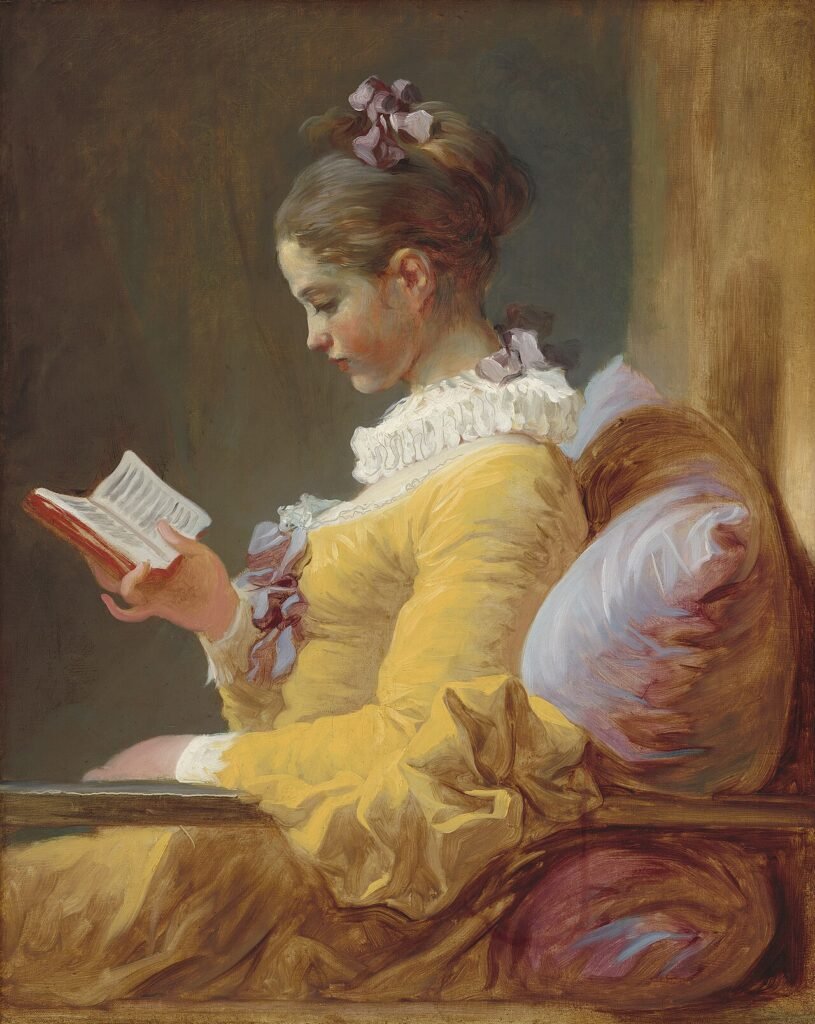
The Reading Room is where I work with whole books and excerpts. Each studio asks you to read a passage, find the evidence, test your interpretation and then rehearse your voice.
- George Orwell: All Art Is Propaganda (full text available privately; short quotations only for copyright reasons)
- Amor Towles: A Gentleman in Moscow (full text available privately; short quotations only for copyright reasons)
- C. S. Lewis: On Writing (and Writers) (full text available privately; short quotations only for copyright reasons)
- Leo Tolstoy: Anna Karenina (full text available privately; short quotations only for copyright reasons)
- Arthur Conan Doyle: Sherlock Holmes (excerpts)
- Fyodor Dostoevsky: White Nights and other stories (excerpts) (full text available privately; short quotations only for copyright reasons)
- Fyodor Dostoevsky: Notes from Underground and The Grand Inquisitor (companions)
- The Last Question: a seven-scene synopsis of the Isaac Asimov story
Philosophy and human nature
Start with Philosophy and Mental Health: An Introduction, then read the essays Why I Teach, The Stoic Teacher and Bad Faith and the Language Learner. The Human Nature Dossiers are my research notes on judgement and group behaviour. The dossiers themselves are still in draft, but the page already explains the method and has a Bias Lab you can try.
A practical guide: French residency and citizenship through marriage
Why I wrote it
A long time ago, I met my wife in Sydney, Australia. We were not sure whether we should be together, but eventually we decided to get married. The problem was that I was not Australian: I had been living in Australia for over ten years on a visa. Her native country is France; mine is Bangladesh.
I had to make a dramatic decision: to leave my comfort zone of eleven years in Sydney and start a new life from ground zero. Going back to Bangladesh was a huge risk. I was not sure whether my family would accept my wife, and she would face culture shock, security concerns, and challenges with food, transport and bureaucracy.
The route at a glance
+------------------------------+
| 1. MARRIAGE ABROAD           |
| consulate file, interview,   |
| bans, local wedding          |
+------------------------------+
       |
       v
+------------------------------+
| 2. TRANSCRIPTION             |
| French record of the         |
| marriage, livret de famille  |
+------------------------------+
       |
       v
+------------------------------+
| 3. SPOUSE VISA (VLS-TS)      |
| up to 1 year; validate it    |
| within 3 months of arrival   |
+------------------------------+
       |
       v
+------------------------------+
| 4. MULTI-YEAR CARD           |
| 'vie privee et familiale',   |
| valid for 2 years            |
+------------------------------+
       |
       v
+------------------------------+
| 5. 10-YEAR RESIDENT CARD     |
| possible after 3 years of    |
| marriage                     |
+------------------------------+
       |
       v
+------------------------------+
| 6. NATIONALITY               |
| declaration after 4 years    |
| of marriage (5 in some       |
| cases); French at B2         |
+------------------------------+

The process, step by step
These are the steps as I lived them. Where the official rules are more precise, or have changed, I say so; the official pages are on Service-Public.fr, the French government’s information site.
- Contact the French embassy in your country of origin (not the country where you currently live, if you are not a citizen there). Officially, the French spouse applies for a certificat de capacité à mariage at the French embassy or consulate for the place where the wedding will be held (Service-Public: marriage of a French national abroad).
- Provide the required documents (birth certificate, proof of address and so on), attested by the ministry and translated by an approved translator. This costs money and takes time.
- You will receive a convocation, an official letter inviting you to an interview.
- Attend the interview. You and your spouse may be interviewed separately, then together: officially, the consular officer interviews the couple together and can also see each of you alone. Answer honestly; it can be stressful.
- The marriage process is launched with the publication des bans, a public notice posted for ten days at the consulate and, if either of you lives in France, at the local mairie.
- Get married locally, with an authorised lawyer who specialises in marriages between foreign and local nationals.
- Get the documents stamped by the Ministry of Justice and the Ministry of Foreign Affairs, have them translated into French, and submit them.
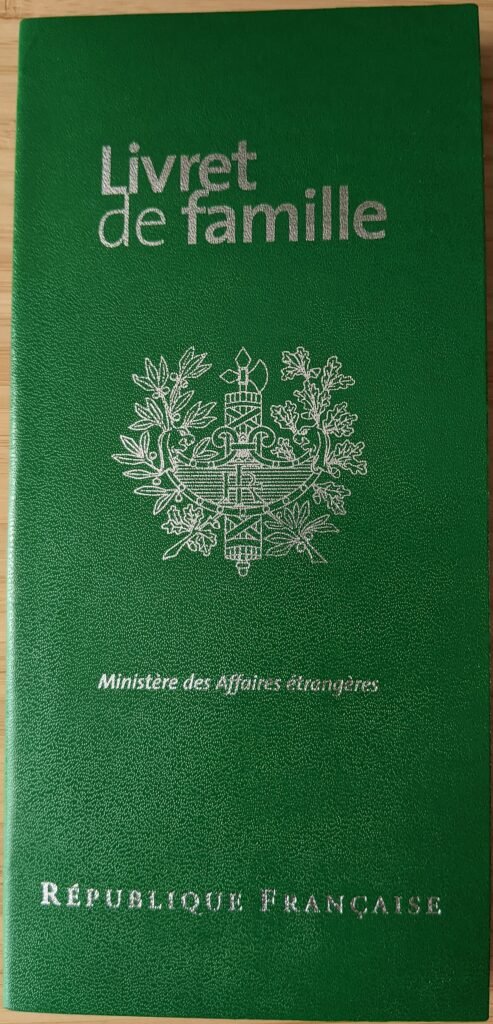
- Receive the official livret de famille and marriage certificates. These come once the consulate has transcribed the marriage into the French civil register, and the transcription is also what allows the marriage to count for a residence permit.
- Apply for the long-stay visa for the spouse of a French citizen (visa de long séjour valant titre de séjour, conjoint de Français). Ours took two months. Note that this is not regroupement familial (family reunification), which is a separate procedure for the families of foreign residents (Service-Public: the foreign spouse of a French citizen).
- Within three months of arriving in France, the visa must be validated. In our case, that meant an OFII stamp, which took nine months because of staff shortages; today the validation is done online. OFII also calls you for a medical check-up, and through the contrat d’intégration républicaine you complete compulsory civic training, plus French language training if your level requires it. The ‘vie privée et familiale’ status of a spouse of a French citizen does allow you to work.
- Receive your residence card (titre de séjour). After the first year on the visa, the multi-year card is valid for two years and is renewed every two years; after three years of marriage, you can apply for a ten-year resident card instead.
- Apply for social security through ameli.fr; in my experience, this was possible even before the residence card arrived. If you are not working, health cover generally starts after three months of stable residence in France.
- Open a current bank account. A Livret A, the state-regulated savings account, is worth having too, but it is not an everyday account. If a bank refuses to open a current account, the Banque de France’s droit au compte procedure can designate one that must. Finding an apartment can be difficult without a CDI (a permanent contract) and a guarantor.
- If you drive, exchange your licence or pass the Code de la route, the French theory test. Only licences from certain countries can be exchanged, and you must apply within one year of the start of your residence.
- For long-term residence or citizenship, take French courses and sit a recognised exam. Since 1 January 2026, nationality by marriage requires French at level B2 in speaking and writing, shown by a diploma at that level, such as the DELF B2, or by a TCF or TEF certificate less than two years old (Service-Public: proving your level of French). You can declare French nationality after four years of marriage, provided that you have lived together continuously and your spouse is still French. It becomes five years if you have not lived in France for three years since the wedding and your spouse was not on the consular register while you lived abroad. You must also have no disqualifying criminal conviction.
If you need to write to the préfecture during the process, my lesson The Letter That Got Me Through Immigration explains how to structure a formal letter.
The takeaway: each stage unlocks the next. The transcription opens the way to the visa, the visa to the residence cards, and four years of marriage to the nationality declaration. The rules change, as the 2026 B2 requirement shows, so check each step against Service-Public.fr before you rely on this guide.
VIVE LA FRANCE!
This is a practical guide based on personal experience, not legal advice. The process is similar for others marrying a French citizen, although Algerian and Tunisian nationals follow some different rules.
More from the journal: My Daily Journal · Europe Travel · Photography and Software · Creator and Life