Faro and Lisbon: the Bone Chapel, Belém Tower and Pastéis de Belém (100 Days in Europe, Part 13)
Part 13 of 24 in the 100 Days Europe Travel Journal, our 100 days across Europe by train, plane, ferry and bus.
My notes for this part are short: one line for Faro and one for Lisbon. A short list can still carry a long history, though. In Faro, a cathedral keeps a chapel of human bones. In Lisbon, a stone tower guards the old entrance to the port, and a pastry shop dates its custard tarts to 1837. This part takes those two lines and asks what each name on them actually is.
The route is simple to place. After Seville (Part 12, Days 80–82), the video above follows the bus from Seville to Faro, in the Algarve, in southern Portugal. From Lisbon we went on to Madeira (Part 14, which begins on Day 90). So Faro and Lisbon sit between those two parts.
Faro: an old town, a cathedral and a bone chapel
Faro is an old, historic city. We saw the cathedral with its bone chapel and a sunset at the port. At the first restaurant we went to in Faro, the complimentary port wine was very generous.

A cathedral built in layers
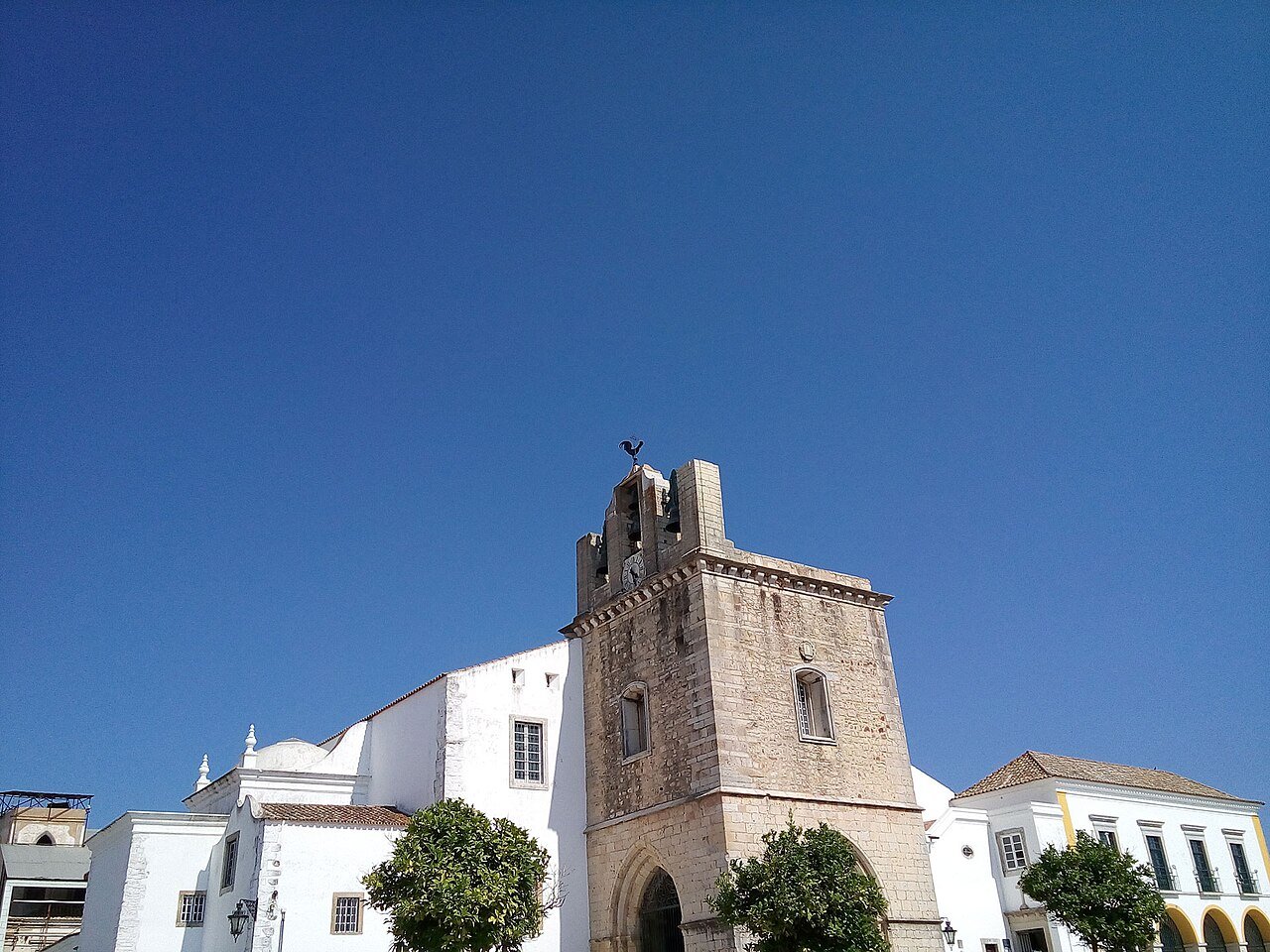
Faro’s cathedral, the Sé, was built in layers. According to the cathedral’s own heritage page, it was built after the Christian reconquest of 1249, on the site of an early Christian basilica that had been turned into a mosque during the Islamic period. The sturdy bell tower, the Gothic chapels of the transept and the pointed-arch doorway survive from the medieval church; after the English sack of the city in 1596, long rebuilding work added Doric columns, and the 17th and 18th centuries brought the gilded Baroque woodwork inside.

Two bone chapels in Faro
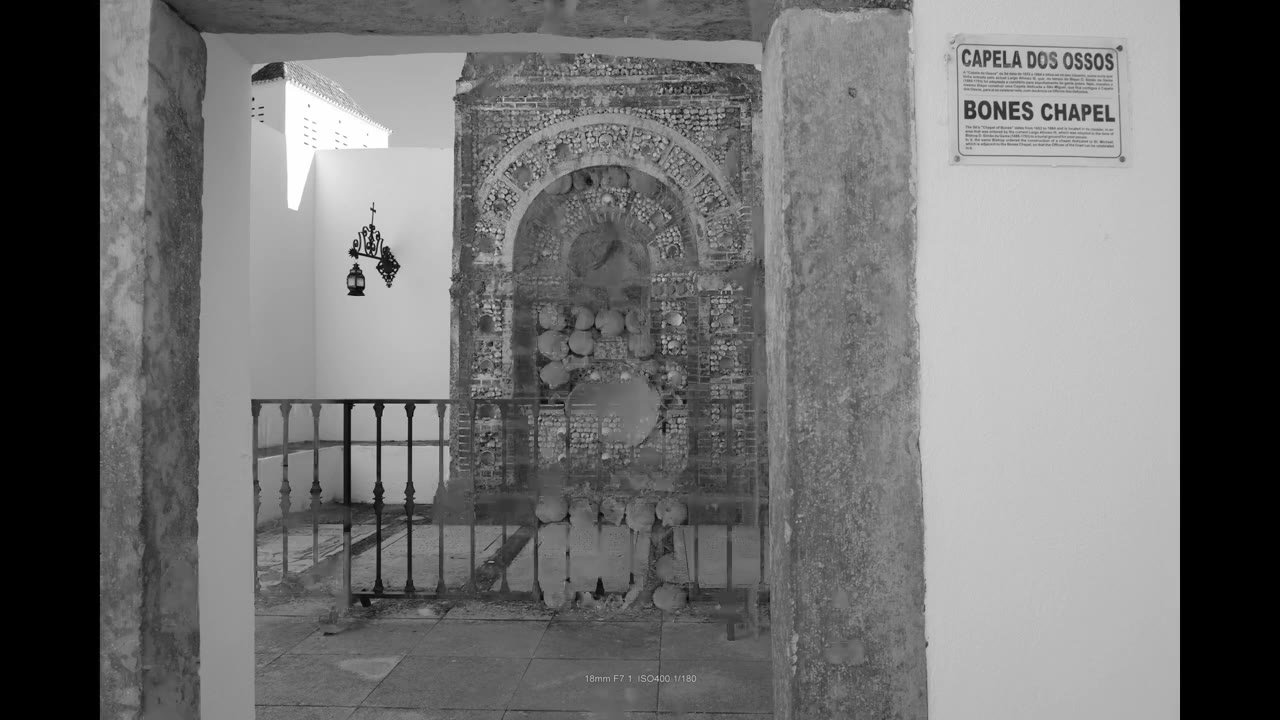
My notes place the bone chapel at the cathedral, and the same heritage page lists a Capela dos Ossos, described as 17th-century funerary art, in the cathedral’s cloister. Faro has a second one: the Capela dos Ossos of the Carmo church, which the Faro city council says was built in 1816 in the old cemetery attached to the church. If you visit Faro, note that there are two bone chapels, so you can tell which is which.
Lisbon: a viewpoint, a lift and Belém
The Lisbon line in my notes reads: the Miradouro da Senhora do Monte, the Elevador de Santa Justa, the Tower of Belém, the Jerónimos Monastery and Pastéis de Belém (since 1837). Each of those names has its own story.
Miradouro da Senhora do Monte
Visit Lisboa, the city’s tourism board, calls this viewpoint one of Lisbon’s major landmarks and one of the calmest places from which to view the city. From it you see the Graça church and the castle, the river and the Tagus estuary, and the rooftops of the Baixa. Visit Lisboa also associates the spot with Afonso Henriques, Portugal’s first king, who, according to the board, assembled his troops there to conquer Lisbon, and it dates the chapel of Our Lady of the Mount to 1147.
Elevador de Santa Justa
The Santa Justa Lift, also called the Carmo Lift, links Rua de Santa Justa in the Baixa with the Largo do Carmo above it. Carris, Lisbon’s transport company, says it opened on 10 July 1902, was designed by Raoul Mesnier du Ponsard, and ran on steam until it was fitted with electric motors in 1907. Portugal’s heritage register describes it as the city’s only vertical lift: two linked metal towers 45 metres high, with neo-Gothic arches and a viewpoint on top. A practical note: at the time of writing (22 October 2026), Carris lists the lift as temporarily closed, so check before you go.
Belém: the Tower and the Jerónimos Monastery
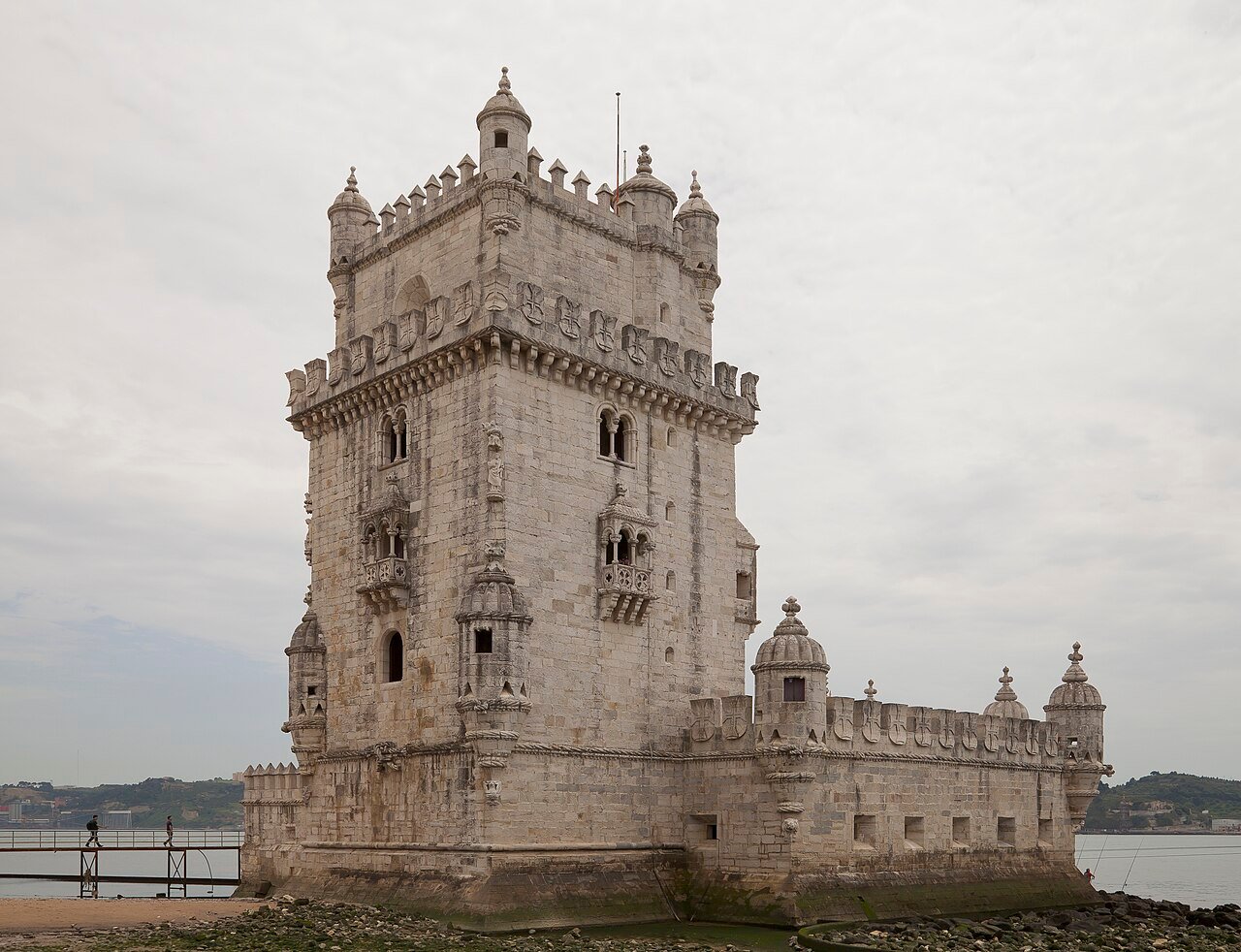
The Tower of Belém and the Jerónimos Monastery are listed together by UNESCO as a single World Heritage site, inscribed in 1983. UNESCO explains that construction of the monastery, a royal foundation of King Manuel I, began in 1502, and that Francisco de Arruda built the tower around 1514 to commemorate Vasco da Gama’s expedition and to defend the port of Lisbon. Both stand on the bank of the Tagus at the entrance to the port, and UNESCO calls the complex one of the most representative examples of Portuguese power during the Age of Discoveries.

Pastéis de Belém: what “since 1837” means
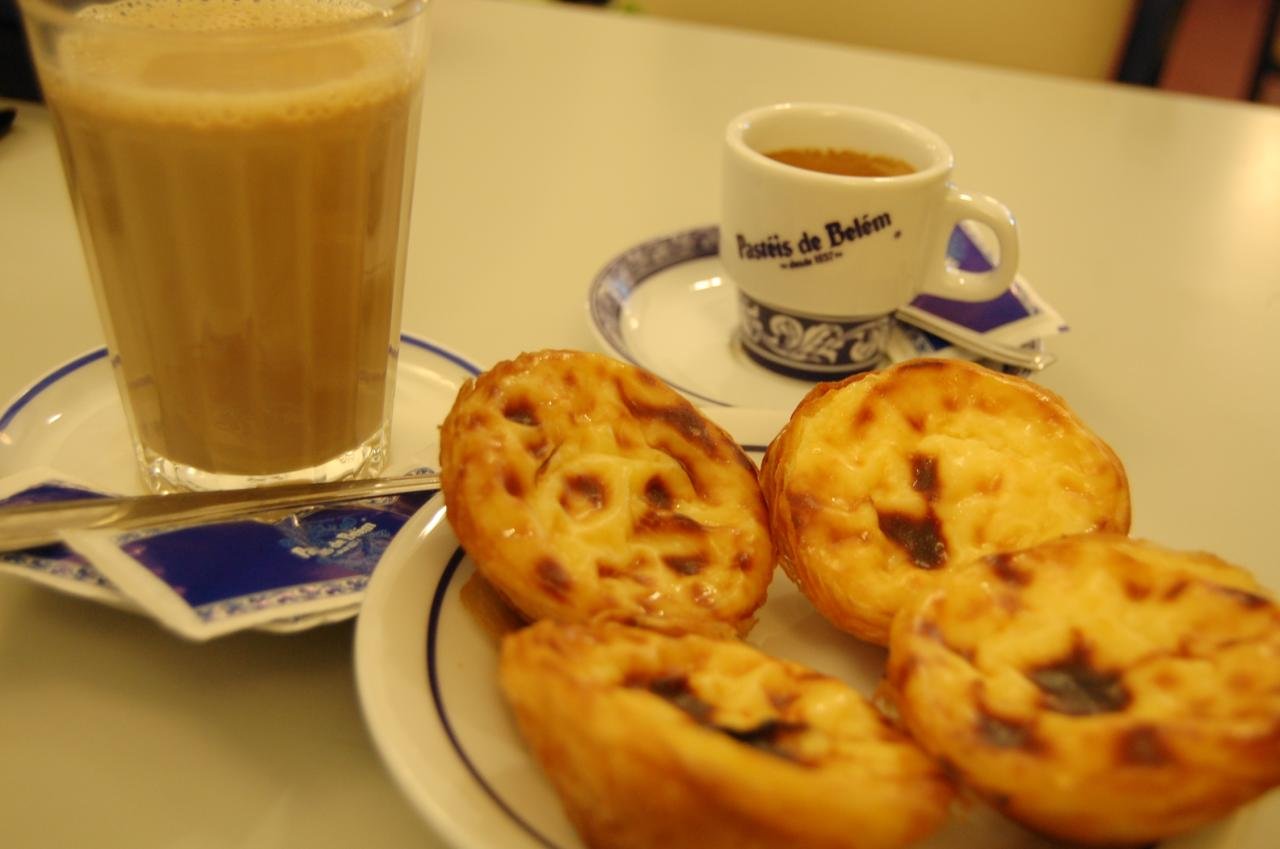
The date in my notes matches the shop’s own account. The Pastéis de Belém history page says that after Portugal’s convents and monasteries were closed in 1834, someone from the monastery offered sweet pastries for sale in a small general store attached to a sugar-cane refinery next to Jerónimos, and that baking began in the buildings attached to the refinery in 1837, following a secret recipe from the monastery. Portugal’s national register of traditional products (DGADR), which also dates the house to 1837, adds a careful note: the monastic origin is a legend, and “nothing is proven”. So the date is firm, and the story behind it is tradition.

FARO AND LISBON: A TIMELINE
(dates from the sources cited)

1249
  Faro taken in the Christian
  reconquest; cathedral
  built after this
      |
      v
1502
  Jerónimos Monastery begun
      |
      v
c. 1514
  Tower of Belém built
      |
      v
1596
  English sack of Faro;
  rebuilding begins
      |
      v
17th century
  cathedral's bone chapel
      |
      v
1816
  Carmo bone chapel, Faro
      |
      v
1837
  Pastéis de Belém first baked
      |
      v
1902
  Santa Justa Lift opens
      |
      v
1983
  Belém monastery and tower on
  the World Heritage List
The takeaway: a two-line diary entry can hold several centuries. Faro’s cathedral was built after 1249 and has its own bone chapel, while the second one, at the Carmo church, dates from 1816. In Lisbon, the Jerónimos Monastery (begun 1502) and the Tower of Belém (around 1514) are one World Heritage site, the Santa Justa Lift dates from 1902, and Pastéis de Belém has been baked since 1837, even if its monastic recipe story remains a legend.
100 Days Europe Travel Journal · Part 13 of 24
← Previous: Seville: the Giralda, Royal Alcázar and Plaza de España (100 Days in Europe, Part 12) | Next: Madeira: Porto Moniz Lava Pools, Cabo Girão and Funchal (100 Days in Europe, Part 14) →
More from the journey: the Europe Travel page (all fifteen parts and the whole trip in one minute) · the Portugal posts · Part 12: Seville · Part 14: Madeira · Part 15: Porto · Part 1: Geneva