Naples, Pompeii and Lecce: Castel Nuovo, Vesuvius and Real Neapolitan Pizza (100 Days in Europe, Part 6)
Part 6 of 24 in the 100 Days Europe Travel Journal, our 100 days across Europe by train, plane, ferry and bus.
I made one big mistake before Naples: I read the bad reviews. By the time we arrived, I almost expected North Korea. What I found was loud, messy and crowded, and on our night out I didn’t feel unsafe. That gap between reputation and reality is the thread of this part, and it applies to my own notes too: my original notes put Naples’s castle and cathedral in the 12th century, and both are later. I have corrected them below, with sources.
This part covers three stops in southern Italy. I have kept them in the order of the title, but on the ground the route ran the other way: Lecce came first (Day 53, after Bari, as my Europe Travel page records), the video above follows the train from Lecce to Pompeii, and Naples was our last stop in Italy before we flew to Athens (Part 7).
Naples: reputation and reality
Before Naples, the warnings were everywhere: “warzone”, “mafia”, “kidnapped”, “mugged in daylight”, “don’t walk at night”. Half of it is nonsense and half is true, but the true half is true of any big city, London, Paris and New York included.
We had only one full day there, so I can’t give a final verdict on safety. The mafia (the Camorra) influences local people and businesses, not tourists much.
We arrived after a beautiful coastal train ride. The walk from the station to the apartment was crowded: it was a busy Thursday, the streets were narrow, the old buildings stood close together and clothes hung outside. It looked like New Delhi, Hanoi or Kathmandu (all in safe countries), but it was hard to imagine an Italian city like that: loud and messy, with shopkeepers screaming, roads that were not flat, and people and vehicles sharing the same space.
The owner’s father, on his Vespa, greeted us in a sweet, heavy voice. Naples was our last stop in Italy, and it was the first time I communicated in Italian: a few broken words, which delighted him.
The apartment was not bad: well equipped, with yellow walls, modern inside and typical old Naples outside.
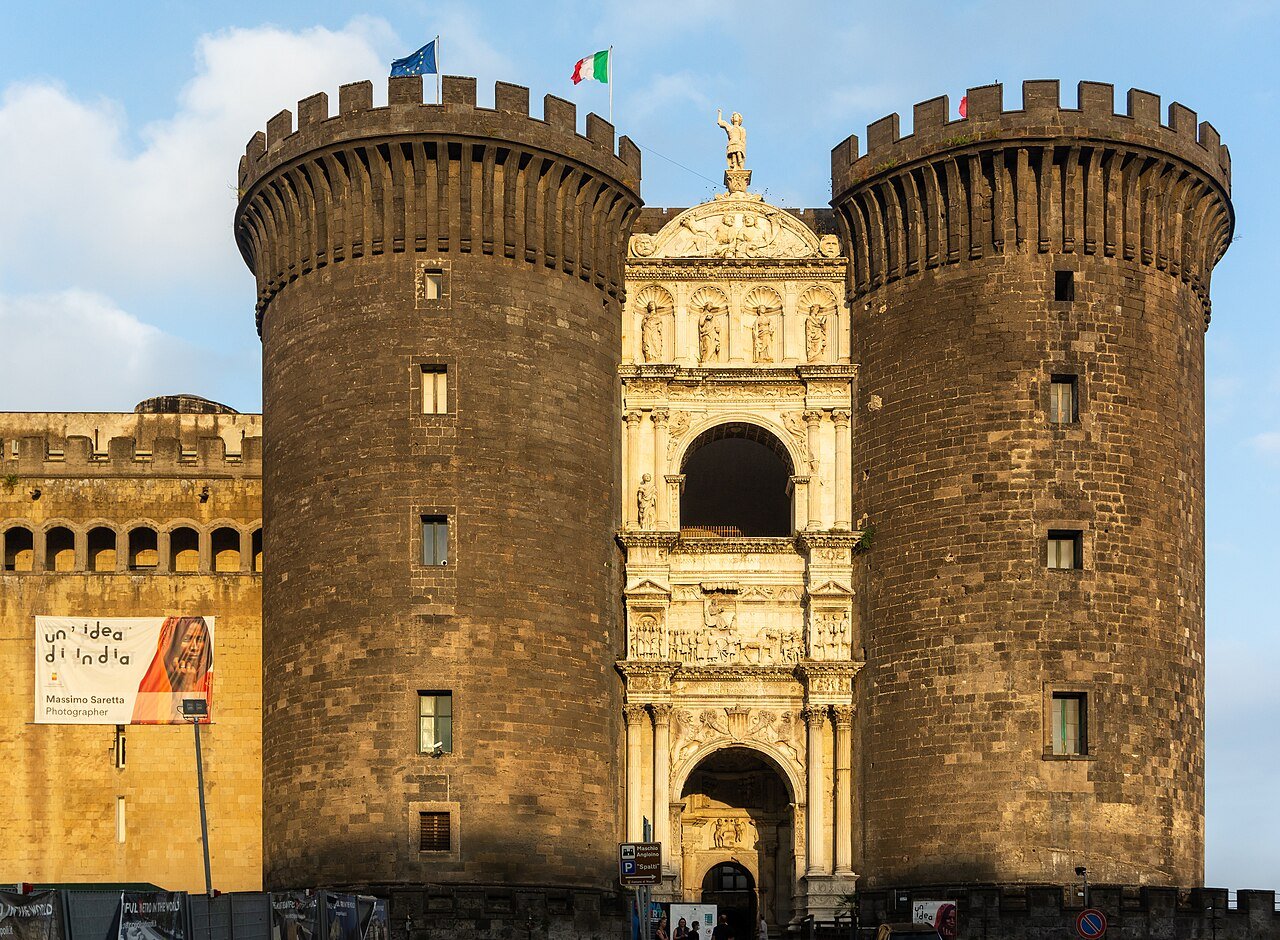
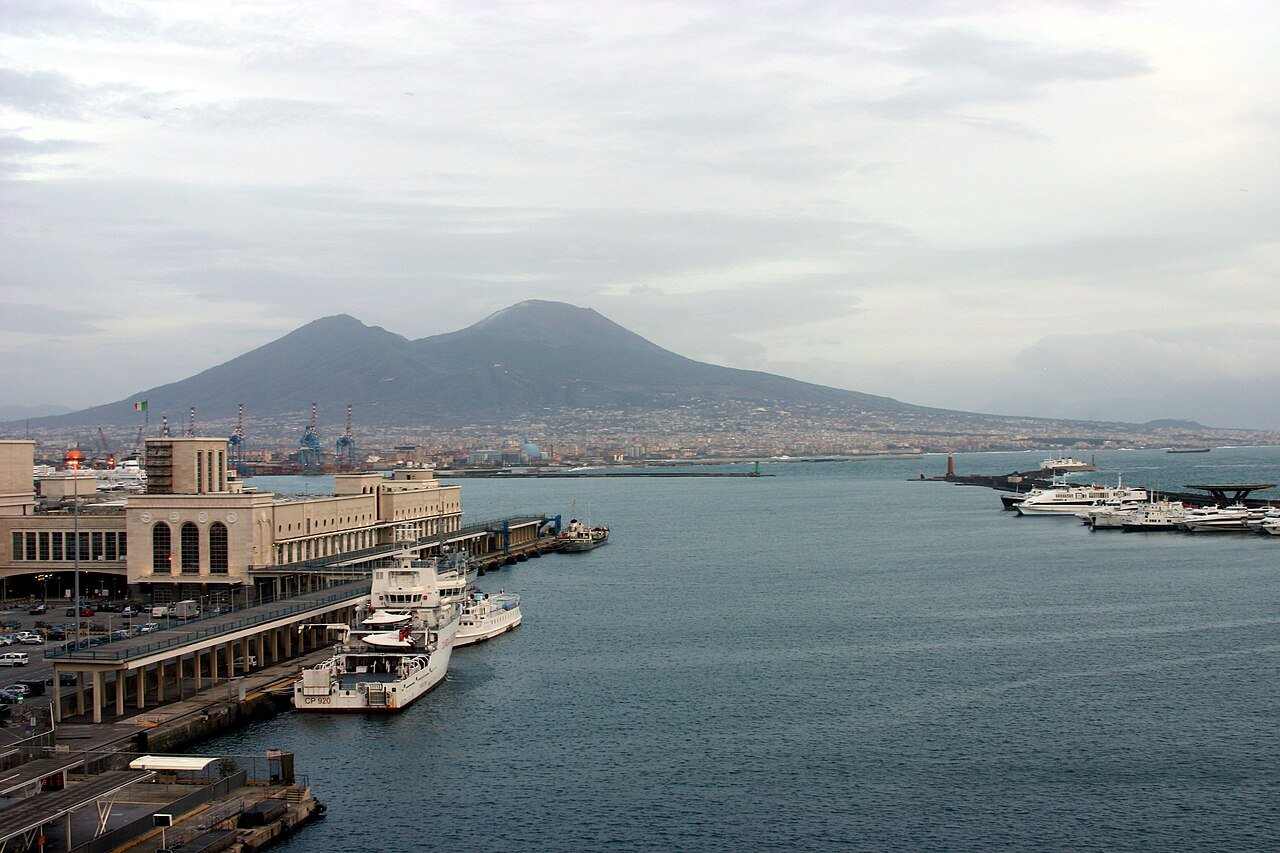
We walked with extra precautions. We saw Castel Nuovo, the castle by the port, the port itself with Vesuvius in view, and the cathedral. (My first notes called both buildings 12th-century; they are later, as explained below.) The real experience was loud people, heavy traffic, narrow uneven streets, rubbish, an osteria or trattoria every two to five metres, and old buildings. Unlike in Rome, nobody approached us to sell anything. We were left alone.
In the evening we went out for pizza in its birthplace. Our host gave us recommendations, and we went to Mattozzi’s, which was hard to find (Google was not much help). The streets were vibrant, with people out and bright lights, and I didn’t feel unsafe. The pizza was out of this world, and that is not just a happy tourist’s palate talking: our backgrounds and experience have given us a good knowledge of food. We got back happily and safely.
My verdict: Naples is as safe, and as dangerous, as any big metropolis. Use common sense. The mafia cares less about tourists. The rubbish problem is sad, and it is linked to the landfills, but it shouldn’t stop you visiting. Come for the pizza alone.
Older than it looks, younger than I wrote
Castel Nuovo is not a 12th-century castle. According to Italy’s Ministry of Culture, it was built for Charles I of Anjou from 1279, to a design by the architect Pierre de Chaule, and after Alfonso of Aragon conquered the kingdom in 1442 it was gradually rebuilt for the defensive needs of the mid-15th century. So much of what you see today, including the five round towers and the triumphal arch that Alfonso built to celebrate his entry into the city, belongs to that Aragonese rebuilding; the Palatine Chapel is the only surviving part of the Angevin castle.

The cathedral is not 12th-century either. The City of Naples’ World Heritage website says it was completed by Robert of Anjou in 1313, after work begun in the late 13th century under the Angevin kings. It also incorporates much older buildings: inside are the Basilica of Santa Restituta and the Baptistery of San Giovanni in Fonte, both from the 4th century. In Naples, in other words, a single date rarely tells the whole story of a building.
Pizza: a craft on UNESCO’s list
Naples is usually called the birthplace of pizza. What UNESCO formally recognises is the craft: in 2017 it added the Art of Neapolitan ‘Pizzaiuolo’ to its Representative List of the Intangible Cultural Heritage of Humanity. UNESCO describes four phases, from preparing the dough to baking it in a wood-fired oven with a rotatory movement by the baker, and notes that the practice originates in Naples, where about 3,000 pizzaiuoli live and work. Knowing that, a good Neapolitan pizza looks less like hype and more like a living tradition.
Pompeii: a day without the touts
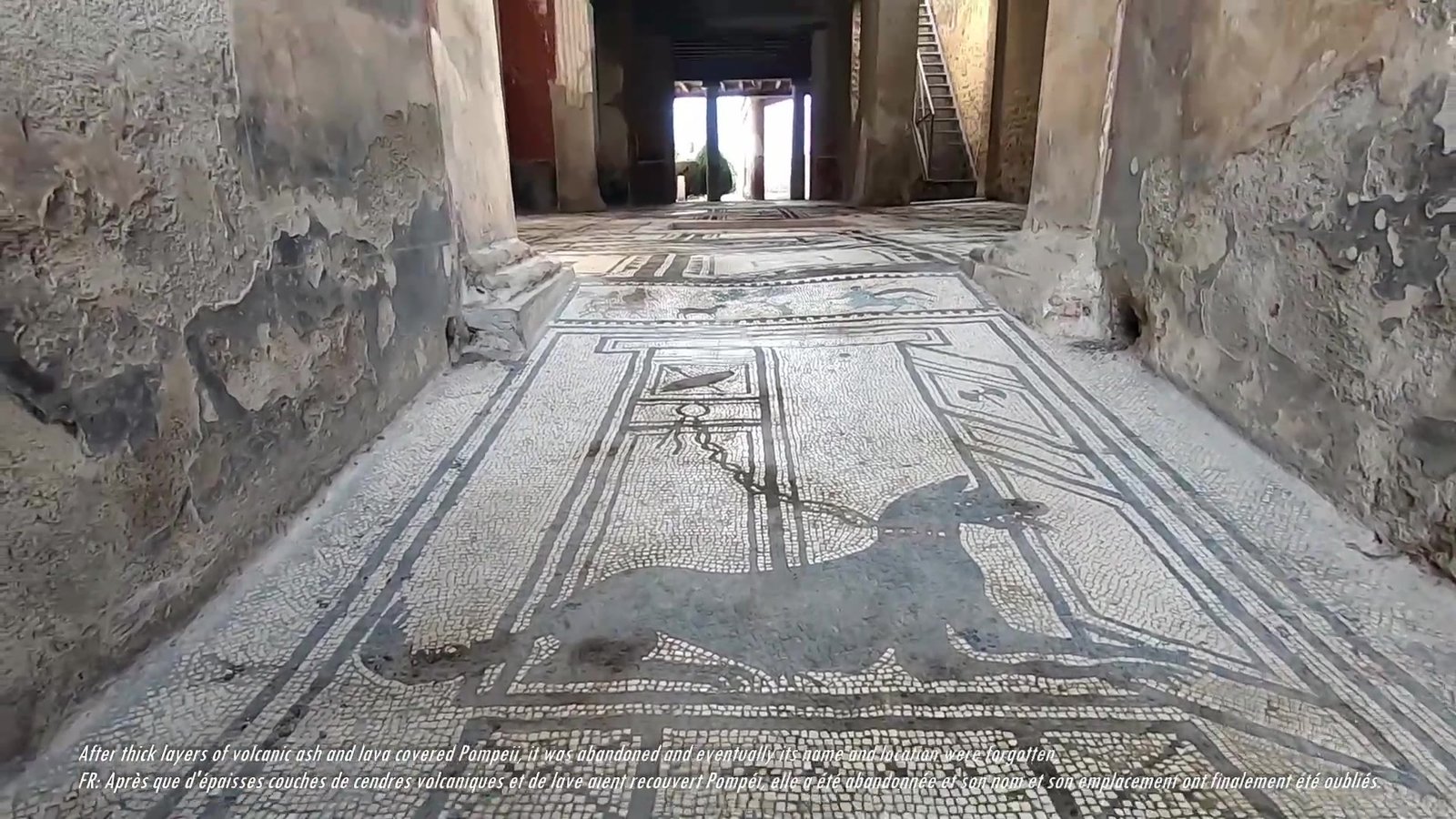
Pompeii was a relaxed day. The woman at the main tourist office was helpful. Many private agents in yellow jackets present themselves as “official” and will cross the line to sell you guides, tours or tickets to skip the queue. The actual tourist office is in front of a church with a long name, after a little park. We got a map there from a lovely, helpful lady. Download the official guide before you go: group tours are a pain because they leave you no freedom. My subjective suggestion is to skip group tours, read up in advance (Google, YouTube) and enjoy the freedom. The agents are annoying, but smile and say, “We have everything we need.”
The volcano in the view
The Vesuvius we could see from the port in Naples is the volcano that buried Pompeii. According to UNESCO’s World Heritage listing, when Vesuvius erupted in AD 79 it engulfed the Roman towns of Pompeii and Herculaneum; Pompeii was buried largely by a thick layer of volcanic ash and lapilli. The towns have been progressively excavated and opened to the public since the mid-18th century, and the sites were inscribed on the World Heritage List in 1997.

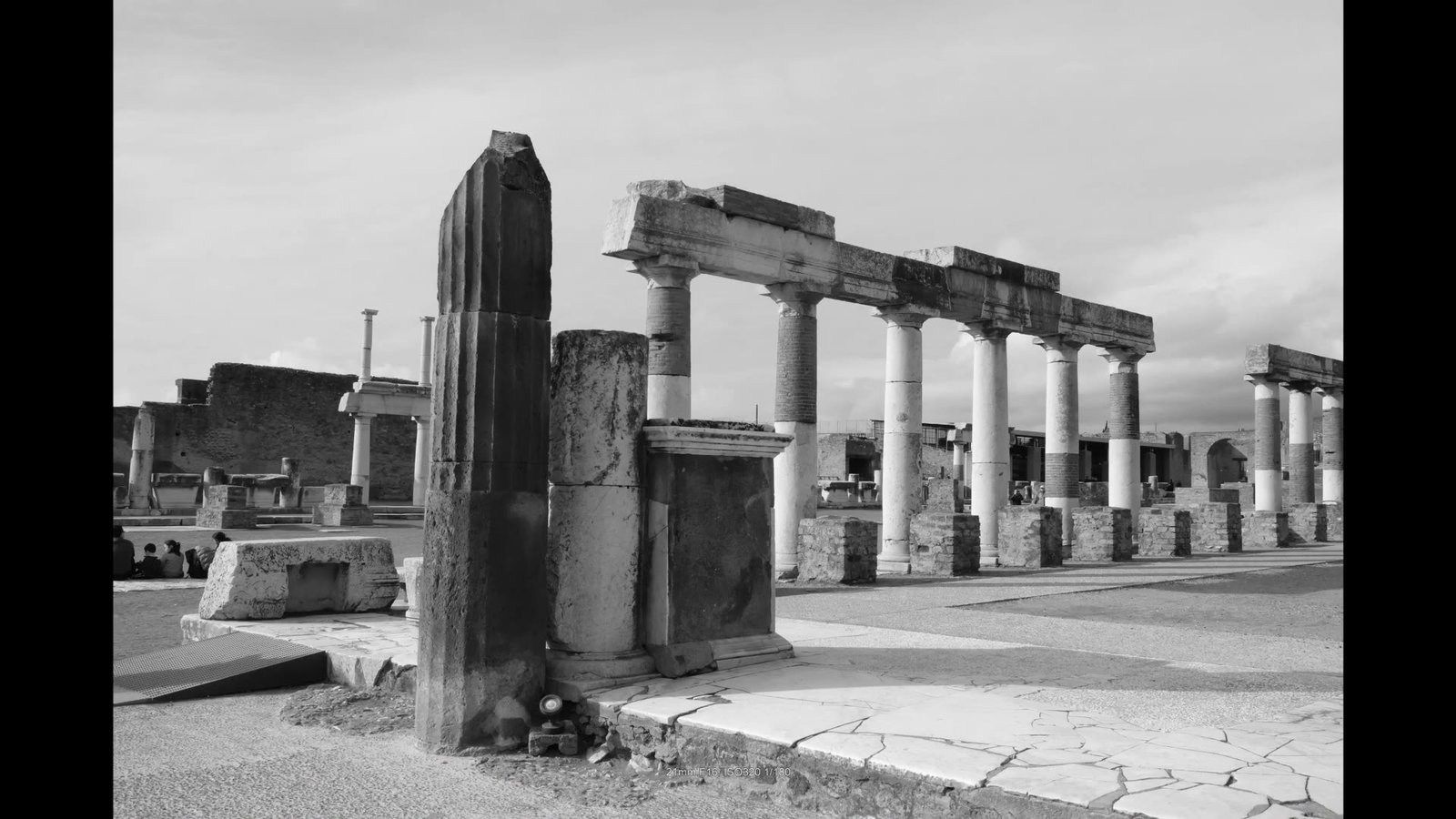
UNESCO describes Pompeii, with its excavated area of 44 hectares, as the only archaeological site in the world that gives a complete picture of an ancient Roman city. Its main forum, shown in the black-and-white video still above, is flanked by public buildings such as the Capitolium, the Basilica and temples. Because the ash also preserved spaces where bodies had been, excavators could pour plaster into those voids and make casts of the victims, people and animals alike. That is why a quiet day there, with a map and no tour group, can still feel crowded with history.
NAPLES AND VESUVIUS: A TIMELINE
(dates from the sources cited)

AD 79
  Vesuvius buries Pompeii
      |
      v
1279
  Castel Nuovo begun for
  Charles I of Anjou
      |
      v
1313
  cathedral completed under
  Robert of Anjou
      |
      v
1442
  Alfonso of Aragon takes the
  kingdom; castle rebuilt
      |
      v
mid-18th century
  excavations at Pompeii begin
      |
      v
1997
  Pompeii on the World
  Heritage List
      |
      v
2017
  Neapolitan pizzaiuolo craft
  on UNESCO's heritage list
Lecce (Day 53): a rooftop and a slow evening
Lecce is in Puglia, on the heel of Italy’s boot, a short two-hour ride from Bari. It was sunny, and the views were of mountains, valleys, olive trees and the sea. Early check-in was fine. I expected a Saturday crowd, but the 15-minute walk from the station was calm. Puglia is poorer than Italy as a whole (the regional statistics office, using ISTAT data, puts its 2023 GDP per head at about €23,500, against about €36,100 for Italy as a whole), and there were not many modern buildings.
Our apartment was on the top floor (on the roof?), with a small bedroom, a toilet, a shower and a kitchen. The humidity and the insects were bad. The good side was a terrace as big as the room or bigger, a wide sky and a view over the street, though the monuments were far away. The tiny size was forgivable. We bought groceries for two lunches, dinners and breakfast, and lunch under the open sky was enjoyable.
In the evening we did nothing. Sometimes it’s nice not to rush. I walked to the rooftop to look around the town as far as I could. “Going out of the house?”
Leaving Italy
That was the end of Italy, the longest country leg of our trip. Next came our first plane since the start of the journey, to the birthplace of democracy and the home of Hercules: Greece.
The takeaway: reputations and dates both deserve a second look. Naples felt as safe, and as dangerous, as any big city, and common sense was enough. Castel Nuovo was begun in 1279 and rebuilt by the Aragonese after 1442; the cathedral was completed in 1313. The Vesuvius you see from the port buried Pompeii in AD 79, and UNESCO now lists the Neapolitan pizzaiuolo’s craft as living heritage. And in Pompeii, look for the real tourist office, not the yellow jackets.
100 Days Europe Travel Journal · Part 6 of 24
← Previous: Zurich: Drinking Fountains, Clock Towers and Canals (100 Days in Europe, Part 5) | Next: Athens: the Acropolis, Ancient Agora and Changing of the Guard (100 Days in Europe, Part 7) →
More from the journey: the Europe Travel page (all fifteen parts and the whole trip in one minute) · the Italy posts · Part 5: Zurich · Part 7: Athens · Part 1: Geneva