Lucerne: Chapel Bridge, Mount Pilatus and the River Reuss (100 Days in Europe, Part 4)
Part 4 of 24 in the 100 Days Europe Travel Journal, our 100 days across Europe by train, plane, ferry and bus.
The Chapel Bridge in my video is both very old and surprisingly new. It was built in the 14th century, yet much of it burned down one August night in 1993 and was rebuilt within eight months. That mix of the old and the carefully kept is what I noticed most in Lucerne. Part 4 covers Days 7 to 9 of our trip: a snowy train ride from Interlaken, the Reuss and its bridges, and a cold trip up Mount Pilatus. As in the other parts, my diary notes are kept exactly as I wrote them and in their original order, and after each one I have added what the official sources say about the places in it.
Day 7: Interlaken to Lucerne by train
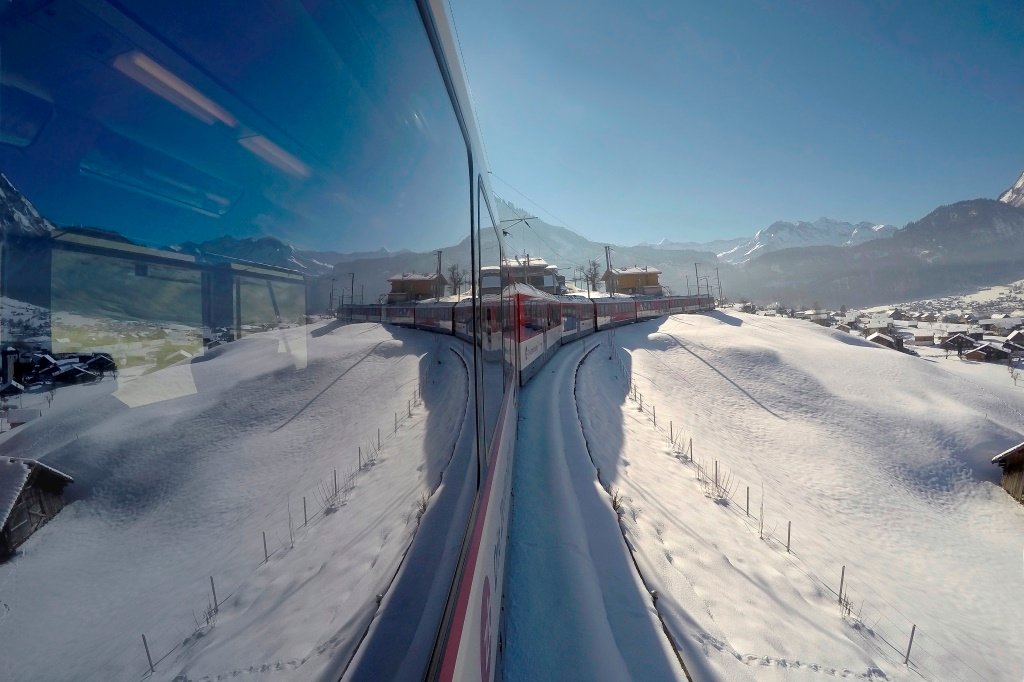
Day 7: Woke early to pack. Sunny, white cloud, no rain (brief snow earlier). Ran for 10:04 train. Memorable ride: lakes, mountains, sun, high altitude turned green to white fluffy snow. Felt like Christmas.
The ride is the one in the video at the top of this page. Today’s timetable has the direct Luzern–Interlaken Express leaving Interlaken Ost at four minutes past each hour, which fits the 10:04 in my note, and Zentralbahn, which runs it, gives the journey time as 1 hour 50 minutes. The line climbs to its highest point at Brünig-Hasliberg, 1,001 metres above sea level. My note does not say exactly where the green turned to snow, only that it did as the train climbed, and that it felt like Christmas.

Arrival: the Reuss and the Chapel Bridge
Arrival: busy vibrant city (unlike quieter Interlaken). Walked alongside Reuss river to hotel near famous Chapel Bridge (14th c wooden). Venice vibe – narrow streets, stone floors, Italian restaurants, next to river.
Hotel apartment neat but 20€ deposit for kitchen equipment (not told at check-in). Not enough mugs/plates.
Britannica describes Lucerne as a city on the Reuss, at the point where the river flows out of Lake Lucerne. The river divides the town in two and is crossed by seven bridges within it. The Chapel Bridge is the most famous of them, and my note calls it 14th-century; that is right, although the sources differ on the year. Britannica gives 1333, while the town’s Musegg Wall visitor guide says about 1365. Lucerne Tourism tells the story of the fire: on the night of 18 August 1993 a major part of the bridge burned, and only the two bridgeheads and the Water Tower could be saved. The rest was rebuilt in a record eight months and reopened on 14 April 1994. The octagonal stone Water Tower is older than the bridge, from around 1290–1300.


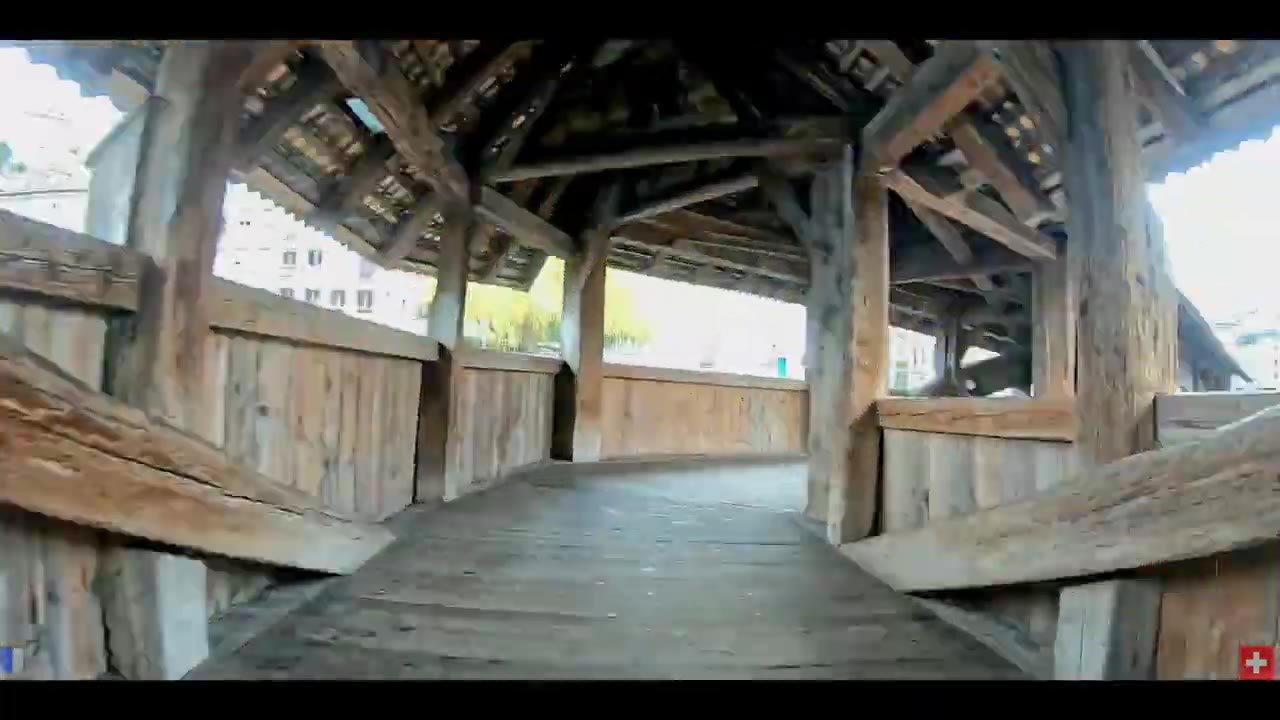
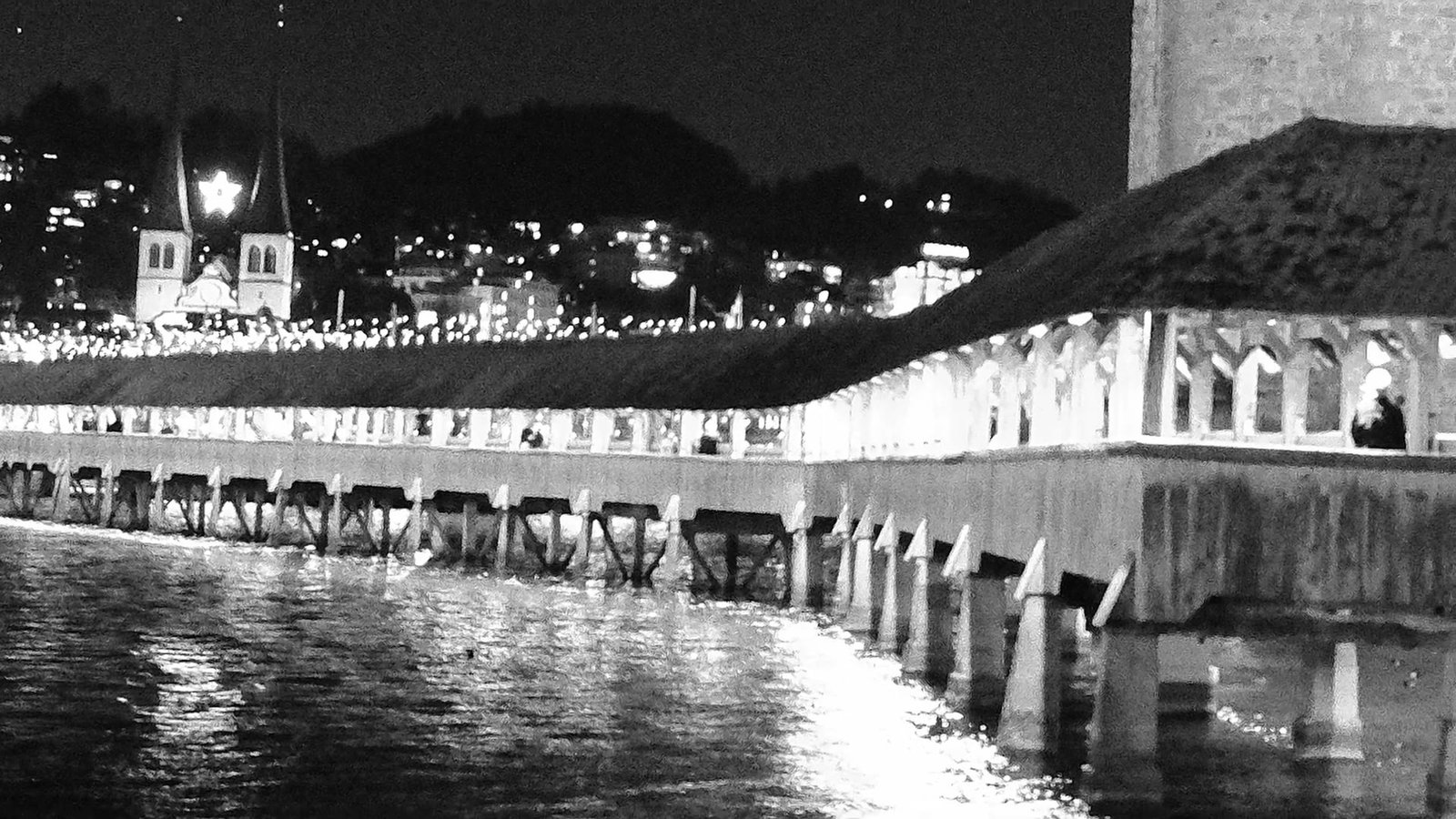
In other words, much of the wooden bridge we walked through is a careful reconstruction. Britannica notes that the Spreuerbrücke (1407), further down the river, is now the oldest bridge in the city.
Mount Pilatus: two cable cars and a dragon
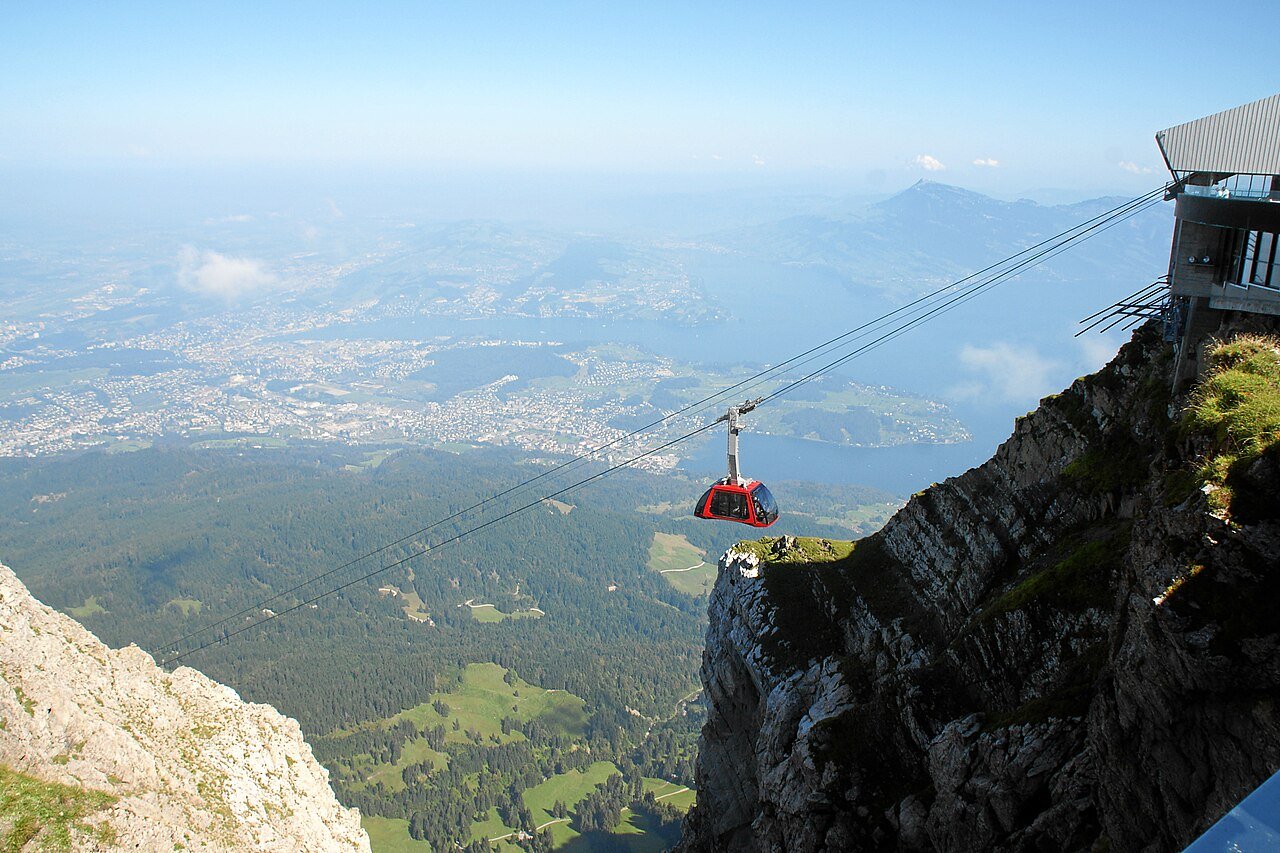
Mount Pilatus: bus then 2 cable cars. Views of lake, city, cliffs. Snow at 7000ft. Caves + dragon legend. Very cold descent (feet froze from earlier sweat). COOP stop (they sell alcohol unlike Migros). Back by river – beautiful at night, full moon.
Our route up, a bus and then two cable cars, is the way Pilatus Railways describes from the Lucerne side: a panorama gondola from Kriens to Fräkmüntegg, then the “Dragon Ride” aerial cableway to the summit, Pilatus Kulm, at 2,132 metres. That is about 6,995 feet, so the “snow at 7000ft” in my note matches the height of the summit. The dragon belongs to the mountain’s folklore. On its Dragon path page, Pilatus Railways says that in the Middle Ages people believed healing dragons lived in the bare crevices of the mountain; the path itself is a short circular trail through the rock at the summit.
PILATUS: THE WAY UP
(figures from pilatus.ch)

 LUCERNE
    |  bus (to Kriens)
    v
 KRIENS
    |  panorama gondola
    |  climbs 899 m
    v
 FRAKMUNTEGG
    |  "Dragon Ride"
    |  cable car, 647 m
    v
 PILATUS KULM  2,132 m
 (about 7,000 ft)

The COOP stop needs a word of explanation for anyone who has not shopped in Switzerland. Migros, the other big supermarket chain, has kept its supermarkets alcohol-free since 1928, and in 2022 its members voted to keep it that way. Coop has no such rule, which explains the bracket in my note.
Days 8 and 9: old streets and no cars
Day 8: Big modern cities not our thing but Lucerne preserved old castles/architectures (still used). Roads not flat – up/down, Italy vibes. Relaxed, movies, ate. Church bell every hour.
Day 9: 1h spare before checkout. Walked river + Chapel Bridge + mountains. Common tourist restaurants. City keeps ancient architectures, fountains, stone paths, NO CARS (except delivery). Venice-like. Train to Zurich (5min wait, 1h). Repetitive views – “do nothing”.
Big modern cities are not our thing, as my Day 8 note says, but Lucerne has kept its old buildings, and many are still in use. Britannica describes the old town on the right bank as having well-preserved 14th-century town walls (the Musegg) with nine watchtowers, narrow alleys, and squares lined with medieval, Renaissance and Baroque houses. That is the “old castles/architectures” of my Day 8 note. On Day 9 we had an hour to spare before checkout and walked by the river and the Chapel Bridge once more. My notes compare the city to Venice twice, and they give the reasons themselves: the river, narrow streets, stone paths and no cars except for deliveries.
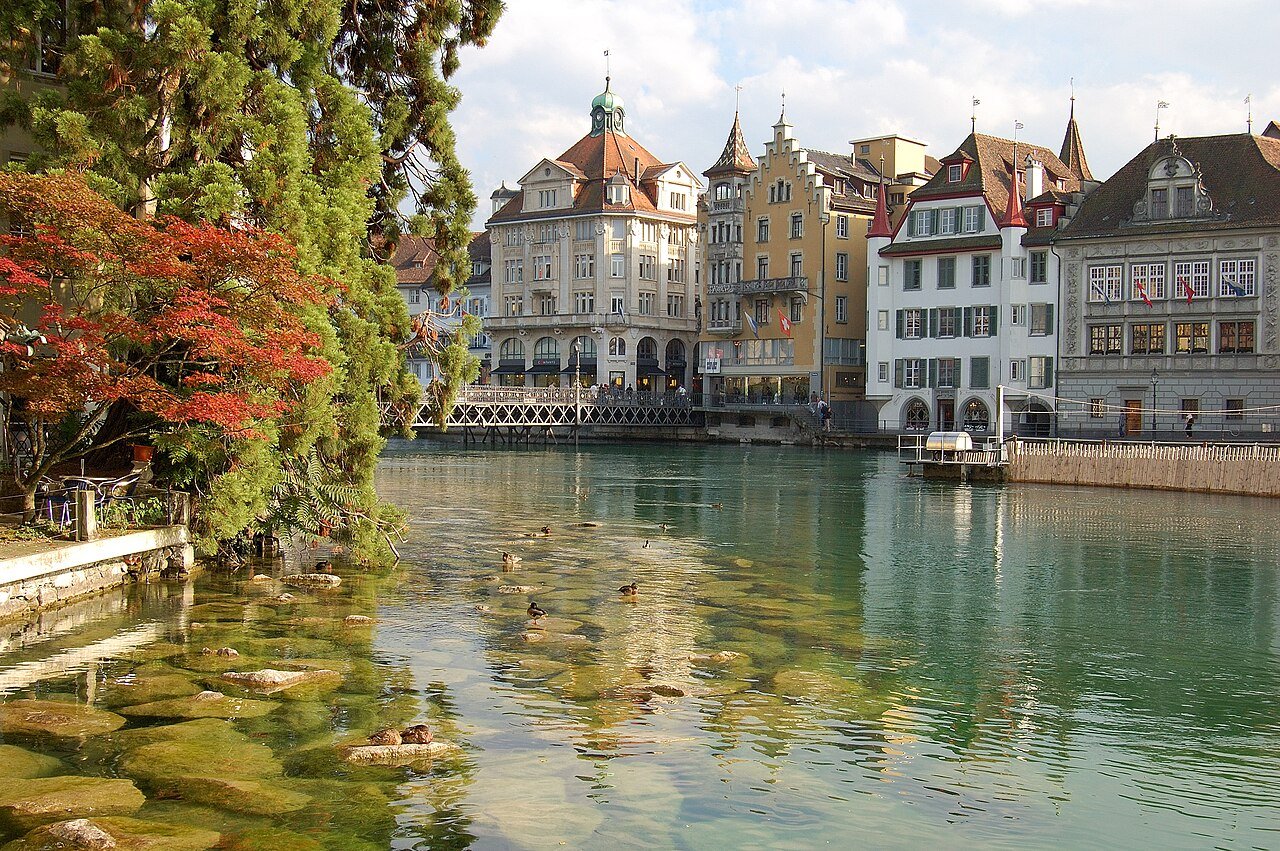

The takeaway: Lucerne is a city best read from its river. The Reuss leaves Lake Lucerne and splits the town in two, and its bridges, old and rebuilt, hold it together. Even with only an hour to spare on our last morning, we could walk the river and the Chapel Bridge once more, and Pilatus Kulm is about 45 minutes from Kriens by gondola and cable car. If you go, check the Pilatus timetable first: this year the gondolas and cable car close for maintenance from 19 October to 27 November. And if you want a bottle of wine with dinner, shop at Coop, not Migros.
From Lucerne the train took us on to Zurich (Part 5).
100 Days Europe Travel Journal · Part 4 of 24
← Previous: Interlaken: Hiking Up the Harder, Lake Thun and an Old Château Ruin (100 Days in Europe, Part 3) | Next: Zurich: Drinking Fountains, Clock Towers and Canals (100 Days in Europe, Part 5) →
More from the journey: the Europe Travel page (all fifteen parts) · every Switzerland post · Part 1: Geneva · Part 2: Montreux · Part 3: Interlaken · Part 5: Zurich