Porto, the Finale: Livraria Lello, Dom Luís I Bridge and Azulejos (100 Days in Europe, Part 15)
Part 15 of 24 in the 100 Days Europe Travel Journal, our 100 days across Europe by train, plane, ferry and bus.
“We made it.” That is how my notes for the last day end, and after a hundred days of trains, planes, ferries and buses across Europe, nothing more needed saying. These were our final days: Francesinha and Tripas à moda do Porto; Livraria Lello, the Palácio da Bolsa, the Dom Luís I bridge and São Bento station; and, on the very last day, the beach and the tram.
We arrived on Day 97, flying in from Madeira (Part 14). After travelling around Europe for a hundred days we were tired, and I wrote that day’s entry at Porto airport. As my Europe Travel page records, the light-rail metro (Line E) took us about 45 minutes to the city centre, and from there it was a nine-minute walk to our apartment, where our host, a lovely woman who knew her city very well, gave us great recommendations. Below, each place in my notes is set beside what the official sources say about it.
Why Porto makes a fitting finale
Porto, also known in English as Oporto, gave Portugal its name: the country’s name comes from Portus Cale, the Roman-era port at the mouth of the Douro. UNESCO describes the city as “an outstanding urban landscape with a 2,000-year history” and lists its historic centre, together with the Luiz I Bridge and the Monastery of Serra do Pilar, as a World Heritage site, inscribed in 1996. Three of the places in my notes are named in UNESCO’s own description of that site: the Palácio da Bolsa, São Bento station and the bridge.
Four landmarks
Livraria Lello: the bookshop and its red staircase
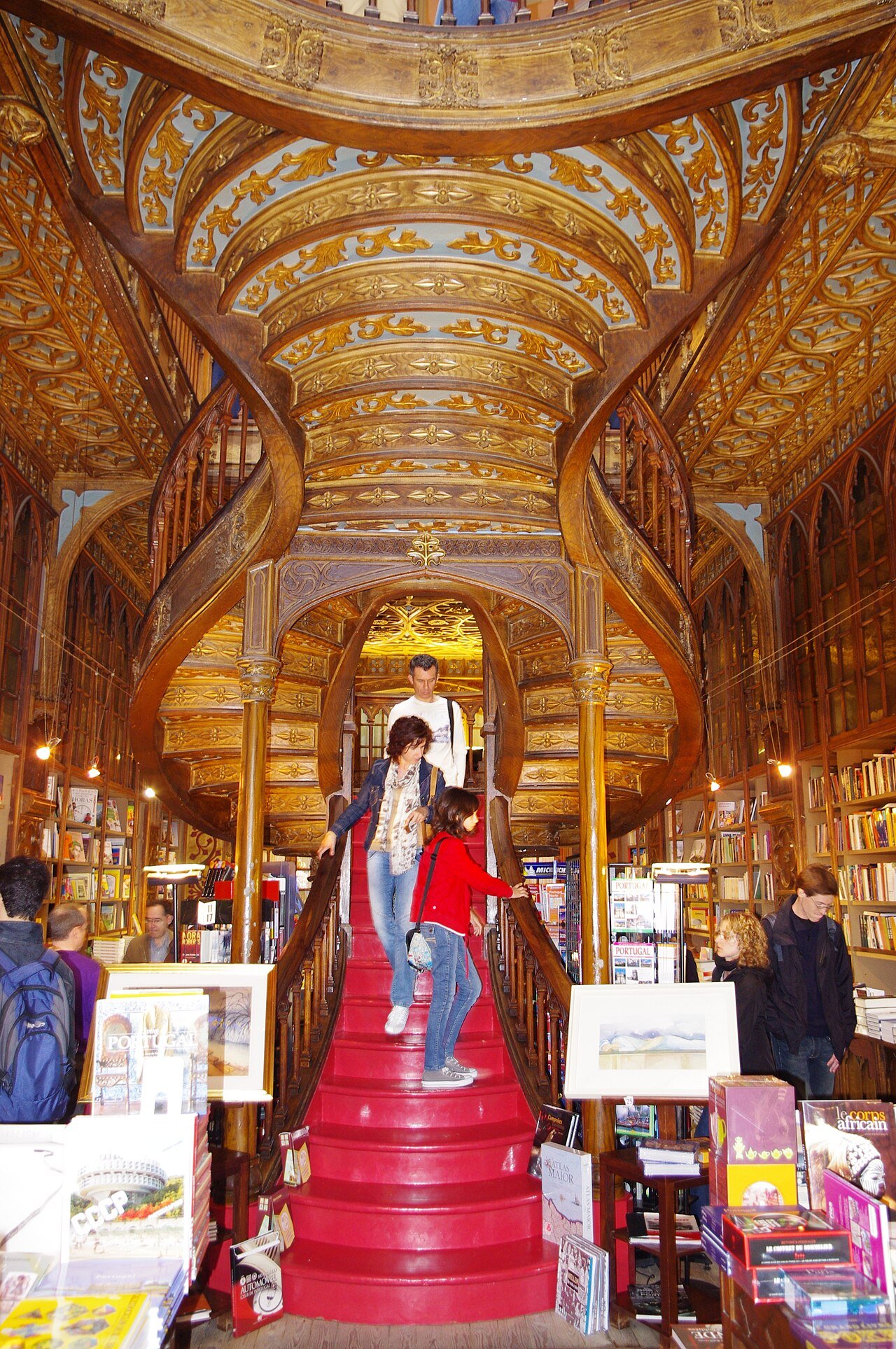
Livraria Lello is a bookshop with a long history. According to Comércio com História, the Portuguese government’s register of historic shops, its origins go back to 1881, when the brothers José and António Lello opened a bookselling and publishing business in Porto; the building we know today, designed by the engineer Francisco Xavier Esteves, opened on 13 January 1906. The staircase’s colour is younger than the staircase itself: the bookshop’s own website explains that it was one of the first concrete staircases built in Portugal, and that its steps were painted red by mistake during restoration works in 1993.

Palácio da Bolsa: the Stock Exchange and its Arabian Room
The Palácio da Bolsa, or Stock Exchange Palace, is the neoclassical building that UNESCO dates to 1842–1910. Visit Porto, the city’s official tourism site, notes that it is a national monument and the headquarters of the Associação Comercial do Porto, the city’s commercial association. Its showpiece is the Arabian Room: the palace’s own guide explains that it was designed by the architect Gustavo Adolfo Gonçalves de Sousa, inspired by the Alhambra, begun on 15 September 1862 and finished on 12 June 1880. Visits are by guided tour only.


The Dom Luís I bridge: two decks of iron
The Dom Luís I bridge joins Porto to Vila Nova de Gaia across the Douro. Visit Porto explains that it was designed by the engineer Théophile Seyrig, a disciple of Eiffel, and inaugurated in 1886, with two iron decks, one above the other; it is 395 metres long and 8 metres wide. Today the upper deck carries a line of the Porto Metro, linking the cathedral area to Jardim do Morro in Gaia. Infraestruturas de Portugal adds that the bridge replaced an earlier suspension bridge on the same site, that the lower deck was completed only in 1888, and that since 2005 it has been used by cars and pedestrians.

São Bento station: history on the walls
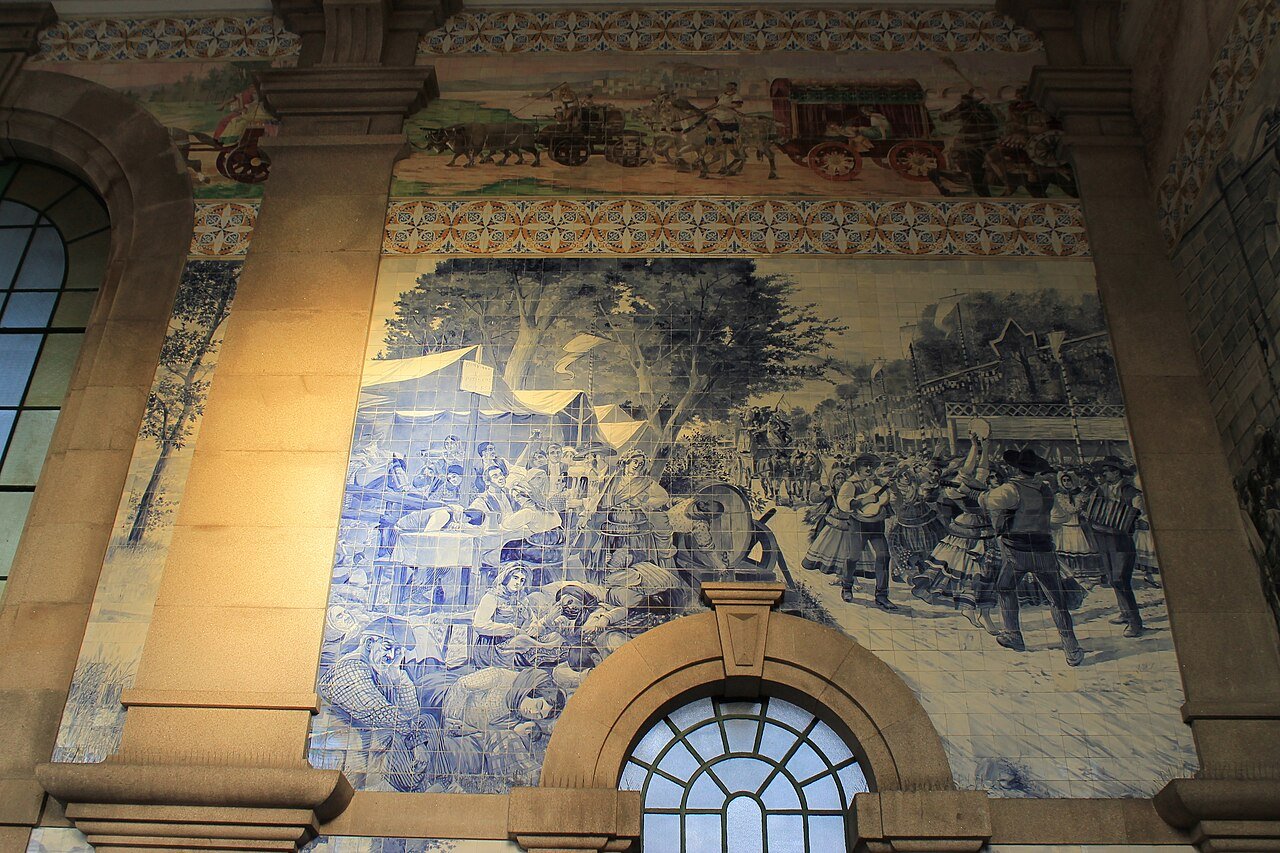
São Bento station is where Porto’s tiles become a history book. Infraestruturas de Portugal records that construction began in 1903 to a design by the architect José Marques da Silva and that the station opened on 5 October 1916; Visit Porto adds that it stands on the site of the former convent of São Bento de Avé-Maria. The entrance hall is covered in tile panels by the painter Jorge Colaço, showing the history of transport, scenes from Portuguese history, rural work and local customs. The sources count them slightly differently: Visit Porto speaks of twenty thousand tiles, while Infraestruturas de Portugal gives more than 22,000, painted between 1905 and 1908 and made at the Sacavém factory.

Azulejos: reading the walls
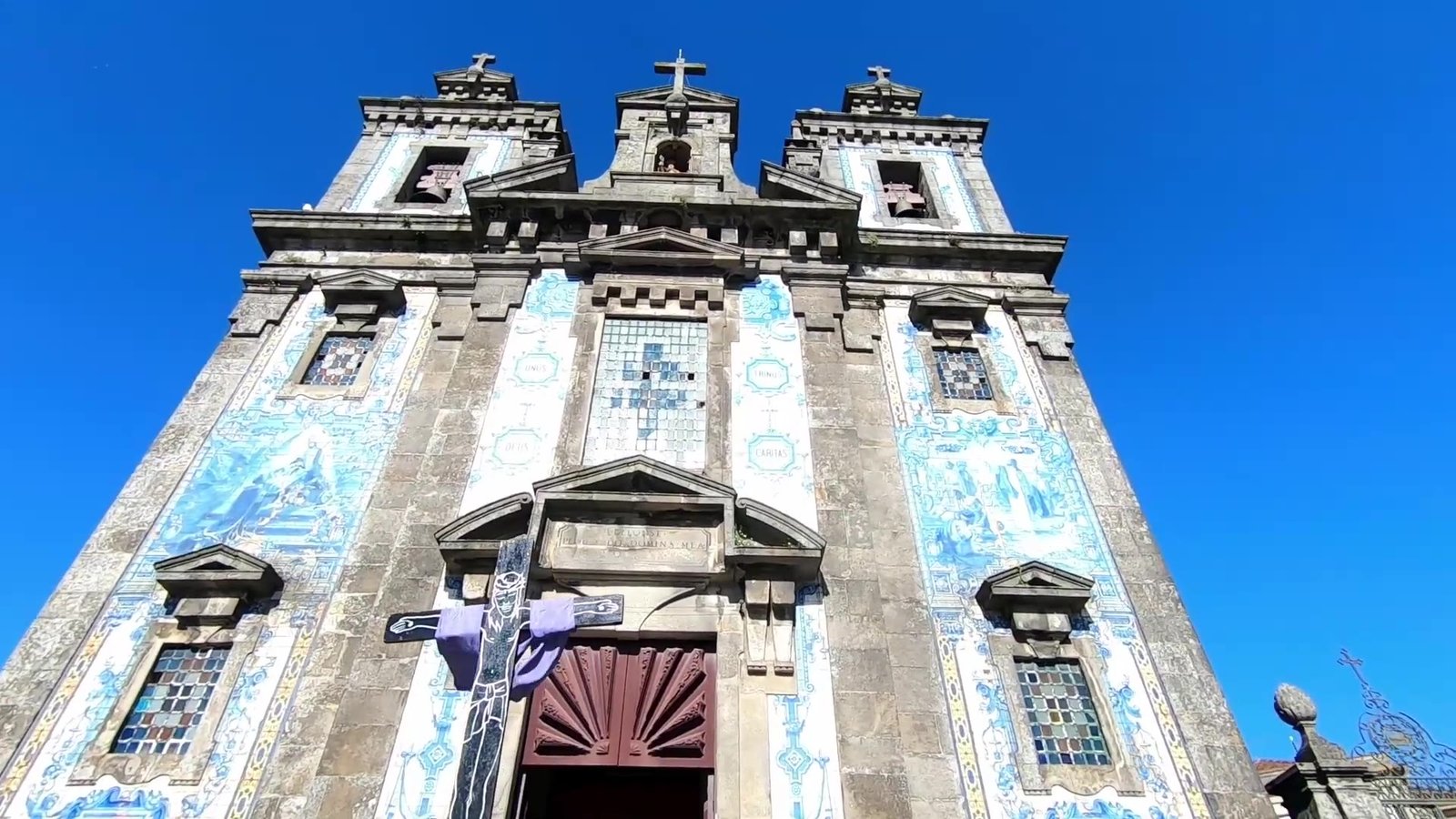
Porto’s painted tiles, the azulejos, cover the walls of São Bento’s entrance hall, and my own photo below, a still from my Porto video, shows them on a church façade. São Bento shows what they can do: rather than serving as decoration alone, the tiles tell stories in pictures, so a wall becomes something you read as you walk past it.
PORTO IN MY NOTES, BY AGE
(dates from the sources cited)

1842  Palácio da Bolsa: work
  |   starts
  |
1862  Arabian Room begun
  |   (finished 1880)
  |
1886  Dom Luís I bridge opens
  |   (lower deck 1888)
  |
1906  Livraria Lello opens
  |   in its present building
  |
1916  São Bento station opens
  |   (tiles painted 1905-08)
  |
1996  UNESCO World Heritage
  |
  v
Days 97-100: our finale,
just before the 2020 lockdown
Eating like a tripeiro
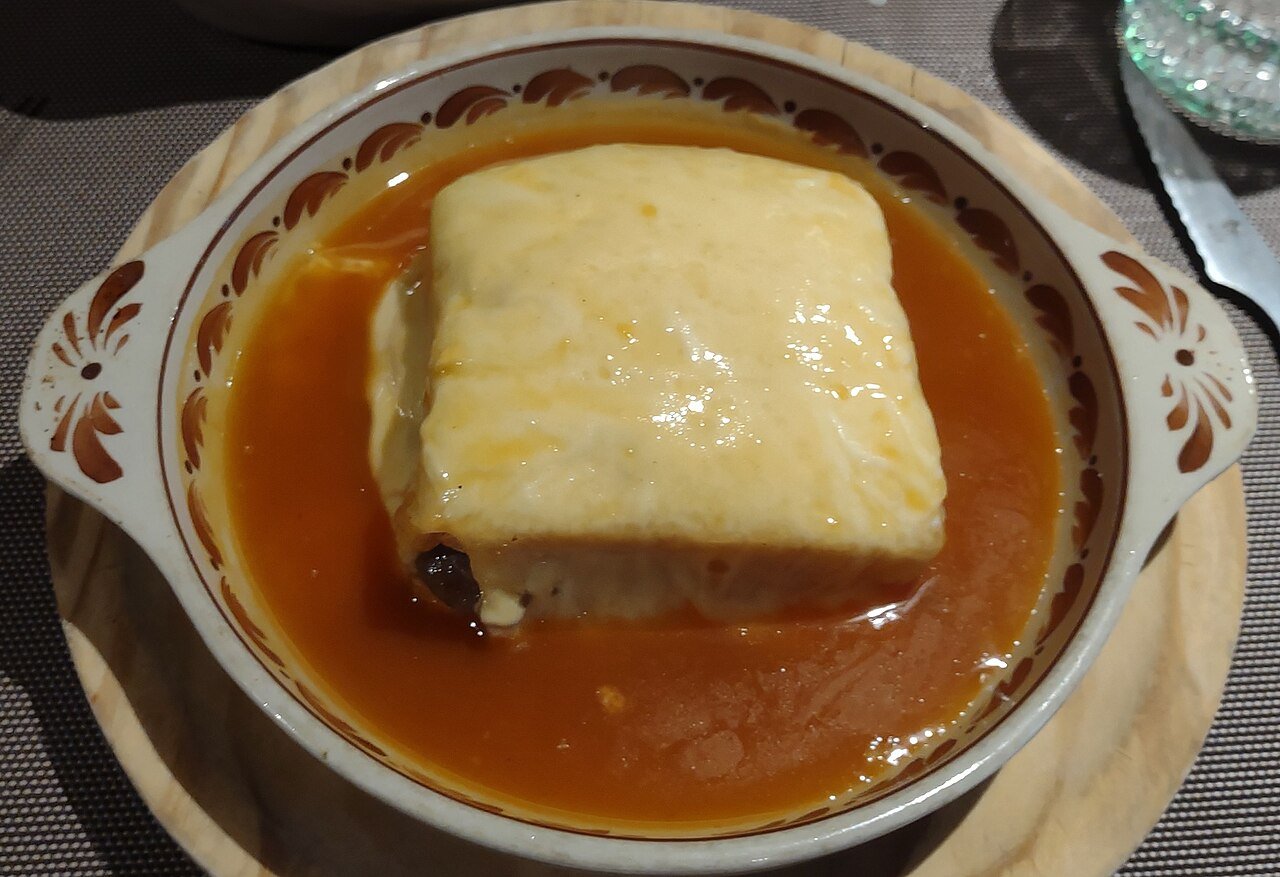
My notes for Porto begin with food: Francesinha and Tripas à moda do Porto; Visit Porto names both, with octopus rice, among the city’s most iconic dishes. Tripas, a stew of veal tripe with other meats and butter beans, comes with a legend that Visit Porto tells: when the fleet sailed to capture Ceuta in 1415, the city slaughtered all its cattle to supply the ships and was left with only the tripe. That is said to be why the people of Porto are still nicknamed tripeiros. Visit Porto presents it as a legend, not as recorded history, but it is the story the city tells about itself.

The last day: the beach, the tram, and home
On the last day we went to the beach and rode the tram. My diary for Day 100 says the rest: “And then, this is it, huh! We made it to our hundredth day, at the last stop of the trip.” It was time to go home, to sit on a real sofa, sleep in a real bed and eat light food to lose a little weight. The whole journey is collected on my Europe Travel page, with the trip in one minute and the diary highlights from the last day backwards.
The takeaway: UNESCO traces Porto’s story back two thousand years, yet the four landmarks in my notes all date from a span of 74 years, from the start of work on the Palácio da Bolsa in 1842 to the opening of São Bento station in 1916. That is what makes them feel so readable to a visitor. A bridge, a stock exchange, a bookshop and a station are buildings made for crossing, trading, buying books and travelling, and the tiles on the walls tell their stories in pictures. That makes Porto a fitting place to end the series. And the last word still belongs to my diary: we made it.
100 Days Europe Travel Journal · Part 15 of 24
← Previous: Madeira: Porto Moniz Lava Pools, Cabo Girão and Funchal (100 Days in Europe, Part 14) | Series hub: Europe Travel: all fifteen parts | Start again: Part 1, Geneva
More from the journey: the Europe Travel page (all fifteen parts and the whole trip in one minute) · the Portugal posts · Part 13: Faro and Lisbon · Part 14: Madeira · My Daily Journal