Athens: the Acropolis, Ancient Agora and Changing of the Guard (100 Days in Europe, Part 7)
Part 7 of 24 in the 100 Days Europe Travel Journal, our 100 days across Europe by train, plane, ferry and bus.
How do you spend three days in a city where walls have ringed the same hilltop for more than 3,300 years? Part 6 closed with the end of Italy, the longest country stretch of the trip, and our first plane since we had set off. That flight brought us to Greece, and Days 59 to 61 of the diary belong to Athens.
My entry for Athens is a list of places, and I have kept it as one:
- the Acropolis and the Parthenon
- the Ancient Agora
- Hadrian’s Arch
- the Temple of Olympian Zeus
- Monastiraki
- Plaka
- the National Garden
- the Changing of the Guard
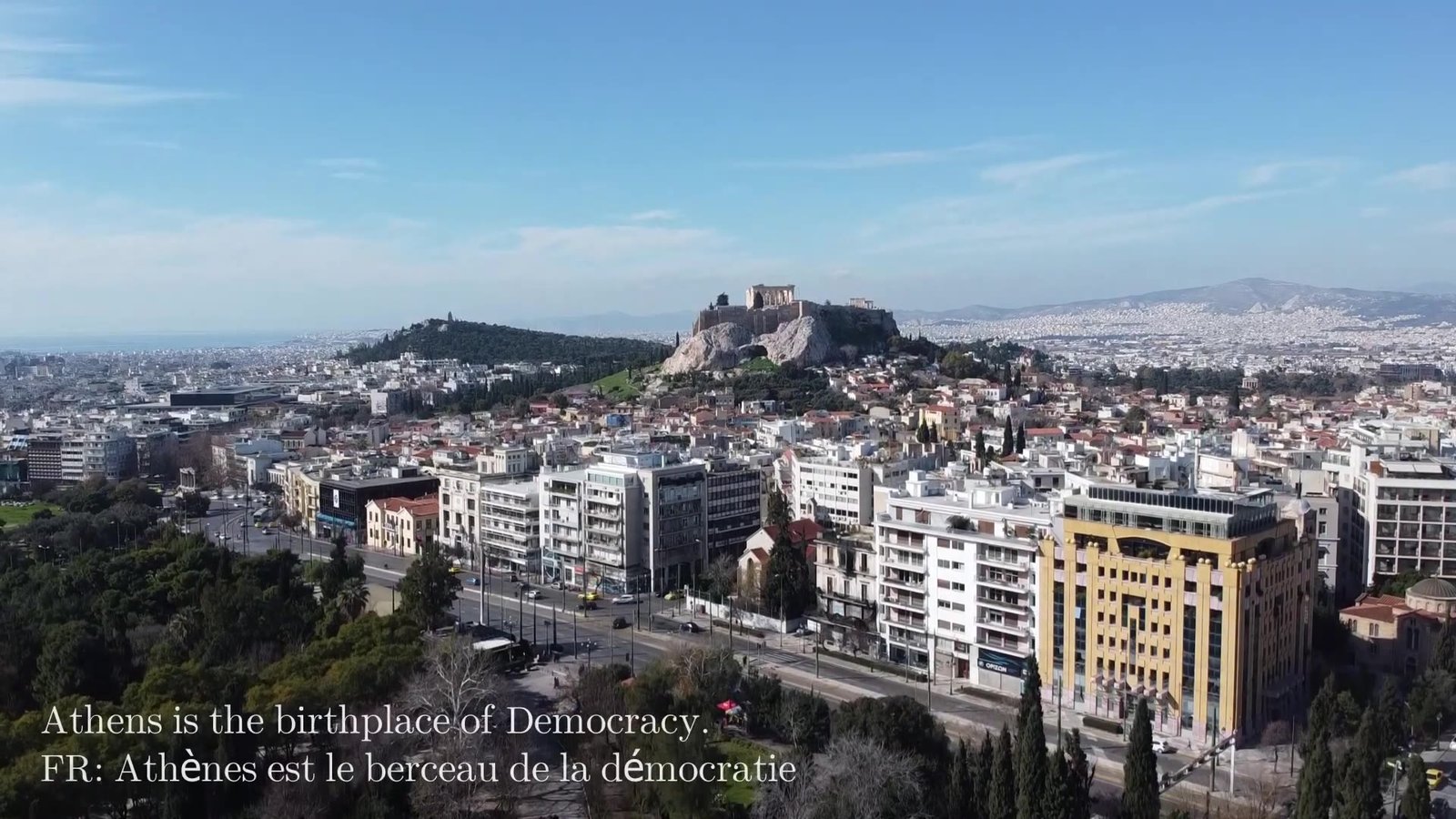
Reading the stones: what the three big stops are
A list of names tells you where we went. It does not tell you why the three biggest stops matter, so here is the short version, drawn from the institutions that look after them.
The Acropolis and the Parthenon
UNESCO, which inscribed the Acropolis on the World Heritage List in 1987, calls it “the most striking and complete ancient Greek monumental complex still existing in our times”. The rocky hill rises 156 metres in the basin of Athens, and fortification walls have enclosed its summit for more than 3,300 years. Its great buildings belong to the fifth century BC, when Athens, after its victory over the Persians, carried out a building programme under the statesman Perikles: the Parthenon (447–432 BC) by Iktinos and Kallikrates, with the sculptor Pheidias; the Propylaia, the monumental entrance; the Erechtheion; and the small Temple of Athena Nike (UNESCO World Heritage Centre: Acropolis, Athens).
The Ancient Agora
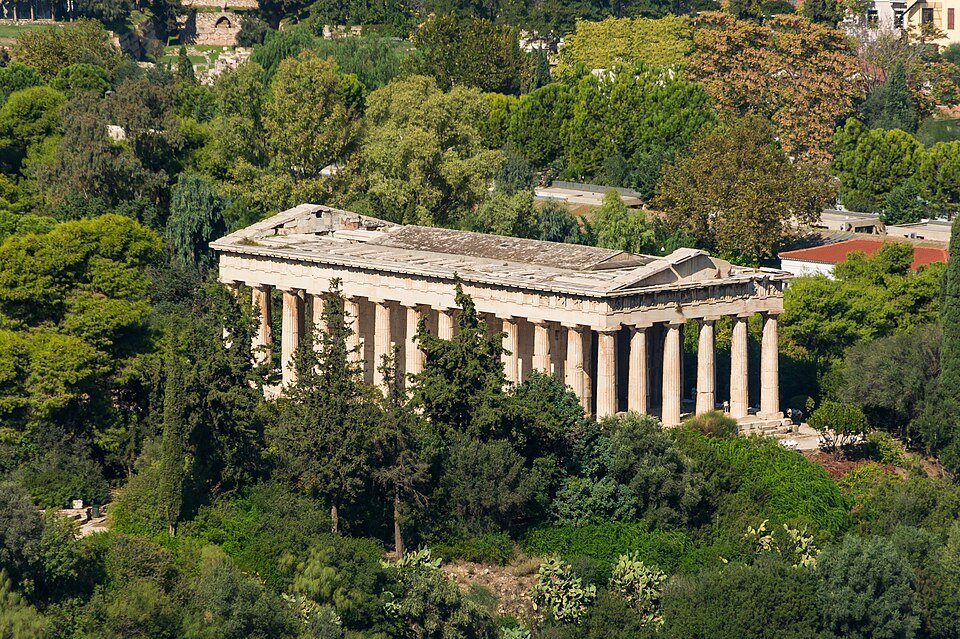
If the Acropolis was the city’s sacred rock, the Agora below it was where daily public life happened. The Hellenic Ministry of Culture’s Odysseus portal describes it as “the heart of ancient Athens”: the focus of political, commercial, administrative and social activity, a religious and cultural centre, and the seat of justice. It became a public area early in the sixth century BC, in the time of Solon. Systematic excavation by the American School of Classical Studies began in 1931, and around 400 modern buildings had to be demolished to uncover it. The Stoa of Attalos was reconstructed in 1953–56 to serve as the site’s museum.

The Changing of the Guard
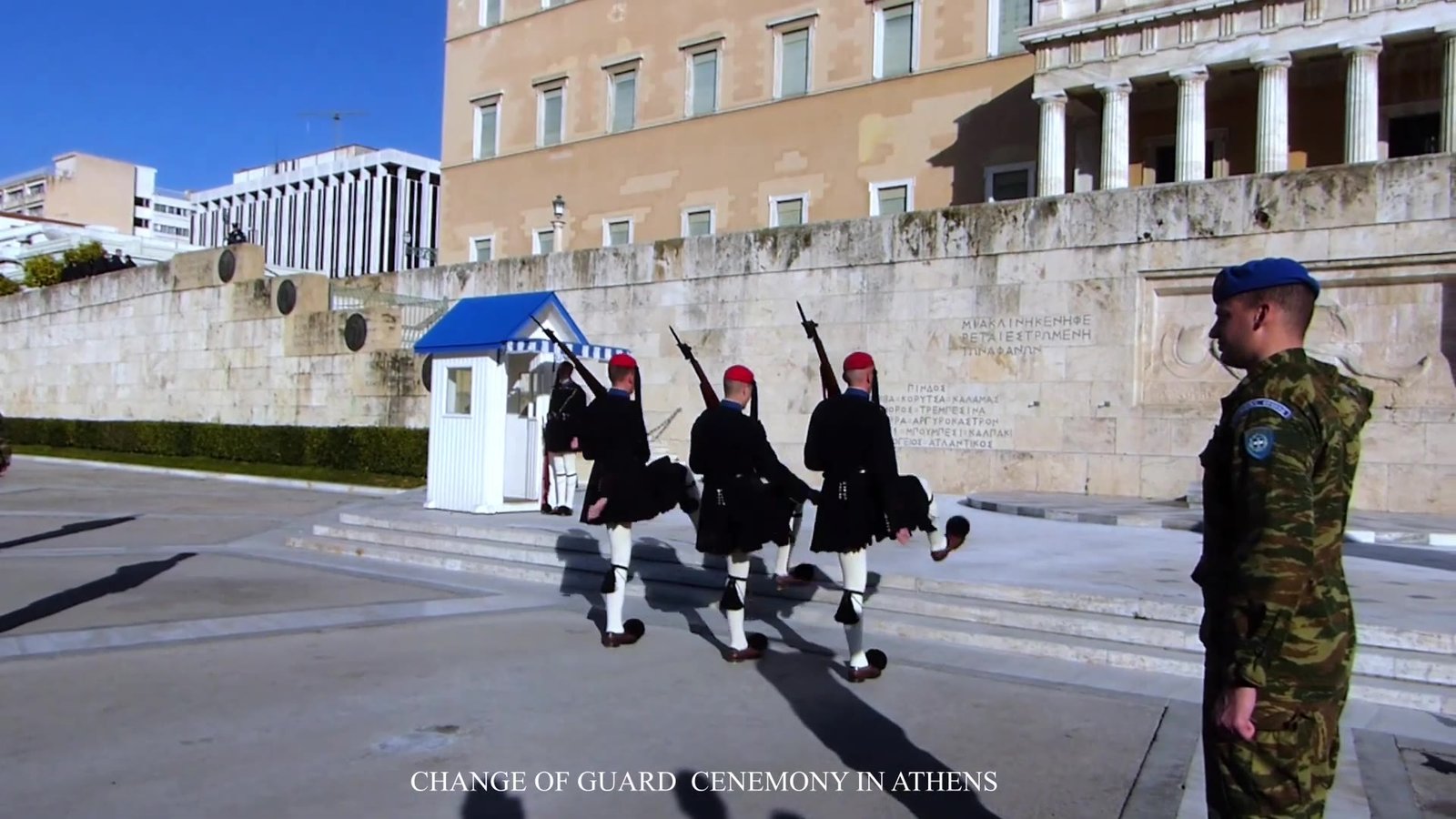
The guards in the video still above are Evzones of the Presidential Guard. According to the Presidency of the Hellenic Republic, they are volunteers from the Hellenic Army’s infantry, and they guard the Tomb of the Unknown Soldier around the clock and in all weathers. The pairs change every hour on the hour, and every Sunday at 11:00 a large contingent, with a military band, marches from the Presidential Guard camp to the Tomb for the official ceremony.
WHEN THE GUARD CHANGES
Tomb of the Unknown Soldier

every hour, on the hour
      |
      v
a new pair of Evzones
takes over
      |
      v
every Sunday at 11:00
      |
      v
a large contingent and a
military band march in for
the official ceremony
Practical note: free Sundays, then and now
My original note said that on the first Sunday of the month, from November to March, many sites are free. The current rule is more generous. The Hellenic Ministry of Culture’s current rules (checked in October 2026) make admission free for all visitors at the state-owned sites and museums it manages on the first and third Sunday of each month from 1 November to 31 March, and also on 6 March, 18 April, 18 May, the last weekend of September and 28 October (Hellenic Ministry of Culture: free admission). Rules like these change, so check the official page before you plan a day around them.
The takeaway: Athens rewards a little homework. Know that the Acropolis is a fifth-century-BC building programme on a hill fortified for over three millennia, that the Agora below it was the working heart of the ancient city, and that the guard at the Tomb of the Unknown Soldier changes every hour, with the full ceremony on Sundays at 11:00. Then check the free-entry dates before you buy a ticket.
100 Days Europe Travel Journal · Part 7 of 24
← Previous: Naples, Pompeii and Lecce: Castel Nuovo, Vesuvius and Real Neapolitan Pizza (100 Days in Europe, Part 6) | Next: Paros, Naxos and Santorini: Blue Domes, the Portara and the Fira-to-Oia Cliff Walk (100 Days in Europe, Part 8) →
More from the journey: the Europe Travel page (all fifteen parts and the whole trip in one minute) · every Greece post · Part 6: Naples, Pompeii and Lecce · Part 8: Paros, Naxos and Santorini · Part 1: Geneva