Madrid: the Royal Palace, Plaza Mayor and Retiro Park (100 Days in Europe, Part 11)
Part 11 of 24 in the 100 Days Europe Travel Journal, our 100 days across Europe by train, plane, ferry and bus.
My notes on Madrid end on a lukewarm line: the city “was okay at best”. The list above that line, though, reads like a tour of Spain’s capital: the Royal Palace, Almudena Cathedral, the Plaza Mayor, the Gran Vía, Retiro Park with its Crystal Palace, and the Prado area.
We reached Madrid by train from Valencia (Part 10), as the video above shows, and after three days we went on by train to Seville (Part 12). Madrid started badly for us, with a mess over our apartment. Below, each place in my notes is set beside what the official sources say about it, so that a reader can decide whether to share my verdict.
The Royal Palace and Almudena Cathedral
The Royal Palace: built to resist fire
The palace stands where an older one burned. According to Patrimonio Nacional, the state body that runs it, the old Alcázar was destroyed by fire on Christmas Eve 1734, and Philip V wanted the new palace on the same spot. It was vaulted throughout, in stone and brick and without wooden structures, so that no fire could destroy it. The works ran from 1738 to 1755, and Charles III took up residence there in 1764. Madrid’s official tourism website adds that the first architect commissioned, Filippo Juvarra, died, and that his pupil Giovanni Battista Sacchetti drew up the final plans. The palace remains the official residence of the King of Spain, who uses it for state ceremonies but does not live there.
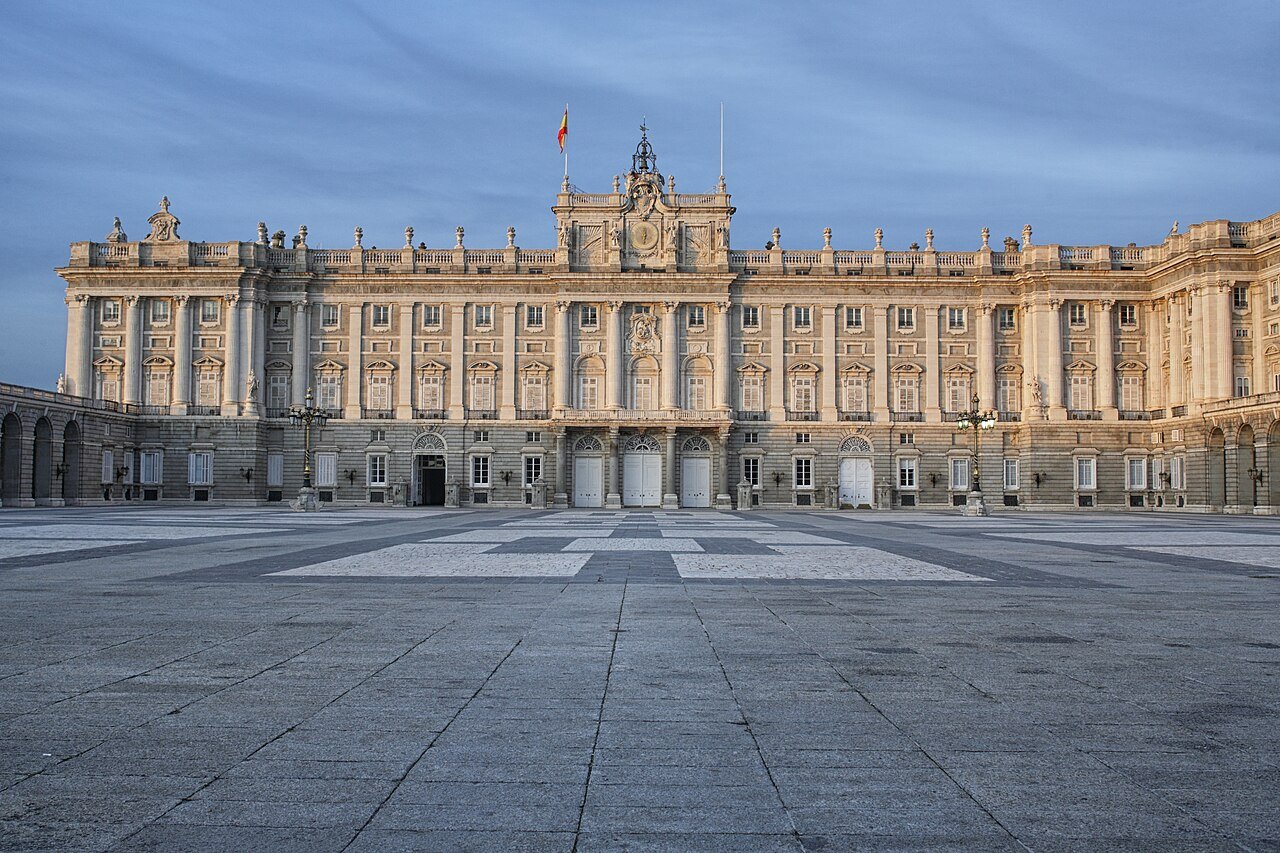

Almudena Cathedral: a hundred and ten years in the making
Almudena Cathedral, next to the palace, looks old but was the last building on my list to be completed. The Archdiocese of Madrid records that King Alfonso XII laid its first stone on 4 April 1883. The tourism website explains that the first plans, drawn up in 1879 by Francisco de Cubas, were for a church that would serve as a pantheon for the late Queen María de las Mercedes, and that they changed to plans for a cathedral after Pope Leo XIII created the Madrid–Alcalá bishopric in 1885. The crypt opened in 1911; work stopped during the Civil War and restarted in 1950; and Pope John Paul II consecrated the cathedral on 15 June 1993.
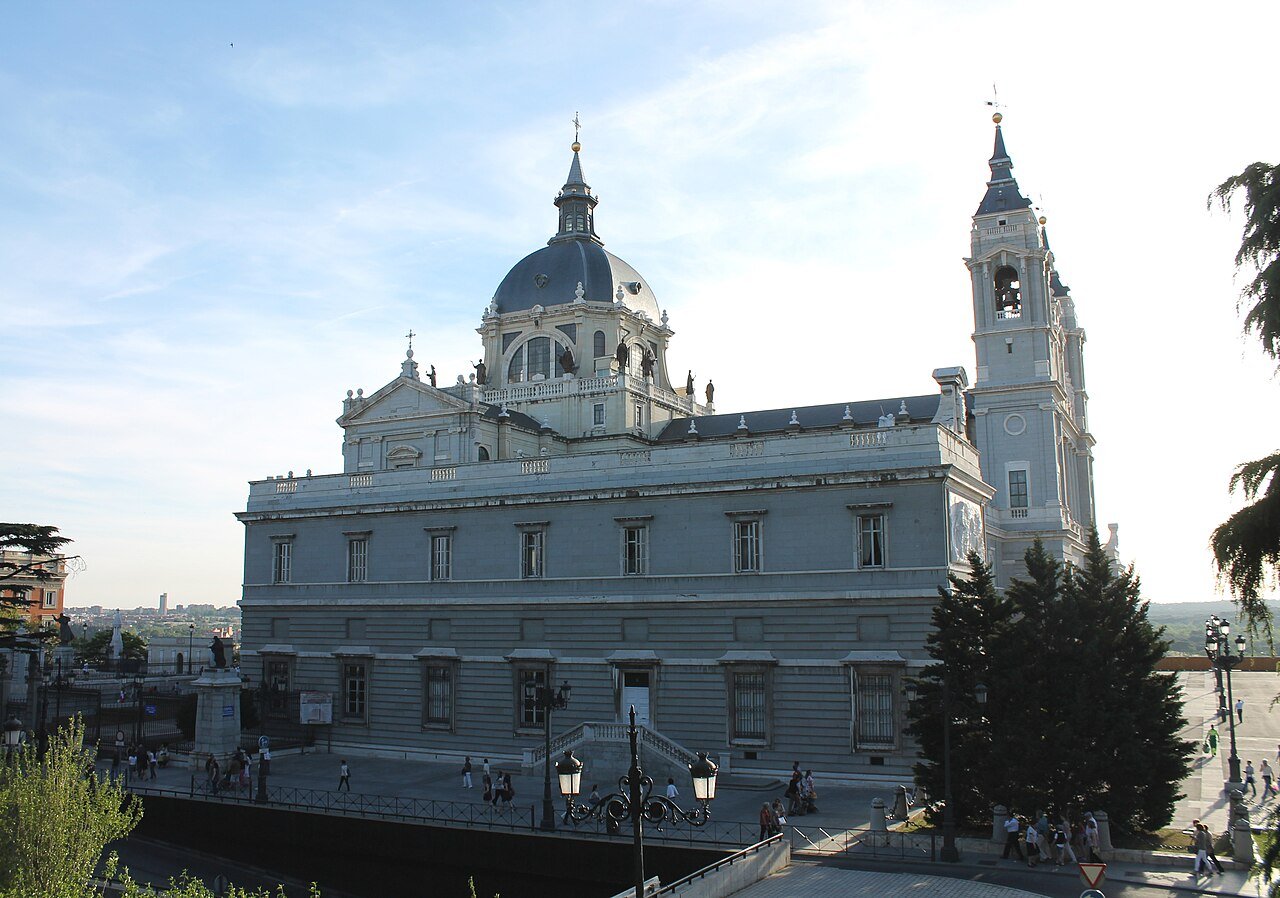

The Plaza Mayor and the Gran Vía
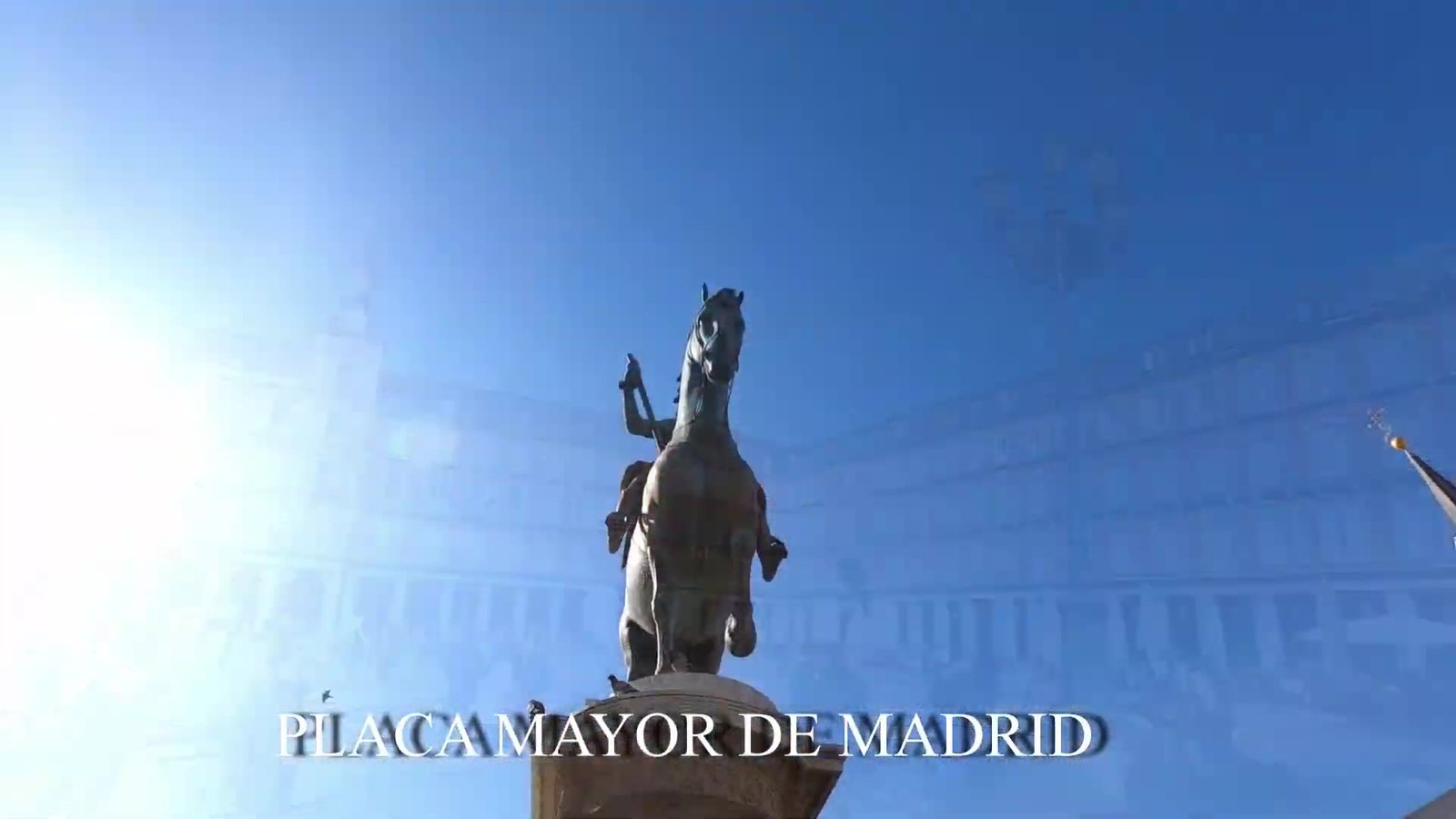
My own still from the video shows the equestrian statue in the Plaza Mayor. Madrid’s tourism website explains that the square stands on the former Plaza del Arrabal, the site of Madrid’s most popular market. Philip II began to plan its remodelling after he moved the court from Toledo to Madrid in 1561, but the new square was built only under his son, Philip III, to a design by Juan Gómez de Mora. It hosted festivities, bullfights, beatifications and coronations, and even the occasional auto-da-fé of the Spanish Inquisition. A fire in 1790 practically destroyed it, and Juan de Villanueva rebuilt it, closing off its four corners and building nine arches as entrances. The statue of Philip III was begun by Giambologna and finished by his pupil Pietro Tacca in 1616; it first stood at the entrance to the Casa de Campo, and Queen Isabella II had it moved to the square in 1848.
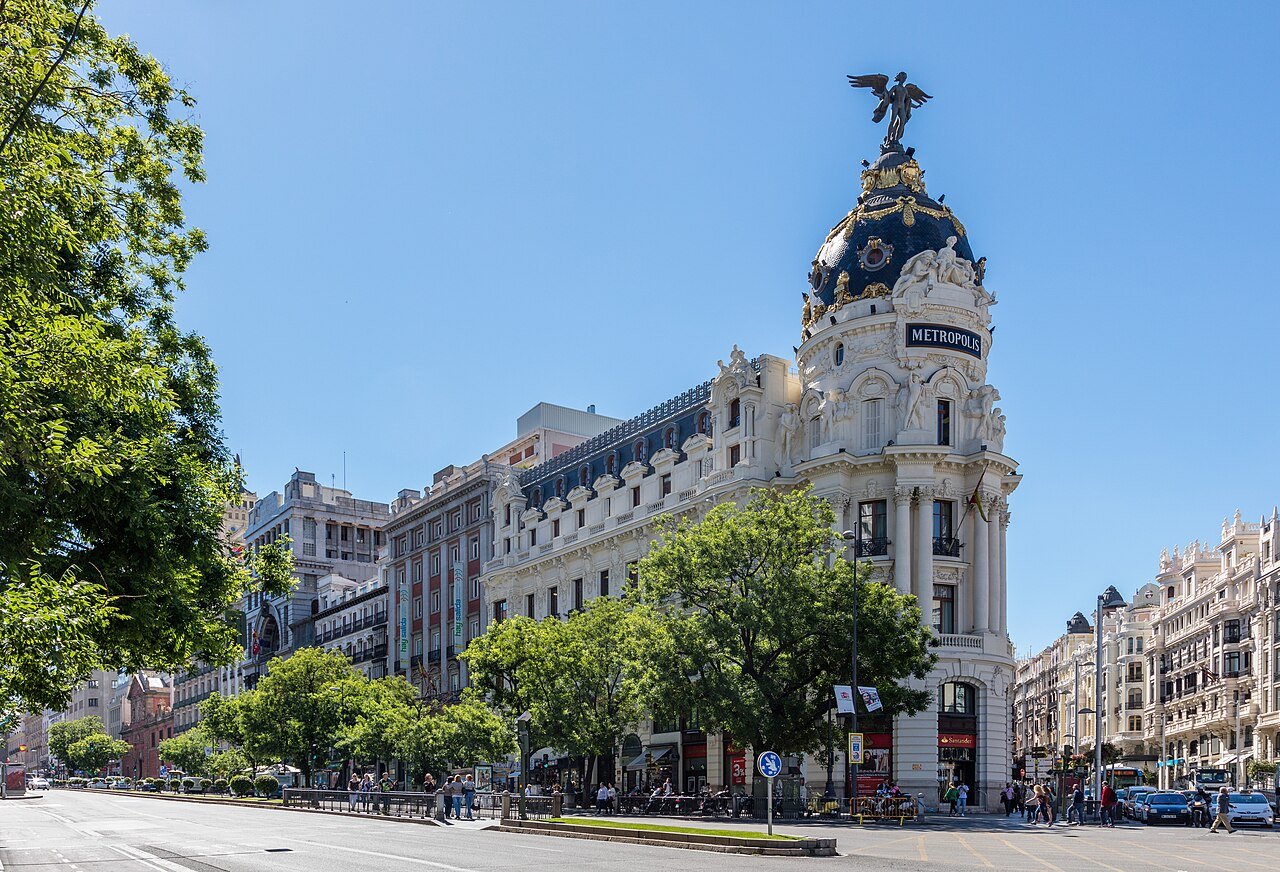
The Gran Vía belongs to a different Madrid. According to the tourism website (in Spanish), the avenue was created between 1910 and 1931 to relieve the chaotic old centre, and twenty-two small streets disappeared to make way for it. It was built in three stretches, starting from Calle de Alcalá, and with the first skyscrapers in Spain it marked the start of the city’s modernisation. The tourism website names the Metrópolis Building among its emblematic buildings.

Retiro Park, the Crystal Palace and the Prado
Retiro Park and the Prado area belong together, and since 2021 they have been one World Heritage site. UNESCO lists the Paseo del Prado and Buen Retiro as “a landscape of Arts and Sciences”: the 120-hectare Jardines del Buen Retiro, a remnant of the 17th-century Buen Retiro Palace, make up the largest part of it, and the tree-lined Paseo del Prado, created in the 16th century, was a prototype of the Hispanic alameda.
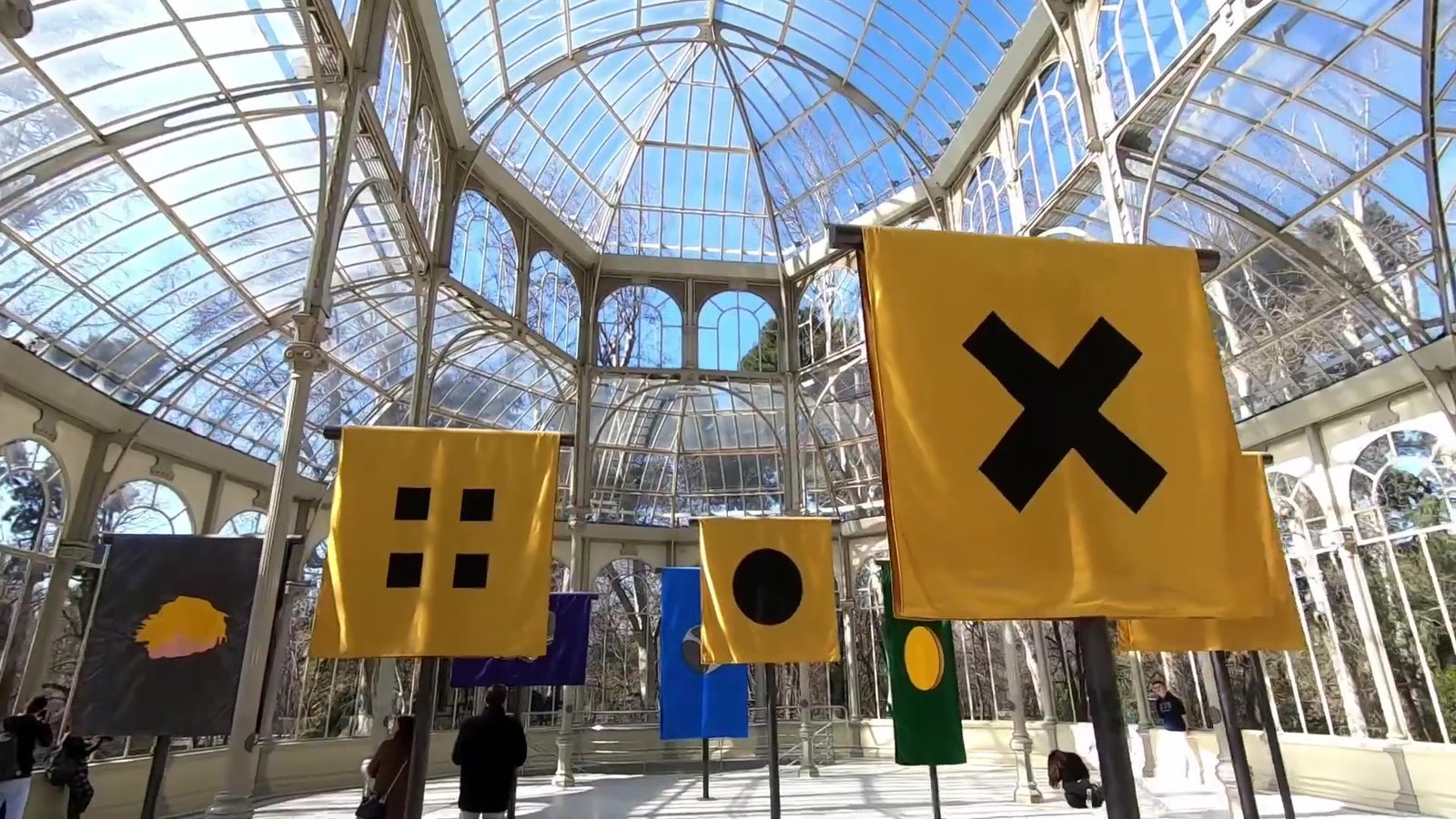
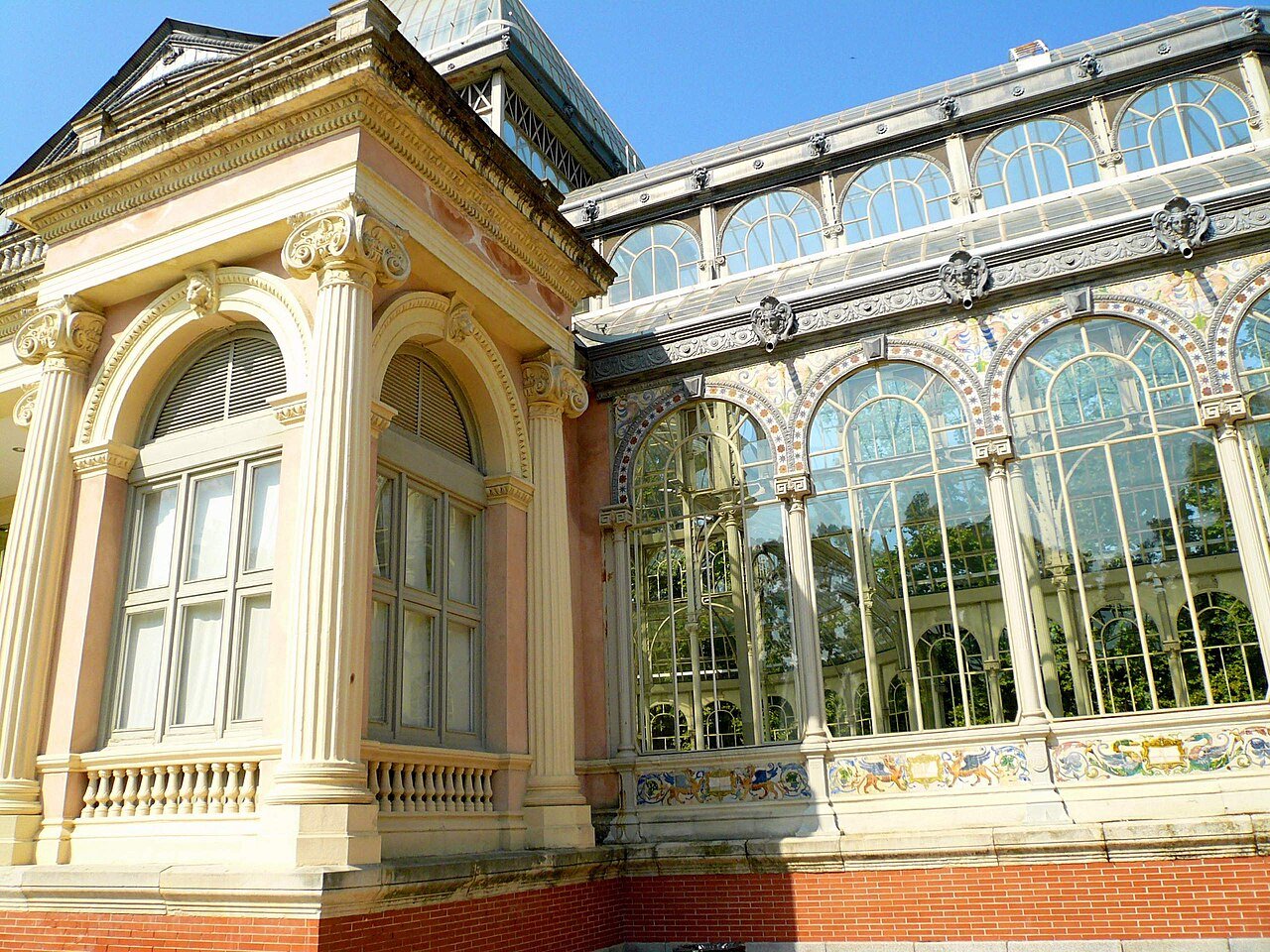
The Crystal Palace was built for an exhibition. The Museo Reina Sofía, which now uses it as a gallery, explains that Ricardo Velázquez Bosco designed it for the General Exhibition of the Philippines of 1887, as a greenhouse for plants from the islands, then a Spanish colony. It was put up in just five months from prefabricated parts and is crowned by a glass dome 24 metres high. The museum also records an uncomfortable fact: the exhibition displayed a group of forty to fifty people from the islands, the first “human zoo” in Spain. Madrid City Council notes that since 1990 the building has housed projects and installations by contemporary artists, and my own still from the video shows an art installation inside.

At the edge of the Prado area stands the Museo del Prado itself. The museum’s own history explains that Juan de Villanueva designed its building in 1785 for a Natural History Cabinet ordered by Charles III, and that Ferdinand VII turned it instead into the Royal Museum of Paintings and Sculptures, which first opened to the public in November 1819.
MADRID IN MY NOTES, BY AGE
(dates from the sources cited)

1561  the court moves to Madrid
  |
1616  statue of Philip III
  |   finished
  |
1734  the old Alcázar burns
  |
1738  Royal Palace begun
  |   (Charles III moves in 1764)
  |
1785  Prado building designed
  |
1790  fire nearly destroys
  |   the Plaza Mayor
  |
1819  the Prado opens
  |
1848  statue moved to the
  |   Plaza Mayor
  |
1883  Almudena Cathedral begun
  |
1887  Crystal Palace built
  |
1910  Gran Vía begun
  |   (built until 1931)
  |
1993  cathedral consecrated
  |
2021  UNESCO lists the Paseo
  |   del Prado and the Retiro
  v
Days 77-79: our three days
The takeaway: Madrid’s great sights are younger, and more often rebuilt, than they look. The Royal Palace rose after the Alcázar burned in 1734; the Plaza Mayor in my video owes its present form to Juan de Villanueva’s rebuilding after the fire of 1790; the Gran Vía was cut through old streets between 1910 and 1931; and Almudena Cathedral, begun in 1883, was consecrated only in 1993. My own verdict on the city, “okay at best”, stays in this diary because it is honest. Our three days started badly, and a first impression is not the whole story of a city.
100 Days Europe Travel Journal · Part 11 of 24
← Previous: Valencia: Turia Gardens, Torres de Serranos and Paella (100 Days in Europe, Part 10) | Next: Seville: the Giralda, Royal Alcázar and Plaza de España (100 Days in Europe, Part 12) →
More from the journey: the Europe Travel page (all fifteen parts and the whole trip in one minute) · every Spain post · Part 9: Barcelona · Part 10: Valencia · Part 12: Seville · Part 1: Geneva