Valencia: Turia Gardens, Torres de Serranos and Paella (100 Days in Europe, Part 10)
Part 10 of 24 in the 100 Days Europe Travel Journal, our 100 days across Europe by train, plane, ferry and bus.
My notes on Valencia read like a checklist: the Turia Garden, “former river turned park”; the Torres de Serranos; the Mercat Central, “Art Nouveau”; the Lonja; the cathedral; the “futuristic” City of Arts and Sciences; and one claim of origin, “paella origin here”. The last line is a verdict: “excellent food and atmosphere”.
We came to Valencia by train from Barcelona (Part 9), as the video above shows, and spent three days there, Days 74 to 76 of the trip, before taking the train on to Madrid (Part 11). In the Barcelona part I wrote that this one would explain why Valencia is the home of paella. Below, each item in my notes is set beside what the official sources say about it, and together they show a city that keeps finding new uses for old places: a riverbed became a park, a mosque site a cathedral, a city gate a prison.
The Turia Garden: a river turned into a park
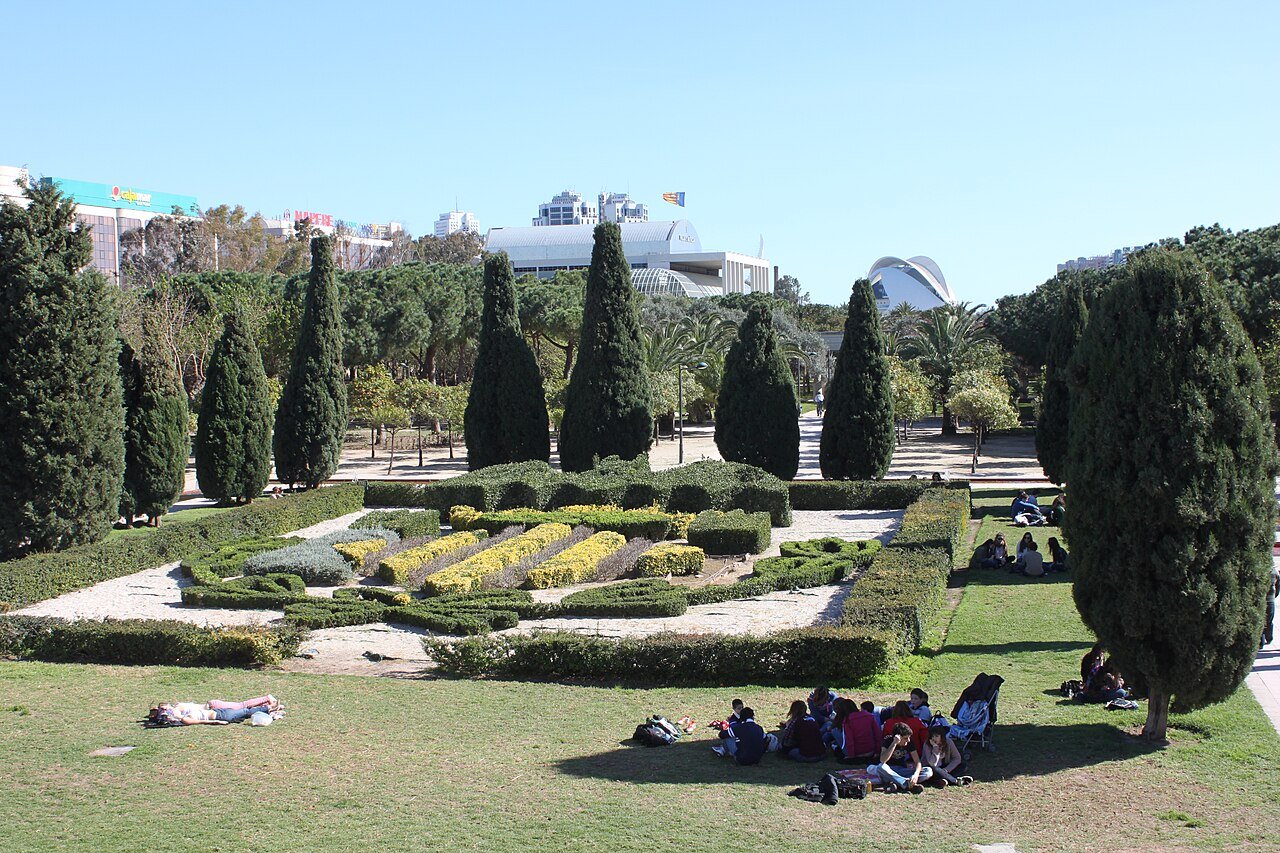
“Former river turned park” is an accurate summary. According to the city’s official tourism website, the Turia Garden stretches for more than nine kilometres along the old course of the River Turia, from the Parque de Cabecera to the City of Arts and Sciences. The river itself was diverted to the south of the city after the devastating floods of 1957.
A garden was not the first plan. As El País recalled on the fiftieth anniversary of the floods, the authorities of the time wanted to use the dry riverbed for motorways. A citizens’ movement answered with the slogan “El llit del Túria és nostre i el volem verd” (“The Turia bed is ours, and we want it green”), and the garden followed after the return of democracy.

The Torres de Serranos: a gate that outlived its walls
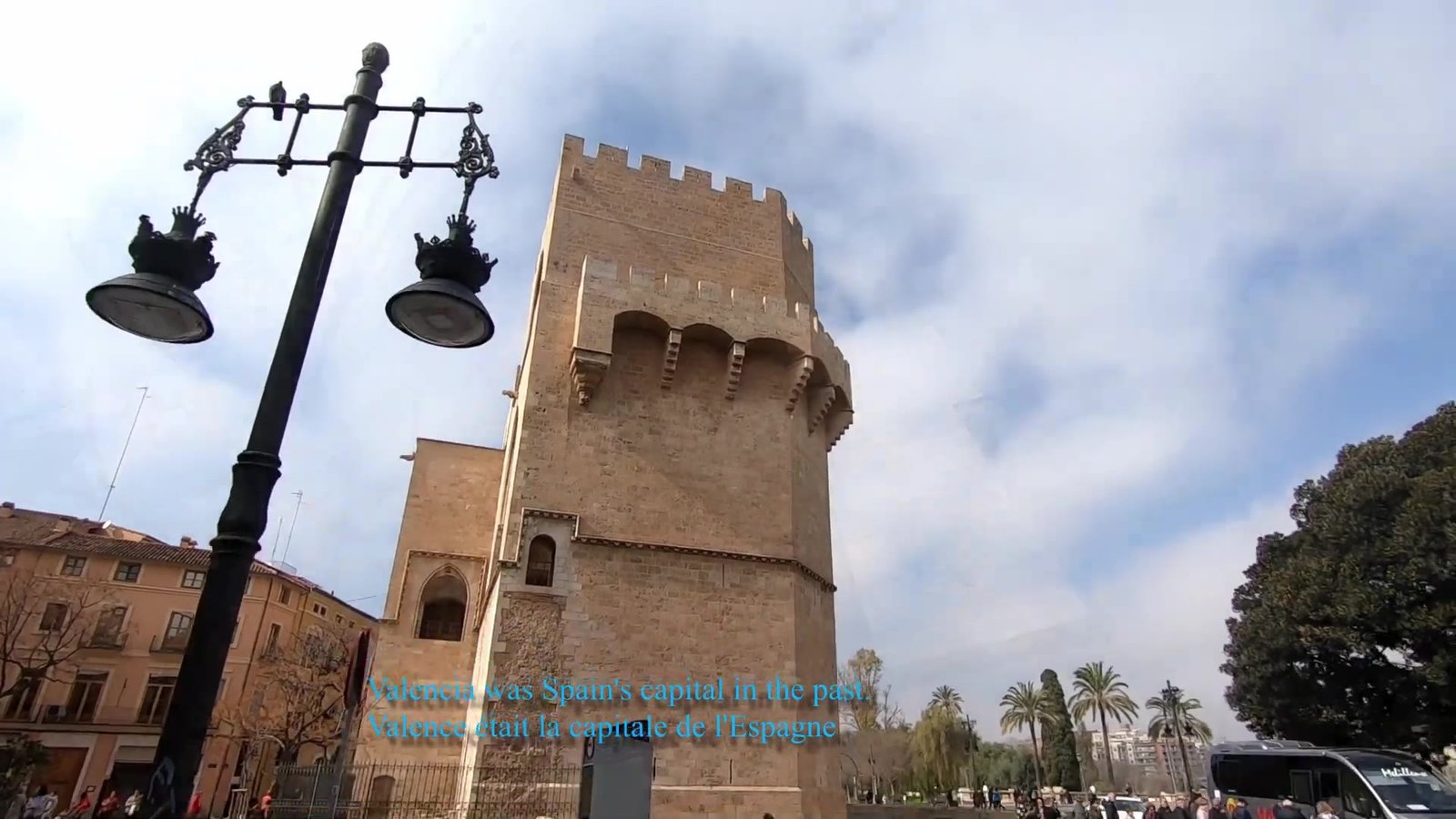
The Torres de Serranos were built between 1392 and 1398 by the master builder Pere Balaguer, according to the city council’s heritage page (in Spanish). Two huge pentagonal towers flank a central arch, and for centuries this was the main entrance to Valencia from the north, used for ceremonies and the official entries of the kings of the Crown of Aragon. From the late 16th century the towers served as a prison for nobles and knights, and that use saved them when the Christian city wall was pulled down in the 19th century. During the Spanish Civil War they stored works of art evacuated from the Prado Museum, and, as Visit Valencia notes, they are still the setting every year for the Crida, the ceremony that opens the Fallas festival. My own still from the video shows the gate.
The old town: the Mercat Central, the Lonja and the cathedral
The Mercat Central
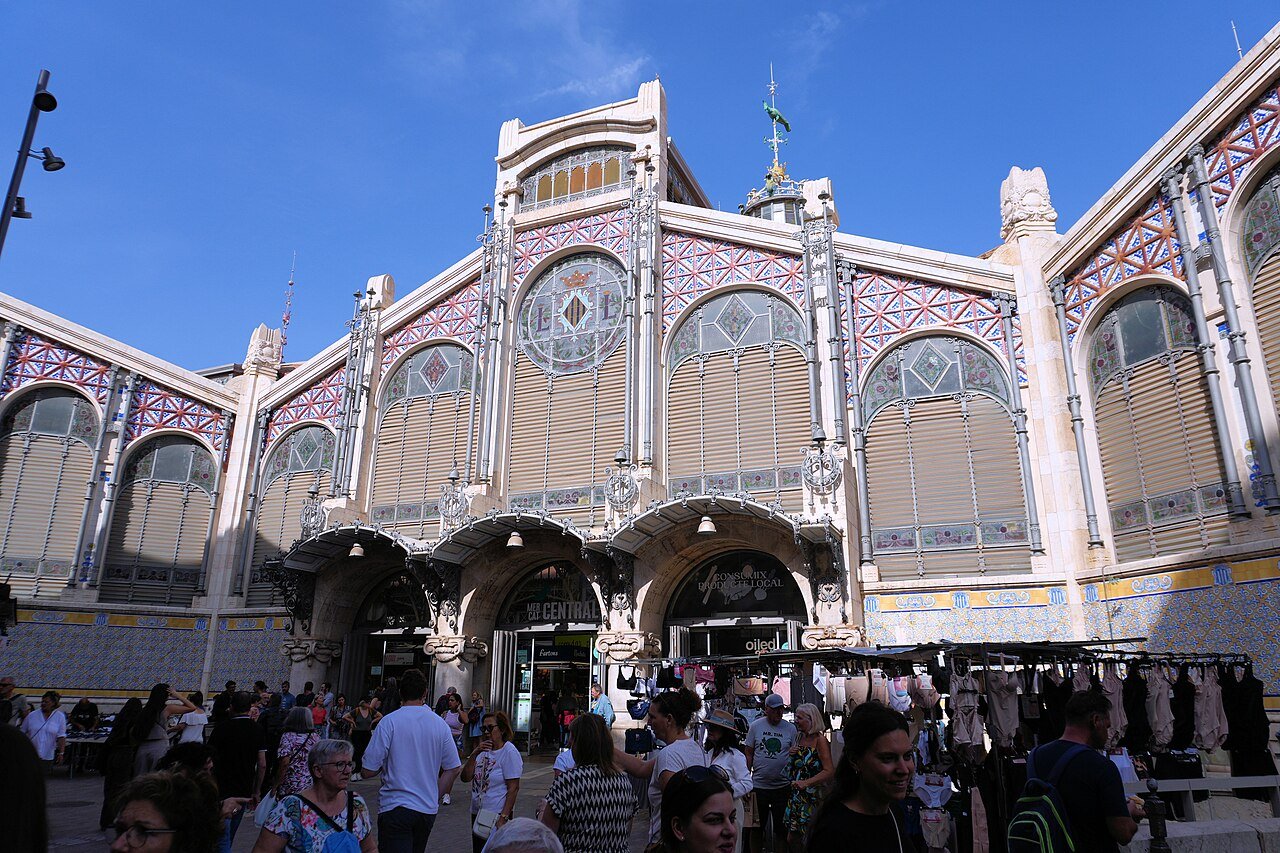
My note calls the Mercat Central “Art Nouveau”, and the market’s own history (in Spanish) agrees in its own terms: it describes the structure as modernista, the Spanish strand of Art Nouveau. The architects, Alejandro Soler March and Francisco Guardia Vial, had trained in Barcelona and worked in the team of Lluís Domènech i Montaner. Their design dates from November 1914; the building was finished by Enrique Viedma and Ángel Romaní and inaugurated on 23 January 1928. Its domes are made of iron, glass and ceramics, and the central one rises to 30 metres.

The Lonja de la Seda
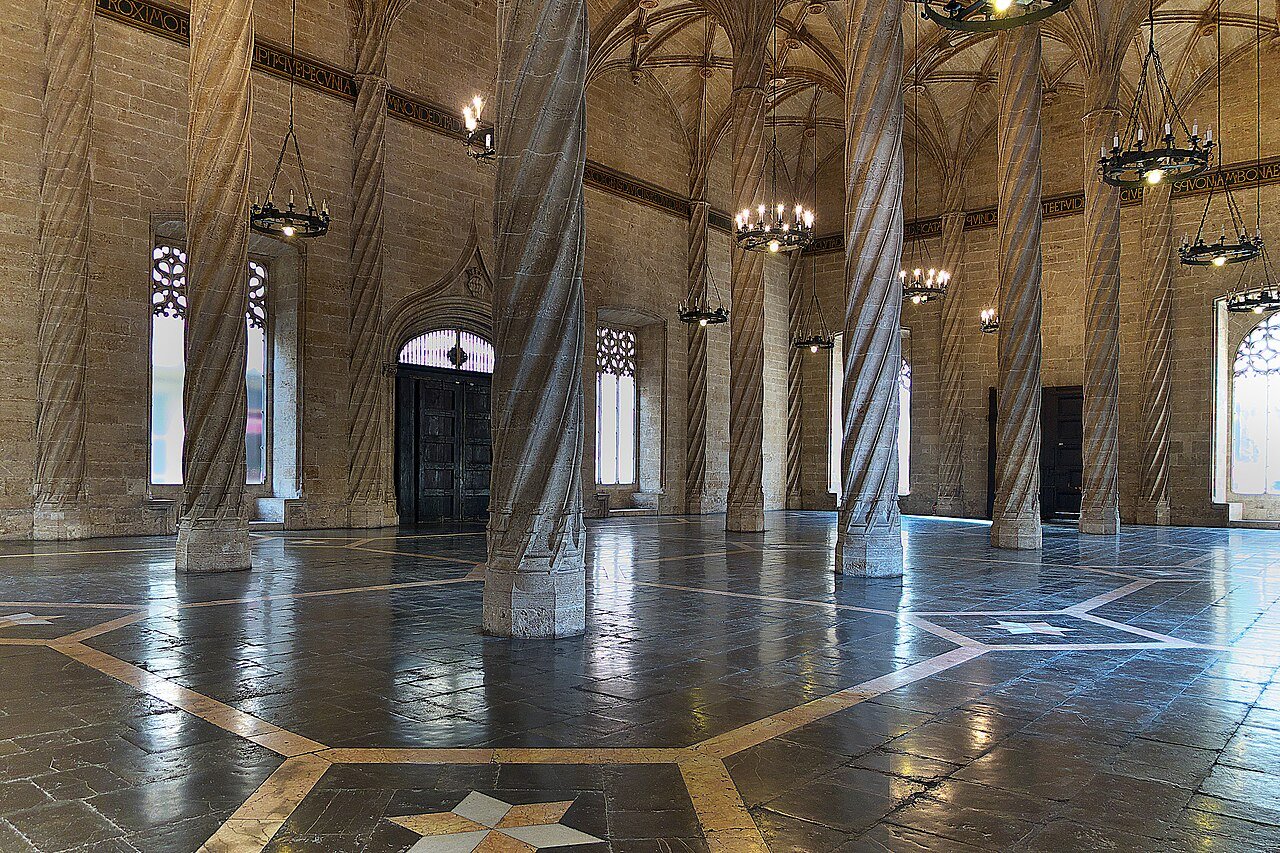
Across the square stands the Lonja, the Silk Exchange. UNESCO, which made it a World Heritage site in 1996, says it was built between 1482 and 1533 for trading in silk and calls it “a masterpiece of late Gothic architecture”. Its great Sala de Contratación, the Trading Hall, illustrates in UNESCO’s words “the power and wealth of a major Mediterranean mercantile city in the 15th and 16th centuries”.

The cathedral
The cathedral, the last of the three, also stands on older foundations. Its official website (in Spanish) explains that the main mosque of Muslim Valencia once occupied the site and served as the cathedral after James I conquered the city in 1238. The first stone of the present building was laid on 22 June 1262, and its bell tower, the Micalet, was begun in 1381. The cathedral’s historical timeline records that Alfonso V gave it, in 1437, the chalice it venerates as the Holy Chalice, and since 1916 that cup has been kept in the old chapter house, now the Chapel of the Holy Chalice.
The “futuristic” City of Arts and Sciences
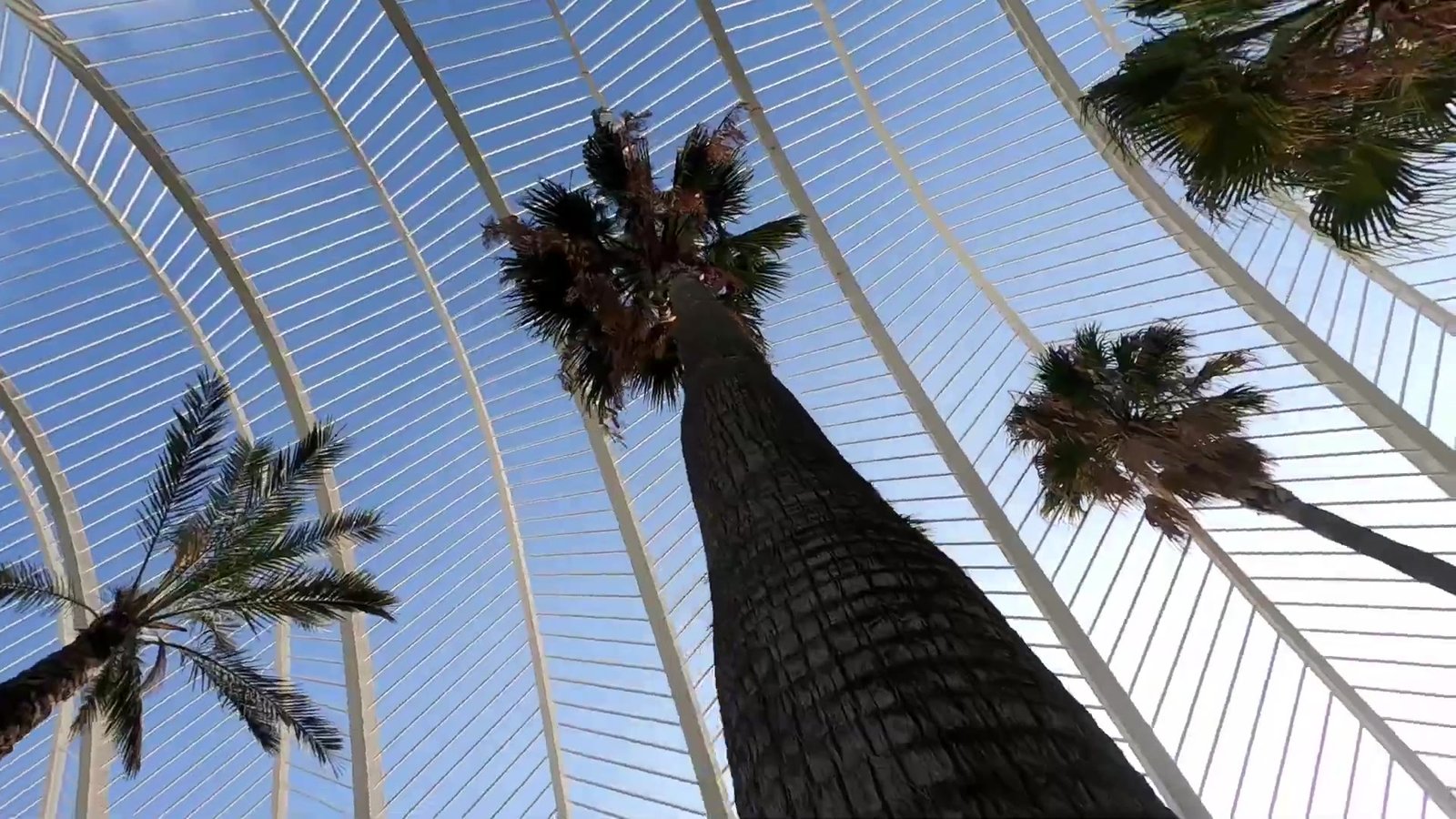
At the far end of the Turia Garden is the sight my notes call “futuristic”. The complex’s official website explains that it was built along an axis of just under two kilometres on the former bed of the River Turia, so it belongs to the same story as the garden. It was designed by Santiago Calatrava and Félix Candela, who designed the roofs of the Oceanogràfic aquarium. The Hemisfèric opened first, in 1998, followed by the Science Museum and the Umbracle in 2000, the Oceanogràfic in 2002, the Palau de les Arts opera house in 2005 and the Àgora in 2009. My own still from the video shows the palm trees under the white arches of the Umbracle, which the website describes as a landscaped vantage point.
Paella, where it was born
“Paella origin here” is not just local pride. In 2021 the Valencian government declared the paella valenciana, “the art of uniting and sharing”, a protected item of intangible cultural heritage (a Bien de Interés Cultural). The decree, published in Spain’s official gazette, places the dish’s origins in the Albufera de València, a fertile wetland where it was cooked to feed the farmers and market gardeners of the area and where conditions suited the rice that is its main ingredient. At the end of the 19th century, the decree adds, paella moved from farmhouses to eating houses, such as those on the beach at La Malvarrosa.
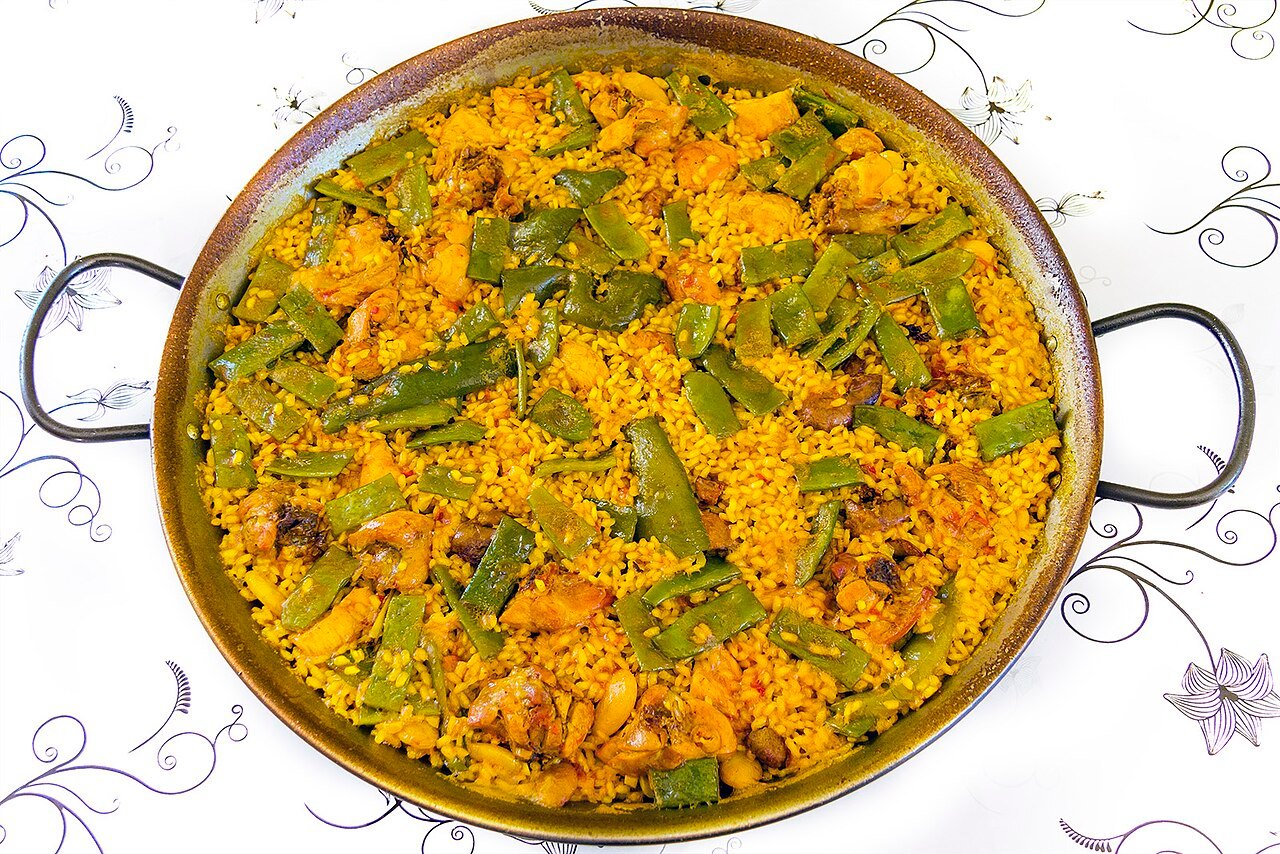

My notes end with “excellent food and atmosphere”. They do not say where we ate or what we ordered, so I leave that line as it is.
VALENCIA IN MY NOTES, BY AGE
(dates from the sources cited)

1238  mosque dedicated as
  |   the cathedral
  |
1262  first stone of the
  |   present cathedral
  |
1381  Micalet bell tower
  |   begun
  |
1392  Torres de Serranos
  |   built (to 1398)
  |
1482  Lonja de la Seda
  |   built (to 1533)
  |
1928  Mercat Central opens
  |
1957  Turia floods; the
  |   river is later
  |   diverted
  |
1996  UNESCO lists the Lonja
  |
1998  Hemisfèric opens:
  |   City of Arts and
  |   Sciences begins
  |
2021  paella valenciana
  |   declared cultural
  |   heritage (BIC)
  v
Days 74-76: our three days
The takeaway: Valencia’s sights tell one story of a city rebuilding on its own past. A mosque site became a cathedral from 1238, a medieval gate survived the loss of the walls around it, silk merchants built a Gothic trading hall that UNESCO now protects, and a market of iron, glass and tile opened in 1928. Then a disaster turned into a park: after the 1957 floods the river was moved, and its old bed became the Turia Garden, with the City of Arts and Sciences at its end. And the dish in the title is officially Valencian: the region’s government traces paella to the rice fields of the Albufera. My notes sum up the three days in four words: “excellent food and atmosphere”.
100 Days Europe Travel Journal · Part 10 of 24
← Previous: Barcelona: Casa Batlló, Park Güell and La Boqueria (100 Days in Europe, Part 9) | Next: Madrid: the Royal Palace, Plaza Mayor and Retiro Park (100 Days in Europe, Part 11) →
More from the journey: the Europe Travel page (all fifteen parts and the whole trip in one minute) · every Spain post · Part 9: Barcelona · Part 11: Madrid · Part 12: Seville · Part 1: Geneva