Barcelona: Casa Batlló, Park Güell and La Boqueria (100 Days in Europe, Part 9)
Part 9 of 24 in the 100 Days Europe Travel Journal, our 100 days across Europe by train, plane, ferry and bus.
“Gaudí everywhere.” That is the first line of my notes for Barcelona, and the rest of the list reads like a plan for seeing why: Casa Batlló with an audio guide; Park Güell for its views, and paella; handball at Camp Nou instead of expensive football; the Gothic Quarter, the Boqueria market and the port; and, at the end, a great Thai massage.
We came to Barcelona from Santorini (Part 8), and it was our first stop in Spain. As my Europe Travel page records for Day 70, Barcelona is the capital and largest city of Catalonia; we took the metro to the city centre, the streets around our hotel were narrow, much like those in Naples (Part 6), and that evening we had Asian food and our first litre of sangria. Below, each place in my notes is set beside what the official sources say about it.
Why Gaudí is everywhere
The first line of my notes is close to the official view. UNESCO lists seven properties built by the architect Antoni Gaudí (1852–1926) in or near Barcelona as a single World Heritage site, the Works of Antoni Gaudí, describing them as an “exceptional creative contribution” to architecture and building technology in the late 19th and early 20th centuries. Park Güell was inscribed in 1984; Casa Batlló, and Gaudí’s Nativity façade and crypt at the Sagrada Família, were added in 2005.
Casa Batlló: a house remodelled, not built
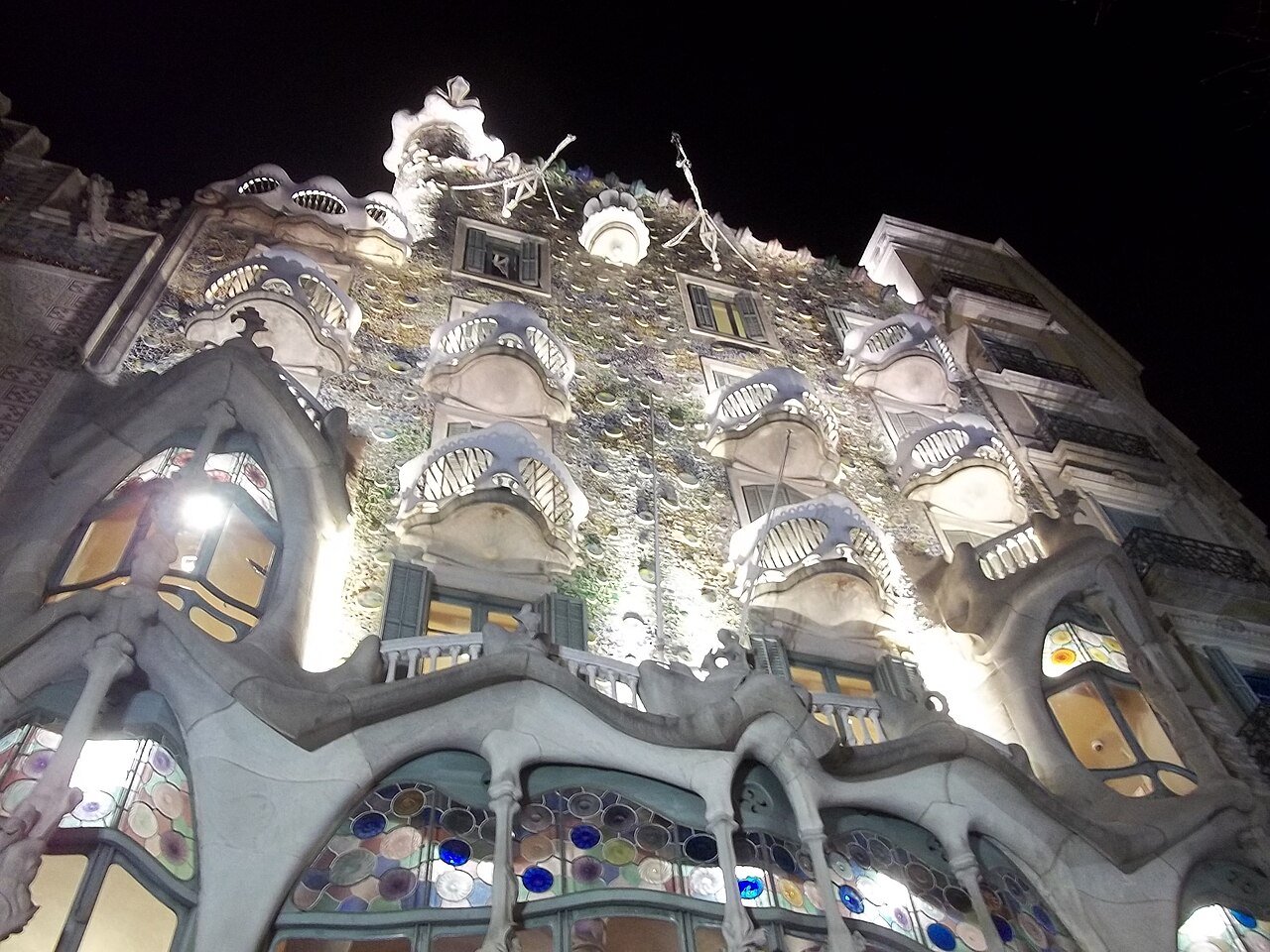
Casa Batlló, which we visited with an audio guide, is not a new building. According to the house’s own history, it was built in 1877 by Emili Sala Cortés and bought in 1903 by the textile industrialist Josep Batlló i Casanovas. Batlló first planned to demolish it, but the demolition was ruled out, and Gaudí carried out a full renovation between 1904 and 1906: he transformed the façade, redistributed the interior partitions and enlarged the light well.

Park Güell: the housing estate that became a park
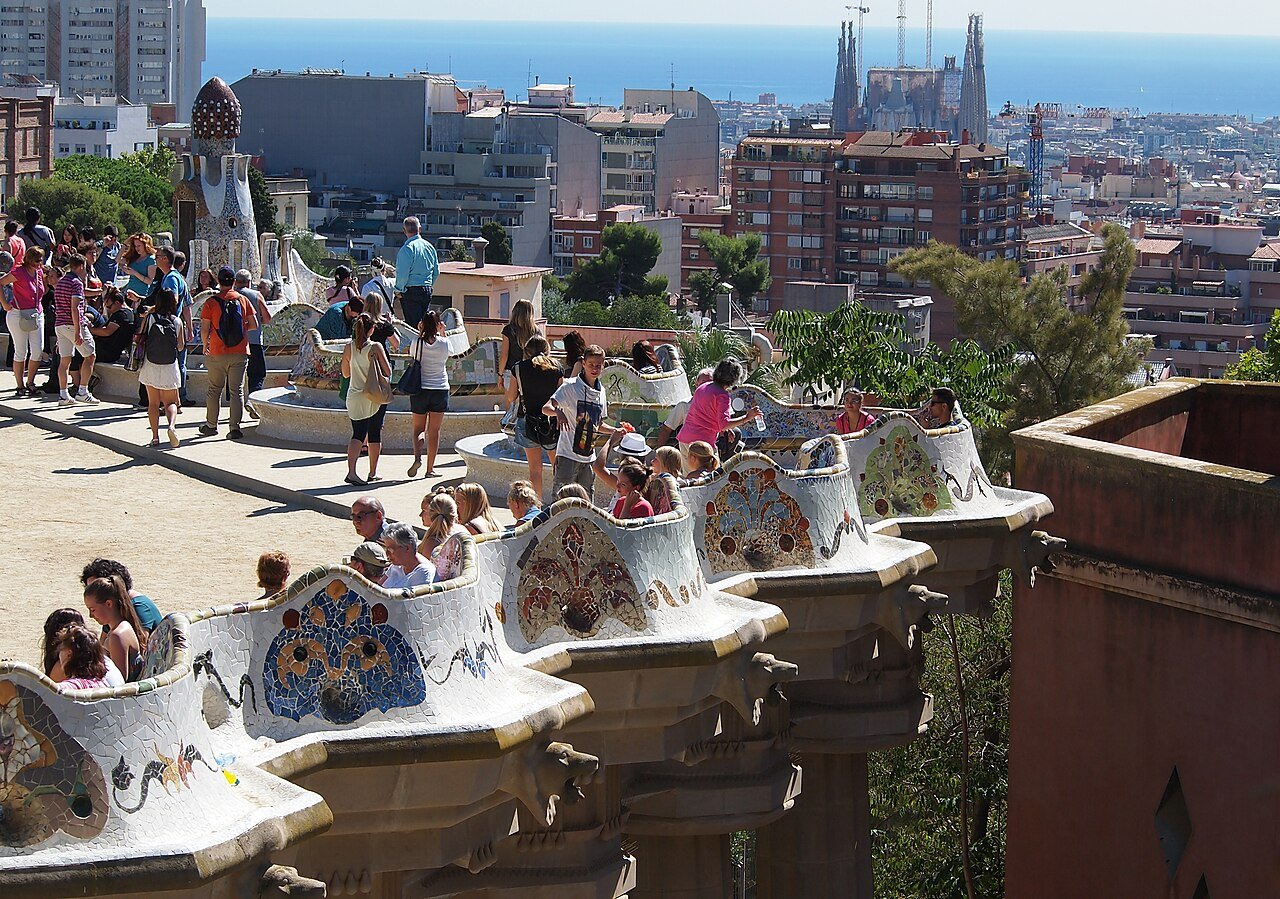
My notes pair Park Güell with its views and with paella, a dish whose home, as my next part explains, is Valencia (Part 10). The park’s official website explains that it was first planned as a housing estate, not a park. In 1900 the industrialist Eusebi Güell commissioned Gaudí to plan an estate of some 60 triangular plots for well-off families on the hill then known as the Muntanya Pelada (“bare mountain”), with views over the sea and the Plain of Barcelona. A lack of buyers led to the works being abandoned in 1914, with only two of the planned houses built; the tiled bench was completed in the same year. After Güell’s death in 1918 his heirs offered the park to the City Council, which agreed to buy it in 1922 and opened it as a municipal park in 1926.

The Sagrada Família: a church still being finished
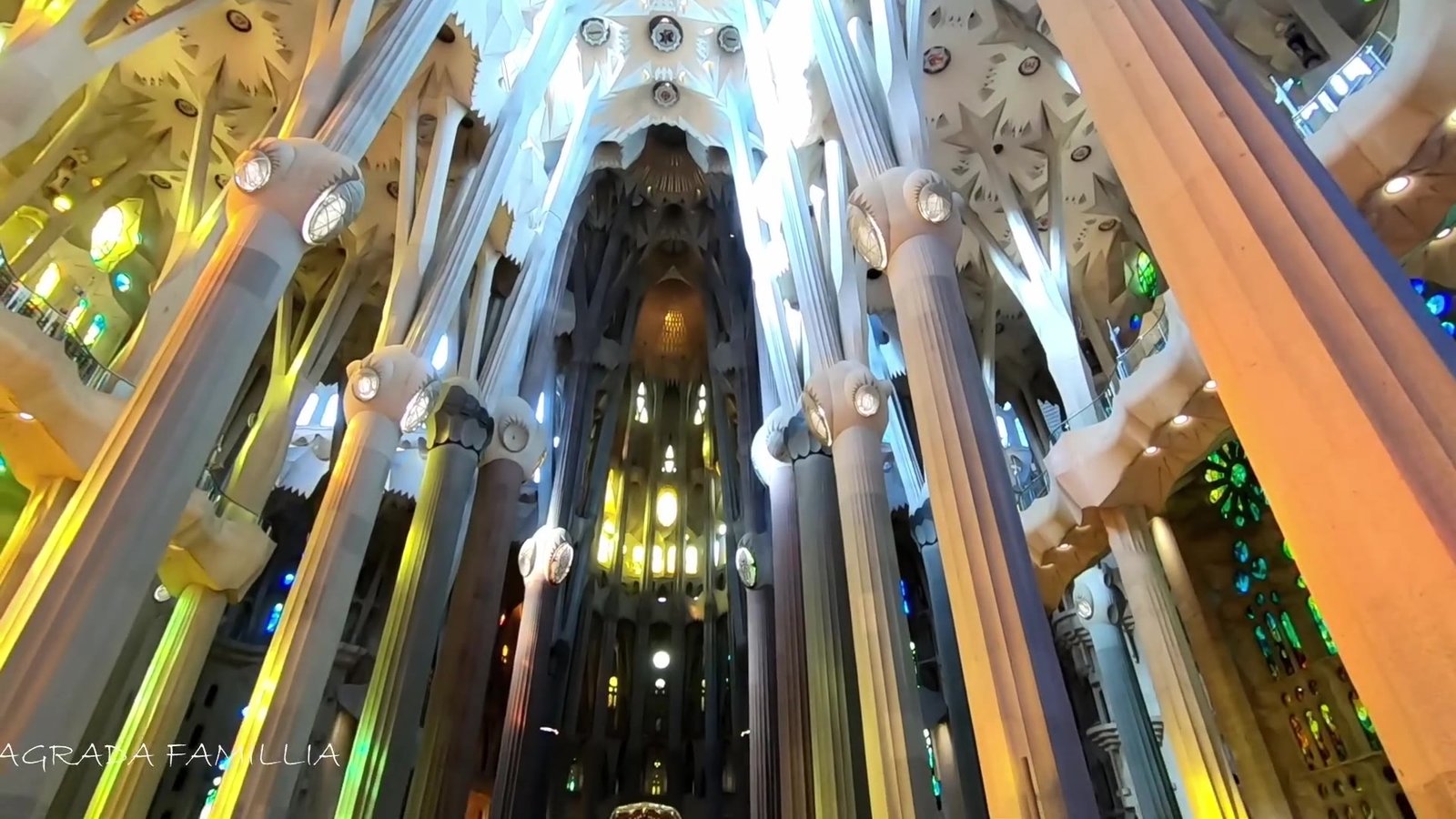
My own still from the video shows the inside of the Sagrada Família, with coloured light. The basilica’s official history records that its cornerstone was laid on 19 March 1882 to a neo-Gothic design by Francisco de Paula del Villar, that Gaudí took over the project in 1883, and that Pope Benedict XVI consecrated it on 7 November 2010 and designated it a minor basilica. UNESCO notes that construction work on the church is still continuing.
Handball instead of expensive football
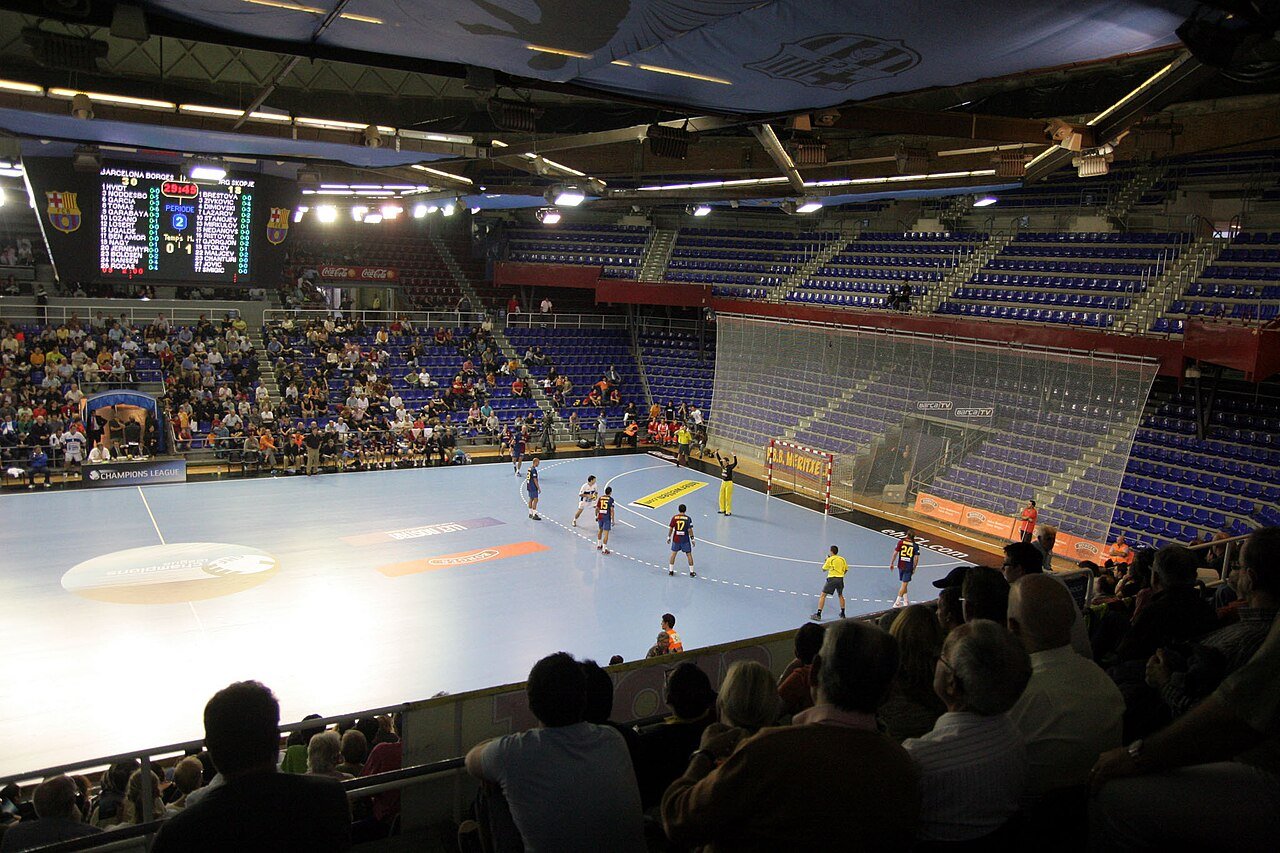
My notes say “handball at Camp Nou”, and that needs one small clarification. Handball is not played in the football stadium itself but in the Palau Blaugrana, FC Barcelona’s indoor arena on the same site as the Camp Nou. The club’s official website gives its opening date as 23 October 1971 and its capacity as 7,585, and lists the sports it hosts: basketball, handball, roller hockey and futsal. So handball instead of expensive football still meant live sport on the Camp Nou site.

The old city: the Gothic Quarter, La Boqueria and the port
The Gothic Quarter is older than its name suggests. The Barcelona City History Museum (MUHBA) explains, in its account of Roman Barcino (in Catalan), that the emperor Augustus founded the small town of Barcino around 10 BC on low hills near the sea, and that some of its streets survive in today’s street plan: Carrer del Bisbe and Carrer de la Ciutat still join two of its old gates. Beneath Plaça del Rei, in the heart of the quarter, the museum’s underground site lets visitors walk along the streets of Roman Barcelona, past the city wall.
La Boqueria is old too, as a market if not as a building. Barcelona City Council’s markets institute dates its first mention to 1217, in a document granting an individual the ownership of a table for chopping meat. Its official name, the Mercat de Sant Josep, comes from the convent of the Barefoot Carmelites that once stood on the site: the first stone of the market was laid on St Joseph’s Day in 1840, the iron roof was built in 1914 by La Maquinista Terrestre y Marítima, and the Modernista arch at the main entrance (in the style of Catalan Modernisme), by the architect A. de Falguera, dates from 1913. The juice stall in my own still below is at La Boqueria.
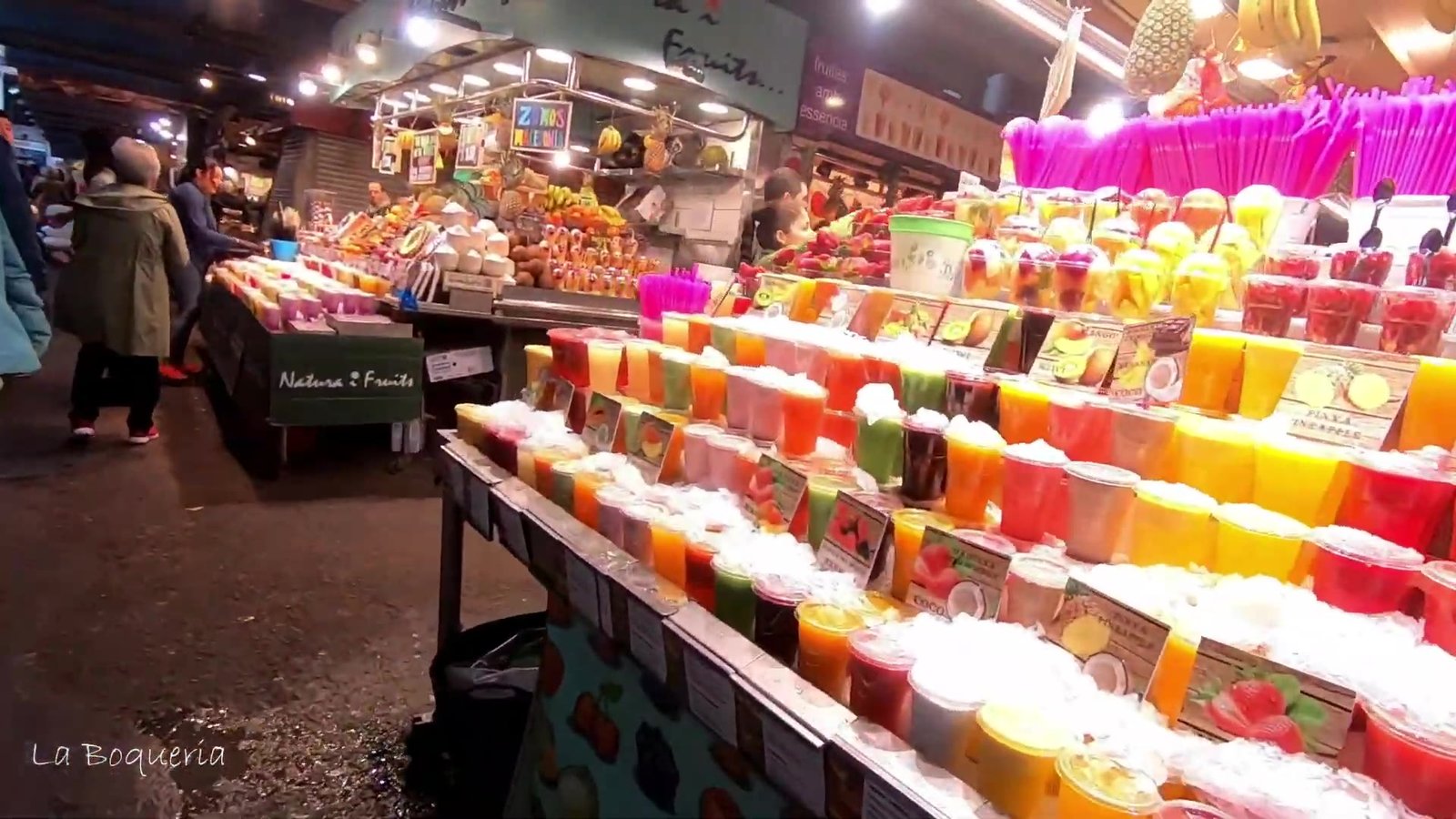
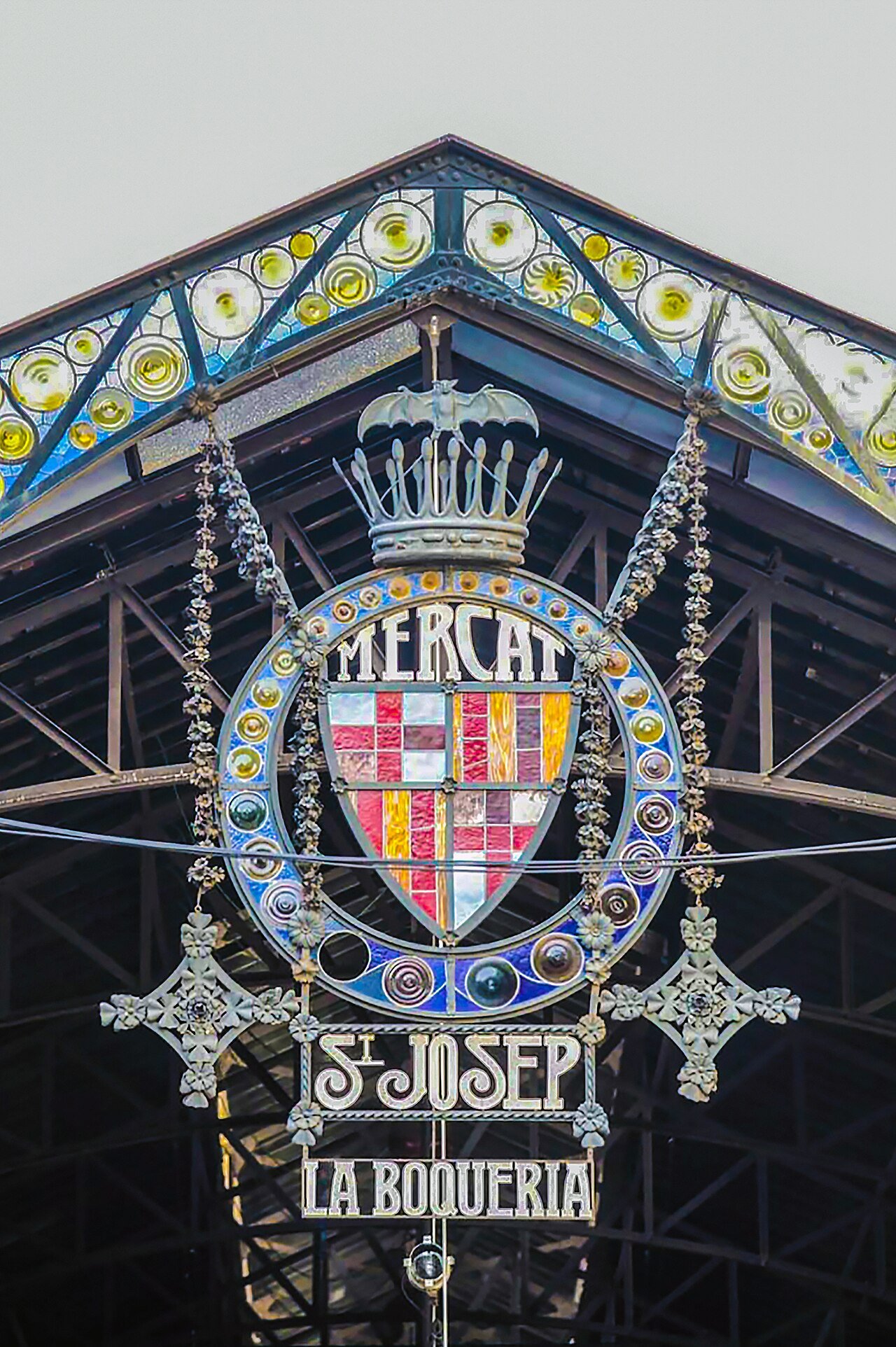

The port was the third place in that list. And a great Thai massage came at the end of our four days.
BARCELONA IN MY NOTES, BY AGE
(dates from the sources cited)

c.10 BC  Roman Barcino founded
  |      (today's Gothic Quarter)
  |
1217  first record of the
  |   Boqueria market
  |
1840  the market's first stone
  |
1882  Sagrada Família begun
  |   (Gaudí in charge from 1883)
  |
1900  Park Güell begun
  |
1904  Casa Batlló remodelled
  |   (finished 1906)
  |
1914  Boqueria iron roof;
  |   work at Park Güell stops
  |
1926  Park Güell opens as a
  |   public park
  |
1971  Palau Blaugrana opens
  |
1984  UNESCO lists Park Güell
  |   (Casa Batlló added 2005)
  |
2010  Sagrada Família consecrated
  |   and made a minor basilica
  v
Days 70-73: our four days
The takeaway: Barcelona rewards a visitor who asks how old things are. Roman streets still shape the Gothic Quarter, a market first recorded in 1217 still trades on La Rambla, and Gaudí’s part in the three works in my notes began between 1883, when he took over the Sagrada Família, and 1904, when he started on Casa Batlló. Even the surprises have a history: Casa Batlló is a remodelled house rather than a new one, and Park Güell was meant to be a housing estate before it became a park. And sport on the Camp Nou site does not have to mean an expensive football ticket: handball is played there too, in the Palau Blaugrana.
100 Days Europe Travel Journal · Part 9 of 24
← Previous: Paros, Naxos and Santorini: Blue Domes, the Portara and the Fira-to-Oia Cliff Walk (100 Days in Europe, Part 8) | Next: Valencia: Turia Gardens, Torres de Serranos and Paella (100 Days in Europe, Part 10) →
More from the journey: the Europe Travel page (all fifteen parts and the whole trip in one minute) · every Spain post · Part 8: Paros, Naxos and Santorini · Part 10: Valencia · Part 1: Geneva