Paros, Naxos and Santorini: Blue Domes, the Portara and the Fira-to-Oia Cliff Walk (100 Days in Europe, Part 8)
Part 8 of 24 in the 100 Days Europe Travel Journal, our 100 days across Europe by train, plane, ferry and bus.
The first version of this post called Santorini the largest of the Cyclades. It is not. That title belongs to Naxos, which the Ephorate of Antiquities of the Cyclades, part of the Greek Ministry of Culture, measures at 435 square kilometres (Ephorate of Antiquities of Cyclades: Naxos). The mistake is a useful way in, because the islands in this part are famous for their pictures, and each picture has a story behind it that is easy to get wrong.
After Athens (Part 7), this part covers Paros, Naxos and Santorini, our last Greek island stop. Below are my notes and video stills, followed by short explanations of two things worth understanding before you look at the pictures: a marble doorway on Naxos and the cliffs of Santorini.
Paros and Naxos
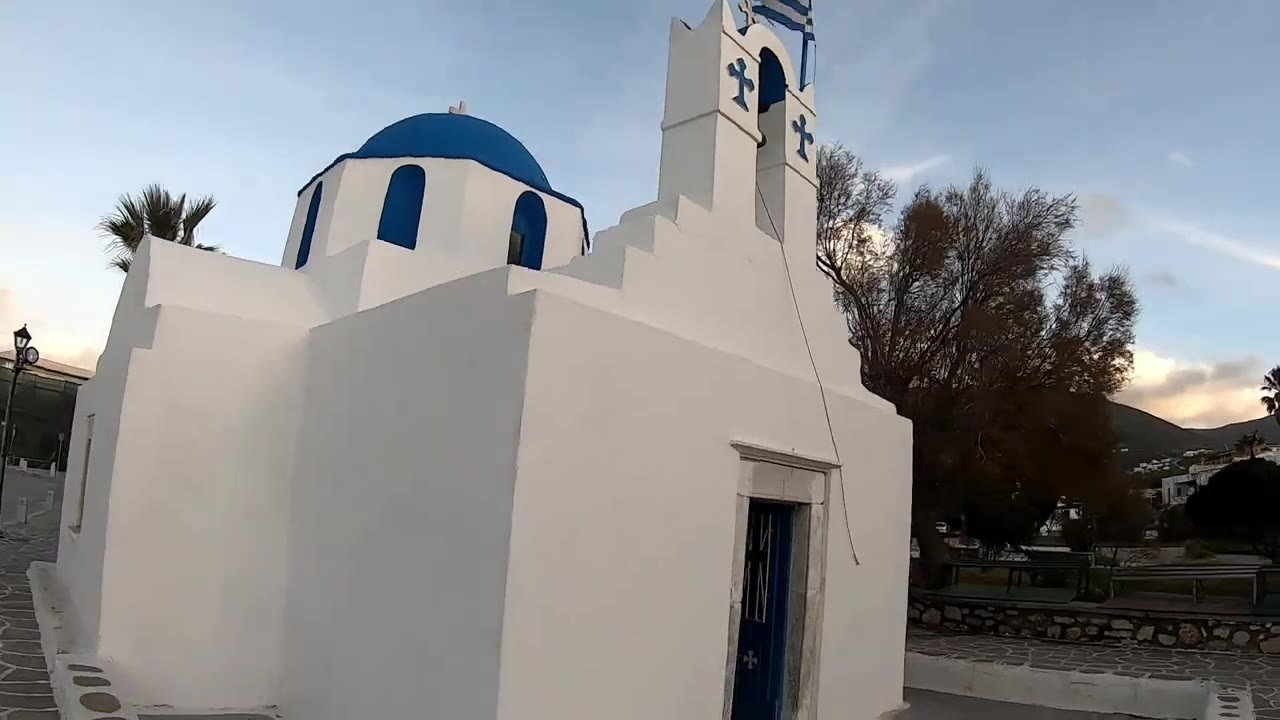
Whitewashed houses, cats everywhere, clear water beaches, Portara gate with epic views. Low season = peaceful.
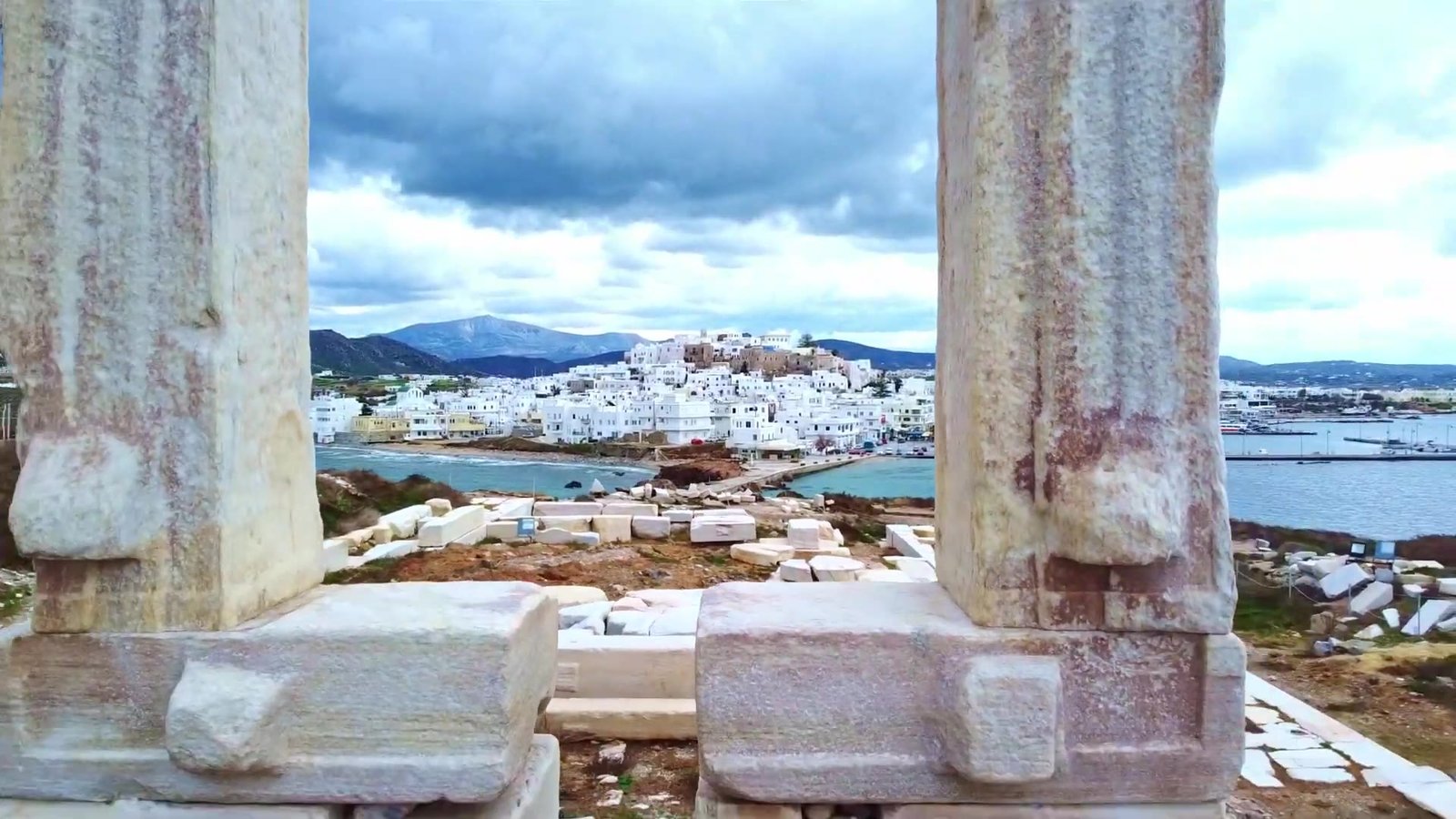
The Portara: a door to a temple that was never finished
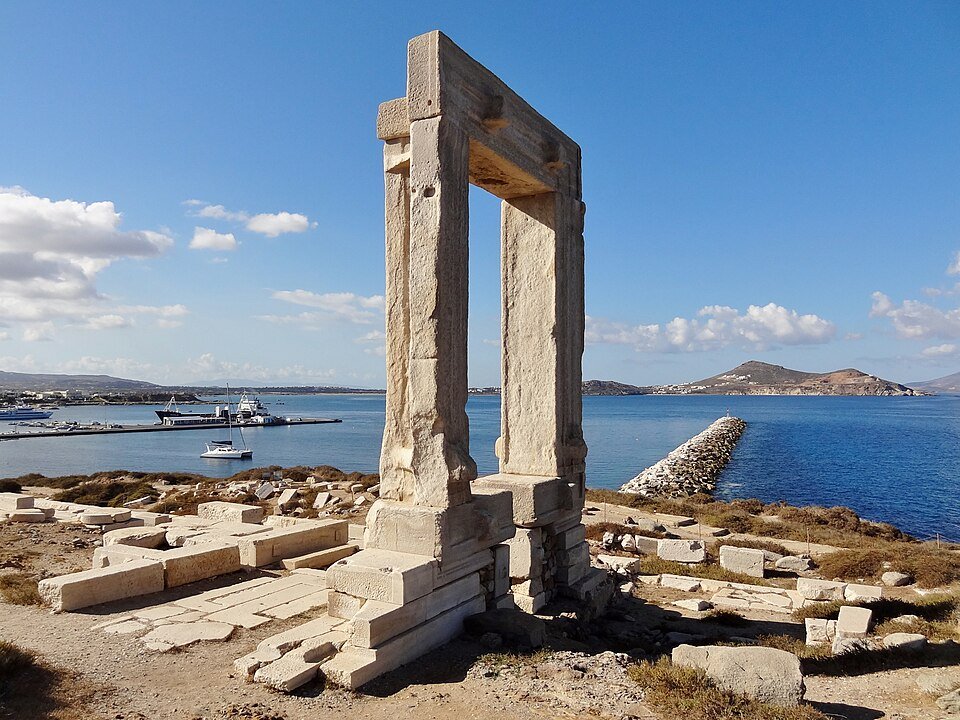
The Portara in my note is on Naxos, not Paros. It stands on Palatia, a small islet at the northern end of the harbour of Chora, the island’s main town. According to the Ephorate of Antiquities of Cyclades, the tyrant Lygdamis began a temple to Delian Apollo here in 530 BC, intending it to be more imposing than every other sanctuary of Delian Apollo, even the one on Delos itself. He was overthrown in 524 BC, and the temple was never finished.
What survives is the doorway, a frame of four huge marble pieces; the Ephorate gives them as about six metres long and 20 tonnes in weight. Its foundations show a temple planned on roughly the scale of the temple of Zeus at Olympia, so the view through the Portara is, in effect, a view through the front door of a building that was never completed.

Santorini
The official name is Thira. Santorini was our last Greek island stop. It is volcanic, and famous for whitewashed villages with blue domes, its sunsets and its wine. (My first version of this post called it the largest of the Cyclades; that is Naxos.)
Why the cliffs are there: the caldera
The cliffs we walked along are the rim of a caldera, the basin left when a volcano collapses into itself. In a study published in the Journal of Geophysical Research in 1984, Grant Heiken and Floyd McCoy showed that Santorini’s caldera was not made in one go: it is two overlapping calderas. The great Late Bronze Age eruption, often called the Minoan eruption, ended with a collapse of about 19 cubic kilometres that overlapped an older caldera, and later eruptions inside the basin built the Kameni islands in the centre of the caldera (Heiken and McCoy, 1984).
The same eruption buried the prehistoric town at Akrotiri, in the south-west of the island. The Ephorate of Antiquities of the Cyclades dates it probably to the end of the 17th century BC, though the exact date is still debated, and notes that the town had been hit by an earthquake shortly before the eruption. The earthquake in my list below is a reminder that earthquakes are part of this island’s long story.
HOW SANTORINI'S CALDERA FORMED
(simplified)

older volcanoes and an
older caldera
      |
      v
Late Bronze Age eruption
(probably end of 17th c. BC;
the date is still debated)
      |
      v
the ground collapses
(about 19 cubic km) and
merges with the old caldera
      |
      v
later eruptions inside it
build the Kameni islands
      |
      v
today: the cliffs of the rim
Highlights
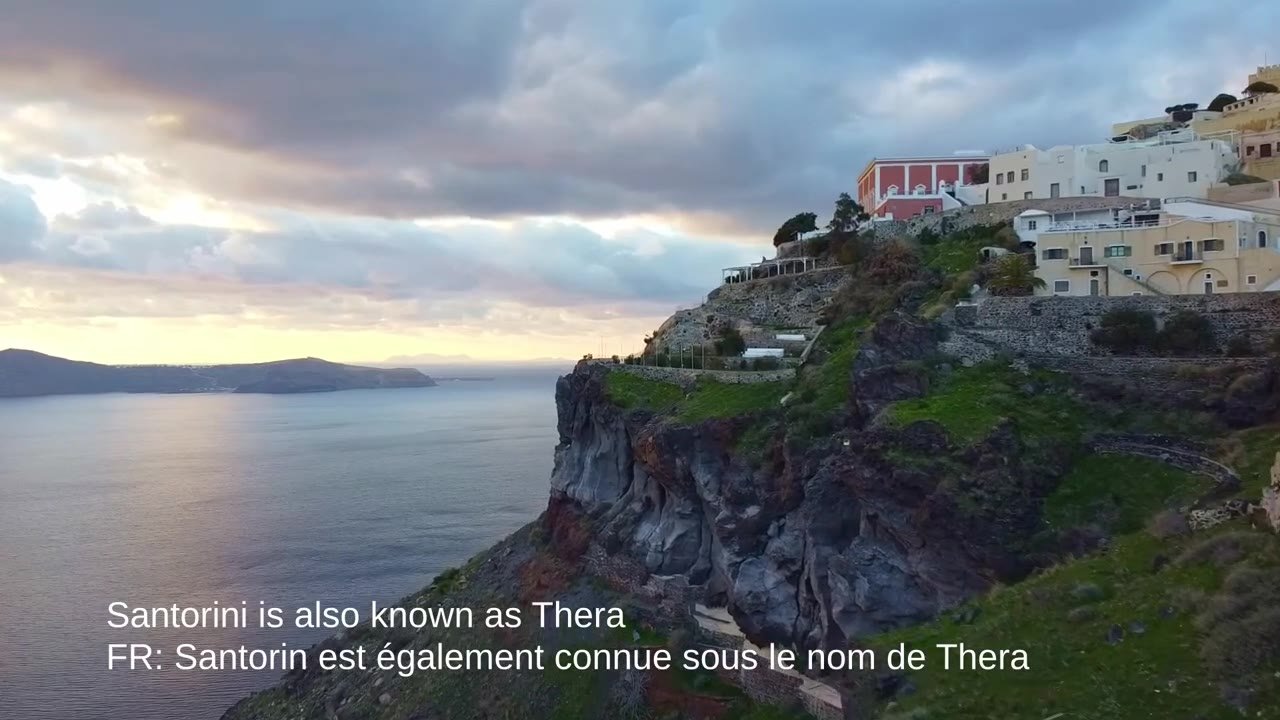
- 3-hour walk from Fira to Oia along the cliff path (zigzag roads, lava rock, high altitude views). We got slightly lost but the landscape was spectacular.
- Oia: the iconic village. Lots of “Respect – it’s our home” signs and clear drone restrictions near private property.
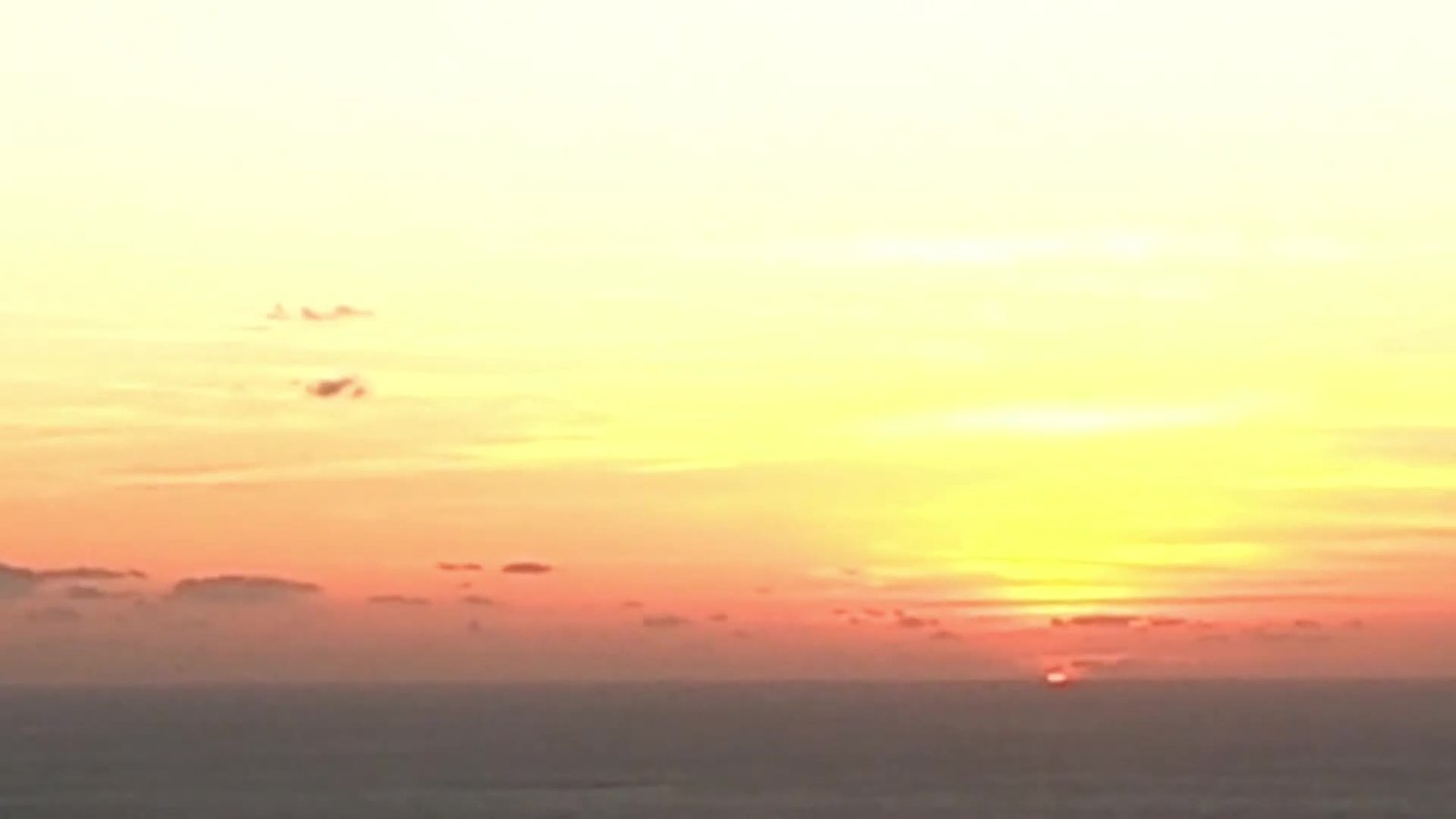
- Caldera views, the famous orange sunset, and even a moonrise from our hotel rooftop.
- An earthquake during our stay, and one of the most dramatic airport approaches of the trip.
The takeaway: famous places are easy to caption wrongly, as the first version of this post shows, so check the story behind the picture. Naxos, not Santorini, is the largest of the Cyclades. The Portara is the doorway of a temple to Apollo begun in 530 BC and left unfinished when its builder was overthrown in 524 BC. And the cliffs on the walk from Fira to Oia are the rim of a caldera whose great collapse came with the Late Bronze Age eruption.
100 Days Europe Travel Journal · Part 8 of 24
← Previous: Athens: the Acropolis, Ancient Agora and Changing of the Guard (100 Days in Europe, Part 7) | Next: Barcelona: Casa Batlló, Park Güell and La Boqueria (100 Days in Europe, Part 9) →
More from the journey: the Europe Travel page (all fifteen parts and the whole trip in one minute) · every Greece post · Part 7: Athens · Part 9: Barcelona · Part 1: Geneva