Generational Trauma Stops Here
Promise
After this page you can explain what generational trauma means, what research shows and does not show about it, and four concrete habits I use to stop passing it on.
Audience: Adults in Réunion (French first language), plain English A2–B1. Context: parenting, mental health, personal story.
Time to read: 10 minutes · Format: web page
Before you start
You will be able to: separate the “DNA” myth from the better-documented route, and choose one habit to practise.
Three words you need first:
- generational trauma — pain that passes from parents to children.
- epigenetic — chemical marks that change how genes are used, not the genes themselves.
- hypothesis — an idea that still needs to be tested.
You need: a quiet moment to think about one habit.
In my words (the original essay, unchanged)
Two true things
My parents loved me. I believe that completely.
They also hurt me. I believe that completely too.
These two things are not contradictions. They are what I mean by generational trauma: pain that moves from one body to the next, not because the people carrying it are cruel, but because they never had the language or the tools to put it down. My mother was beaten as a child. My father grew up performing for a grandfather who measured love in achievements and money. Neither of them ever sat with a therapist. Neither of them ever heard the words “that was not your fault.” So they did to me what had been done to them, imperfectly and with love, and I spent four decades unpacking it.
I have a daughter now. She is eighteen months old. She is, without question, the most important thing in my life: the reason everything else I am doing has to succeed, and the reason I cannot afford to pretend I have not inherited something I need to put down.
What the research does and does not say
The idea has a history. In a 2018 review in World Psychiatry, Rachel Yehuda and Amy Lehrner trace the concept of intergenerational trauma in psychiatry to reports, from the 1960s onwards, on the children of Holocaust survivors. Later studies found that the adult children of survivors with post-traumatic stress disorder (PTSD) were themselves at higher risk of PTSD, and some showed differences in their stress-hormone biology.
You may have read that trauma is “written into your DNA”. The same review is careful here. In humans, studies have not yet shown that the effects of trauma are inherited through epigenetic changes (chemical marks that change how genes are used, not the genes themselves); the strongest evidence for that comes from animal studies, and the authors describe the human case as a hypothesis still to be tested. They also stress that such effects are not fixed: they can change when a person’s environment changes.
The more ordinary route is easier to see. A study funded by the US National Institute of Mental Health followed 541 mothers and their children in Singapore. Mothers who had been neglected or abused as children tended to have worse mental health during or after pregnancy, and that, in turn, was linked to more anxiety and depression in their children at seven and a half. The researchers suggest that supporting mothers at those times may be one way to break the chain.
That is why the practical part matters more to me than the label. If what passes down travels at least partly through a parent’s own mental health and the way they parent, then that is where it can stop.
Breaking the cycle, in concrete terms
Here is what I mean by breaking the cycle, in concrete terms, because I am tired of reading abstract things about generational trauma that do not tell you what to actually do:
I name my emotions out loud. When I am anxious, I say “I am anxious right now.” Not to burden her (she is a baby; she does not understand) but to rewire myself, because I grew up in a house where emotion had no name and no space. There is some laboratory evidence behind the habit: in a brain-imaging study, Lieberman and colleagues (2007) found that putting feelings into words reduced the amygdala’s response to negative emotional images (the amygdala is a part of the brain involved in emotional reactions). It was a small, short-term experiment with 30 adults, not proof of lasting change.
I apologise when I am wrong. No adult in my childhood ever said sorry to me: not for the big things, not for the small ones. An apology requires you to believe the other person’s experience is real.
I protect my own health like it is her future. Because it is. My stability is her emotional baseline. When I manage my condition well, she gets the version of me who can be present.
I am in therapy. I say this without shame. My father would have said it was weakness. I say: the conversation I am having now is the one they never had, and it stops here.

WHAT I AM PUTTING DOWN
(read from the top)

 MY PARENTS' CHILDHOODS
   a mother beaten;
   love measured in
   achievements and money
        |
        v
 MY CHILDHOOD
   emotion had no name;
   no adult said sorry
        |
        v
 ME, NOW
   name it out loud
   apologise when wrong
   protect my health
   go to therapy
        |
        v
 MY DAUGHTER
   a father who
   chose to stop
Still in it
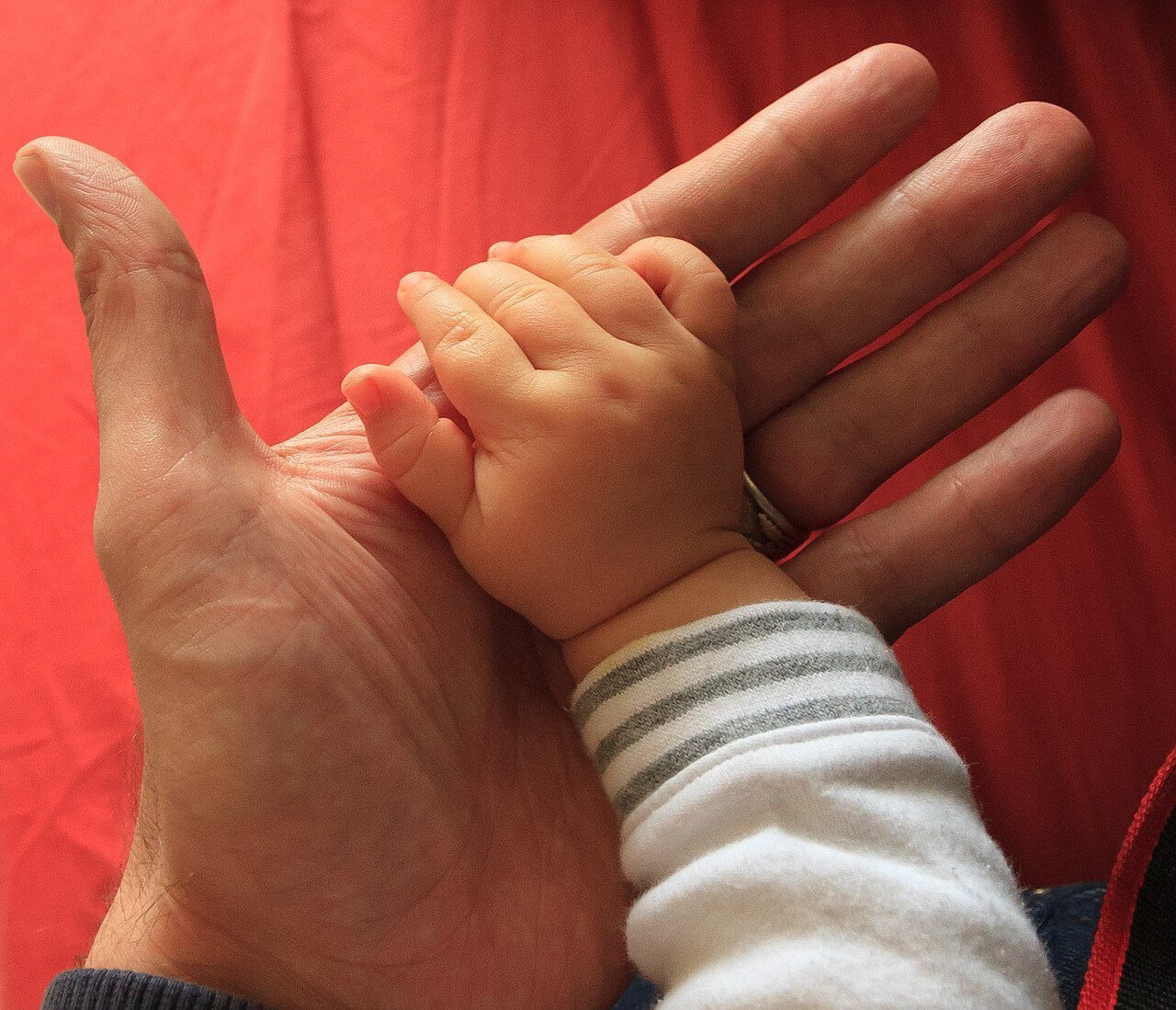
None of this is finished. I am still in it. But my daughter will grow up knowing that her father looked at the thing he inherited, called it by its real name, and chose to stop.


The takeaway: loving someone and hurting them can both be true. The research on intergenerational trauma is real but still developing: in humans, the idea that trauma is passed on through changes to our DNA remains a hypothesis, not a finding. A better-documented route is the ordinary one, the way a parent’s own pain affects their mental health and their parenting, and that is a route we can change. Name what you feel. Apologise when you are wrong. Protect your health. Get help. That is how I am choosing to stop it.
That is the only legacy worth building.
If you are in crisis anywhere in France, including La Réunion, you can call the national suicide prevention line on 3114, free and open 24 hours a day, seven days a week (ARS La Réunion). If a child is in danger or at risk, call 119 (Allô Enfance en Danger), free and open around the clock. In an emergency, call 15 or 112.
Related reading: On Starting Over: What Complex PTSD Taught Me About Resilience, The Forensic Auditor: How Documentation Became My Therapy, Bipolar I at Work, Four Anchors and My Mental Health Journey. For support: Resources, and all the mental health articles.
I am a writer and educator in La Réunion. I am a father, a trauma survivor, and a work in progress.
This is a personal account, not medical or psychological advice. If the effects of your own childhood are weighing on you, talk to your doctor or a therapist, or call one of the lines above.
Lecture notes
Segment 1 — Two true things
The essay starts with two facts that both stay true: my parents loved me, and they also hurt me. Generational trauma, in my words, is pain that moves from one body to the next because people never had the tools to put it down.
Visual 1 — Flow diagram
What it shows: how pain moves down the generations.
How to draw it: Draw four boxes from top to bottom: grandparents, parents, me, my daughter.
The point it makes obvious: The chain can stop at any box.
grandparents
     |
     v
parents (no therapy, no words)
     |
     v
me  ---- STOP: name it, get help
     |
     v
my daughter
EXAMPLE (learner in Réunion): a parent shouts the same words their own father shouted. They notice it, stop, and say sorry. That is one link in the chain breaking.
Check 1: Are “they loved me” and “they hurt me” a contradiction in the essay?
Show the answer
Next: what the research says.
Segment 2 — The research: myth and better-documented route
Yehuda and Lehrner (2018) say the human “trauma in your DNA” idea is still a hypothesis; the strongest evidence is from animals. A better-documented route is ordinary: a parent’s own mental health and parenting. An NIMH-funded study of 541 mothers in Singapore linked mothers’ childhood abuse or neglect to more anxiety and depression in their children at seven and a half.
Visual 2 — Comparison table
What it shows: two routes and how strong the evidence is.
How to draw it: Two rows: route and evidence in humans.
The point it makes obvious: Focus on the route you can change.
ROUTE                         EVIDENCE IN HUMANS
DNA marks (epigenetics)       hypothesis, not yet shown
parent's mental health and    documented in studies
parenting                     (e.g. 541 mothers, Singapore)
EXAMPLE (reading a headline): a magazine says “trauma is written in your genes”. A careful reader asks: is this from human studies or from animal studies?
Check 2: Is “trauma is passed on through DNA” proven in humans?
Show the answer
Next: what I actually do.
Segment 3 — Four concrete habits
I list four habits: I name my emotions out loud, I apologise when I am wrong, I protect my health, and I go to therapy. For the first, a small study (Lieberman and colleagues, 2007, 30 adults) found that putting feelings into words reduced the brain’s alarm response for a short time.
Visual 3 — Checklist
What it shows: the four habits.
How to draw it: Write four boxes you can tick each week.
The point it makes obvious: Small actions, repeated, break the cycle.
[ ] name the emotion out loud ("I am anxious")
[ ] say sorry when I am wrong
[ ] protect my health (sleep, treatment)
[ ] keep going to therapy
EXAMPLE (learner in Réunion): in English class, a learner says, “I am nervous right now,” before speaking. Naming it helps them start.
Check 3: Did the 2007 study prove lasting change?
Show the answer
Worked example — choose one habit
The task: Choose one habit for this week.
| Step | What happens | Why |
|---|---|---|
| 1 | Read the checklist and pick the easiest habit. | Easy habits are easier to repeat. |
| 2 | Write when you will do it: “When I feel angry at dinner, I will say ‘I am angry’.” | A when-then plan makes it concrete. |
| 3 | At the end of the week, write one sentence about what happened. | You notice change without judging. |
Self-explanation prompt: Why start with the easiest habit? Because one habit you keep beats four you drop.
Your turn (guided): Now choose yours. Step 1: circle one box in the checklist.
Common mistakes
| Mistake | Why it happens | Fix |
|---|---|---|
| Thinking love and harm cannot both be true | We want families to be simple. | Hold both facts. |
| Believing trauma is fixed in your genes | Headlines simplify research. | In humans this is a hypothesis; parenting is a route you can change. |
| Trying all four habits at once | Wanting fast change. | Start with one. |
Glossary
| Term | Plain definition | Where first used |
|---|---|---|
| generational trauma | pain passed from parents to children | Before you start |
| PTSD | post-traumatic stress disorder | Segment 2 |
| epigenetic | chemical marks that change how genes are used | Segment 2 |
| hypothesis | an idea still to be tested | Segment 2 |
| amygdala | a part of the brain involved in emotional reactions | Segment 3 |
Quick review
- What are the “two true things”?
- In humans, is epigenetic inheritance of trauma proven?
- What did the Singapore study follow?
- Name the four habits.
- What number do you call in France if a child is in danger?
Show all five answers
2) No, it is still a hypothesis.
3) 541 mothers and their children.
4) Name emotions out loud, apologise when wrong, protect my health, go to therapy.
5) 119.
Fact check, 28 October 2026
Checked the sources already linked in the essay: Yehuda and Lehrner (2018, World Psychiatry), the NIMH science update on the Singapore study (541 mothers), and Lieberman and colleagues (2007, 30 adults). Helplines checked: 3114 (suicide prevention, France), 119 (Allô Enfance en Danger), 15 and 112. No corrections needed.
These lecture notes explain ideas from my own story. They are not medical advice. In France, including La Réunion, the free suicide prevention line is 3114, open 24 hours a day; in an emergency call 15 or 112.
Status: rewritten in lecture-notes style on 28 October 2026. Not tested with readers.